
 Afrika
 Asia
Asia Europa
 Hego Amerika
 Australia eta Ozeania
 Antartika
 Ozeano Barea
 Ozeano Atlantikoa
 Ozeano Indikoa
 Ozeano Artikoa
 Mediterraneo itsasoa
 Itsaso Gorria
 Karibe itsasoa
 Koralen itsasoa
 Hego Txinako itsasoa
 Filipinetako itsasoa
 Andaman itsasoa
 Ipar itsasoa
 Timor eta Arafura itsasoak
 Bengalako golkoa
 Kaliforniako golkoa
Cape cobra
 Koska
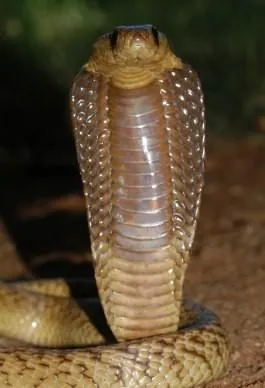
KoskaThe Cape cobra is a medium-sized, highly venomous cobra. It lives in many kinds of land across southern Africa, and it often comes close to people. It is regarded as one of the most dangerous cobras in all of Africa.1



 Nola ezagutu
- Colour ranges from yellow through golden brown and dark brown to black.1
- Many individuals have black or pale stippling and blotches.1
- Juveniles have a dark throat that continues down the belly.1
- Adults are typically 1.2 to 1.4 m long.1
- When threatened, it raises the front of its body and spreads a broad hood.1
Askotan honekin nahasten da: Juvenile Cape cobras have dark throats, which often leads people to confuse them with the rinkhals, a spitting cobra. The dark throat fades during the first year or two of life.1
Pozoi-ahalmena
Pozoia letaginetatik edo hortzetatik ateratzen da kosk egiten duenean.
Zer egiten du bere pozoiak?
Its venom is thick and syrupy, and contains potent neurotoxins that act on the nerves, and possibly cardiotoxins that affect the heart. The venom can affect the respiratory system, nervous system and heart. When death occurs, it normally takes one to ten hours, or more, and is often caused by respiratory failure due to paralysis.1
Zein arriskutsua da pertsonentzat?
Arriskua pertsonentzat: HilgarriaMunduko animaliarik arriskutsuenetako bat.It is regarded as one of the most dangerous cobras in Africa because of its potent venom and its frequent presence around houses. The mortality rate for untreated bites is not exactly known, but is thought to be high, around 50%. Outcomes depend on factors such as the amount of venom injected and the bitten person's state of mind.1
 Albiste ona: medikuek badute sendagai bat (antipozoia) edo tratamendu bat honetarako.1
Zer egiten du beldurtzen denean?
When threatened, it raises its forebody, spreads a broad hood, may hiss loudly and strikes readily.1
 Kosk egiten badu
- Mechanical ventilation (a machine that helps the person breathe) and symptom management are often enough to save a life. Serious cases need antivenom, which is a polyvalent antivenom produced by the South African Institute of Medical Research.1
- Eutsi pertsona geldi eta lasai, kendu eraztunak eta gauza estuak, eta joan ospitalera azkar: antipozoia da tratamendua.
Deitu beti lehenik zure larrialdi-zenbakira (112, 000, 911). Lehen sorospenei buruzko orientabide orokorra da hau, ez mediku-aholkua. Lehen sorospenen oinarriak
 Egon seguru
- Ez ukitu, ez harrapatu eta ez zirikatu inoiz animalia basati bat, txikia izan arren, eta lo edo hilda dagoela badirudi ere.
- Utzi tartea. Bat aurkitzen baduzu, egon lasai, egin atzera poliki eta utzi bere bidetik joaten.
- Batek kosk egiten badizu: egon lasai, egon geldi, deitu zure larrialdi-zenbakira (112, 000, 911) edo joan ospitalera azkar. Gogoratu nolakoa zen, argazki batek laguntzen du.
Ez dabil zure atzetik. Pozoia janaria harrapatzeko edo bere burua babesteko erabiltzen du, eta askoz nahiago du ezkutatu. Seguru egoteari buruz gehiago
Munduko zein tokitan?
Zein handia da?
Zein luzea da?
 3 etxeko katu muturretik buztanera jarrita bezain luzea
 9 banana bata bestearen atzetik jarrita bezain luzea
 100 metro 48 segundotan egin litzake (gizakirik azkarrenak 9,6 behar ditu)
Zein handia da Cape cobra ZUREKIN alderatuta?
Matematika hutsa zure nabigatzailean. Ez da ezer gordetzen, ezta inora bidaltzen ere.
Zein azkarra da?


Datuak
Datuak nondik datozen
- Cape cobra (Wikipedia (CC BY-SA 4.0))
- Naja nivea (iNaturalist): izenak eta sailkapena.
- Venom Wiki: arrisku-maila, ohiko tamaina eta abiadura-kalkulua geureak dira. Ikusi nola kalkulatzen ditugun: Nola baloratzen dugun arriskua.
Orrialde honetako datu bakoitzak zenbaki bat du, bere iturrira eramaten zaituena. Zerbait gaizki badugu, barkatu, animalien zaleak gara, ez zientzia-aldizkari bat. Esaiguzu [email protected] helbidean eta konponduko dugu.
 Eskorpioia gose da! Venom Wiki pertsona bakar baten proiektua da: doakoa, iragarkirik eta jarraitzailerik gabe. Eskupeko txiki batek sarean mantentzen laguntzen du.Elikatu eskorpioia
Talde bereko gehiago: Kobrak, mambak eta kraitak
 Black mambaKobrak, mambak eta kraitakHilgarria
 Egyptian cobraKobrak, mambak eta kraitakHilgarria
 Eastern green mambaKobrak, mambak eta kraitakHilgarria
 Jameson's mambaKobrak, mambak eta kraitakHilgarria
 Western green mambaKobrak, mambak eta kraitakHilgarria
 Ashe's spitting cobraKobrak, mambak eta kraitakHil dezake
 Deathstalker
 Puff adder
 Boomslang
 Fat-tailed scorpion
 Gaboon viper
 Western honey bee