
 Afrika
 Asia
Asia Europa
 Hego Amerika
 Australia eta Ozeania
 Antartika
 Ozeano Barea
 Ozeano Atlantikoa
 Ozeano Indikoa
 Ozeano Artikoa
 Mediterraneo itsasoa
 Itsaso Gorria
 Karibe itsasoa
 Koralen itsasoa
 Hego Txinako itsasoa
 Filipinetako itsasoa
 Andaman itsasoa
 Ipar itsasoa
 Timor eta Arafura itsasoak
 Bengalako golkoa
 Kaliforniako golkoa
False stonefish
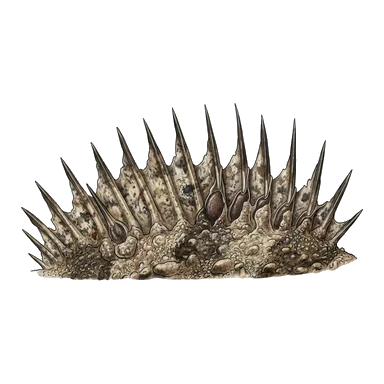 Arantza pozoitsuak
The false stonefish is a venomous fish that lives on the seabed in warm seas. It hides among rocks, coral and rubble, where it waits to ambush passing prey. It is worth knowing about because its back spines can give a painful sting.1
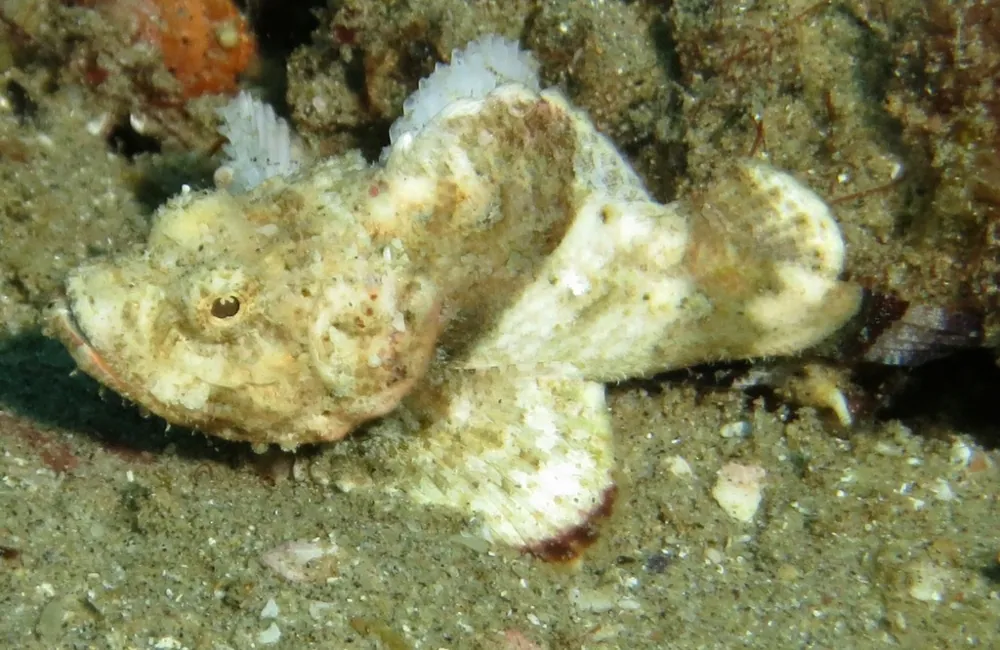
 Nola ezagutu
- Broad head with a wide mouth, a humped back and a tapering body1
- Rough skin with low cone-shaped bumps, spines and tassels1
- Mottled grey and white colouring with reddish-brown blotches, which blends in with stones and coral1
- Twelve venomous spines in the dorsal (back) fin1
- Inner sides of the broad pectoral (side) fins show orange, black and white blotches1
Askotan honekin nahasten da: It closely resembles the reef stonefish (Synanceia verrucosa), which is why the two are easily confused.1
Pozoi-ahalmena
Arantza zorrotzek daramate pozoia. Zapaltzeak edo heltzeak min ematen du.
Zer egiten du bere pozoiak?
Its venomous spines are in the dorsal fin on its back. They can inflict a painful wound when a person is pricked by them.1
Zein arriskutsua da pertsonentzat?
Arriskua pertsonentzat: LarriaBere arantzek zulatzen bazaituzte, joan medikuarengana. Heriotzak oso arraroak dira.An 1829 account by the zoologists Cuvier and Valenciennes says the venom killed two local people in the Moluccas Islands of Indonesia, after what they described as frightful suffering. Local people there avoided the fish because they saw it as a bad omen.1
Zer egiten du beldurtzen denean?
When disturbed by a possible predator, it flares its pectoral fins as a warning.1
 Bere arantzek zulatzen bazaituzte
- Sartu zauria ur beroan, pertsonak erre gabe jasan dezakeen bezain beroan (probatu zure eskuarekin), 30 eta 90 minutu artean. Lortu mediku-laguntza, batez ere harri-arrain eta bastangen kasuan.
Deitu beti lehenik zure larrialdi-zenbakira (112, 000, 911). Lehen sorospenei buruzko orientabide orokorra da hau, ez mediku-aholkua. Lehen sorospenen oinarriak
 Egon seguru
- Ez ukitu, ez harrapatu eta ez zirikatu inoiz animalia basati bat, txikia izan arren, eta lo edo hilda dagoela badirudi ere.
- Utzi tartea. Bat aurkitzen baduzu, egon lasai, egin atzera poliki eta utzi bere bidetik joaten.
- Bere arantzek zulatzen bazaituzte: egon lasai, egon geldi, deitu zure larrialdi-zenbakira (112, 000, 911) edo joan ospitalera azkar. Gogoratu nolakoa zen, argazki batek laguntzen du.
Ez dabil zure atzetik. Pozoia janaria harrapatzeko edo bere burua babesteko erabiltzen du, eta askoz nahiago du ezkutatu. Seguru egoteari buruz gehiago
Munduko zein tokitan?
Zein handia da?
Zein luzea da?
 9 eraikuntza-bloke ilaran jarrita bezain luzea
 igerileku handi baten luzera (50 m) igerian egin lezake 90 segundotan
Zein handia da False stonefish ZUREKIN alderatuta?
Matematika hutsa zure nabigatzailean. Ez da ezer gordetzen, ezta inora bidaltzen ere.
Zein azkarra da?

Datuak
When lit by blue or ultraviolet light, it glows red. This is called biofluorescence, and it may help the fish communicate with others of its kind and aid its camouflage.1
It has twelve venomous spines in its dorsal fin, and it is these spines that make it dangerous.1
Its wide mouth and camouflage let it wait for prey to pass close by before it strikes.1
It is sometimes partly covered with sediment, which helps it stay hidden on the seabed.1
Pozoi-adituentzat
- Izen zientifikoa
- Scorpaenopsis diabolus
- Taldea
- Arrain pozoitsuak
- Familia
- Scorpaenidae2
- Ordena
- Perciformes
- Kontinenteak
- Ozeano Indikoa, Ozeano Barea, Itsaso Gorria, Koralen itsasoa, Filipinetako itsasoa, Andaman itsasoa, Timor eta Arafura itsasoak, Bengalako golkoa, Ozeanoak
- Arriskua pertsonentzat
- 3 / 5: Larria3
Datuak nondik datozen
- Scorpaenopsis diabolus (Wikipedia (CC BY-SA 4.0))
- Scorpaenopsis diabolus (iNaturalist): izenak eta sailkapena.
- Venom Wiki: arrisku-maila, ohiko tamaina eta abiadura-kalkulua geureak dira. Ikusi nola kalkulatzen ditugun: Nola baloratzen dugun arriskua.
Orrialde honetako datu bakoitzak zenbaki bat du, bere iturrira eramaten zaituena. Zerbait gaizki badugu, barkatu, animalien zaleak gara, ez zientzia-aldizkari bat. Esaiguzu [email protected] helbidean eta konponduko dugu.
 Eskorpioia gose da! Venom Wiki pertsona bakar baten proiektua da: doakoa, iragarkirik eta jarraitzailerik gabe. Eskupeko txiki batek sarean mantentzen laguntzen du.Elikatu eskorpioia
Talde bereko gehiago: Arrain pozoitsuak
 Reef stonefishArrain pozoitsuakHil dezakeEz ukitu
 Red lionfishArrain pozoitsuakMedikua behar duEz ukitu
 Estuarine stonefishArrain pozoitsuakHil dezakeEz ukitu
 Short-tail stingrayArrain pozoitsuakHil dezake
 Striped eel catfishArrain pozoitsuakHil dezakeEz ukitu
 Bluespotted ribbontail rayArrain pozoitsuakMedikua behar du
Hemen ere bizi da: Ozeano Indikoa
 Australian box jellyfishMarmokak eta itsasoko izaki ziztatzaileakHilgarriaEz ukitu
 Geography coneKono-barraskiloak eta olagarroakHilgarria
 Greater blue-ringed octopusKono-barraskiloak eta olagarroakHilgarria
 Southern blue-ringed octopusKono-barraskiloak eta olagarroakHilgarria
 Hawksbill sea turtleBeste animalia toxiko batzukHil dezake
 Irukandji jellyfishMarmokak eta itsasoko izaki ziztatzaileakHil dezakeEz ukitu