
 Afrika
 Asia
Asia Europa
 Hego Amerika
 Australia eta Ozeania
 Antartika
 Ozeano Barea
 Ozeano Atlantikoa
 Ozeano Indikoa
 Ozeano Artikoa
 Mediterraneo itsasoa
 Itsaso Gorria
 Karibe itsasoa
 Koralen itsasoa
 Hego Txinako itsasoa
 Filipinetako itsasoa
 Andaman itsasoa
 Ipar itsasoa
 Timor eta Arafura itsasoak
 Bengalako golkoa
 Kaliforniako golkoa
Platypus
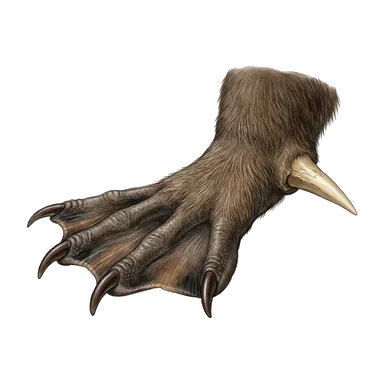 Ezproi pozoitsuak
The platypus is a semiaquatic mammal that lays eggs, and it has a duck-like bill and a beaver-like tail. It lives in eastern Australia, including Tasmania. It is special because it is one of the few venomous mammals.1

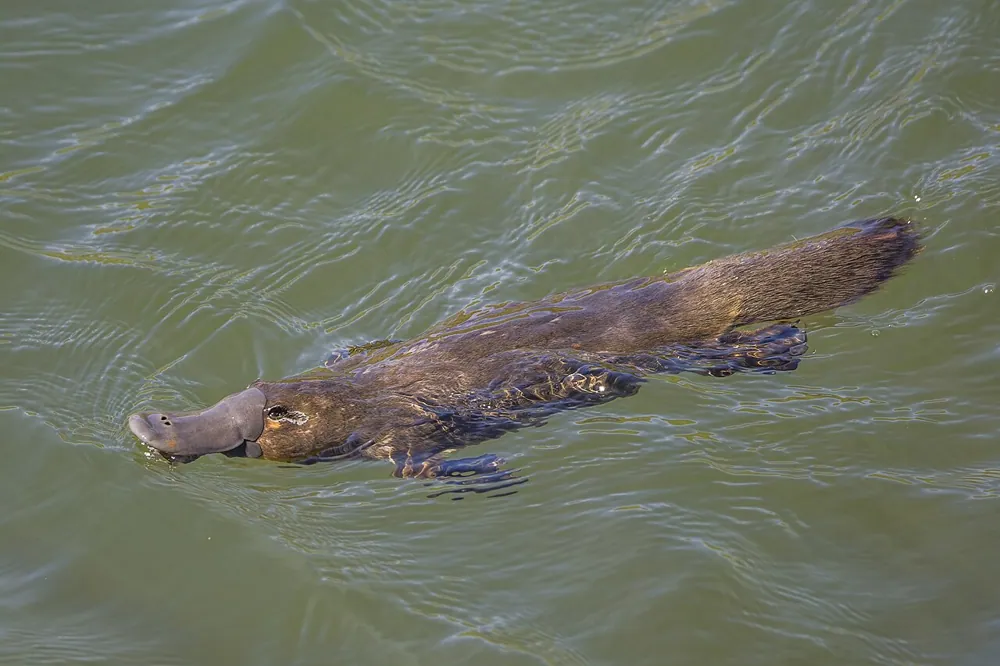
 Nola ezagutu
- Short, dense, brown fur that is waterproof1
- A soft, duck-like bill1
- A wide, flat, furry tail, unlike the scaly tail of a beaver1
- Short legs with webbing, most noticeably on the front feet1
- Small eyes and ears that sit in a groove that closes underwater1
Askotan honekin nahasten da: Early European naturalists were confused by the platypus and thought it was a fake, made by sewing a duck's beak onto a beaver-like body. Its tail looks like a beaver's, but it is furry rather than scaly.1
Pozoi-ahalmena
Atzeko hanketako ezproi zorrotz batek darama pozoia.
Zer egiten du bere pozoiak?
Only the male platypus has venom, which it injects through a spur on each hind foot. The venom is powerful enough to cause extreme pain in humans. The affected limb then develops swelling, which starts at the wound and spreads.1
Zein arriskutsua da pertsonentzat?
Arriskua pertsonentzat: MingarriaBenetan min handia eman dezake, baina ia inoiz ez da larria.The venom is extremely painful.1
 Bere ezproiak zulatzen bazaitu
- Garbitu zauria ondo eta lortu mediku-laguntza.
Deitu beti lehenik zure larrialdi-zenbakira (112, 000, 911). Lehen sorospenei buruzko orientabide orokorra da hau, ez mediku-aholkua. Lehen sorospenen oinarriak
 Egon seguru
- Ez ukitu, ez harrapatu eta ez zirikatu inoiz animalia basati bat, txikia izan arren, eta lo edo hilda dagoela badirudi ere.
- Utzi tartea. Bat aurkitzen baduzu, egon lasai, egin atzera poliki eta utzi bere bidetik joaten.
- Bere ezproiak zulatzen bazaitu: egon lasai, egon geldi, deitu zure larrialdi-zenbakira (112, 000, 911) edo joan ospitalera azkar. Gogoratu nolakoa zen, argazki batek laguntzen du.
Ez dabil zure atzetik. Pozoia janaria harrapatzeko edo bere burua babesteko erabiltzen du, eta askoz nahiago du ezkutatu. Seguru egoteari buruz gehiago
Munduko zein tokitan?
Zein handia da?
Zein luzea da?
Zein astuna da?
 3 banana bata bestearen atzetik jarrita bezain luzea
 16 eraikuntza-bloke ilaran jarrita bezain luzea
 igerileku handi baten luzera (50 m) igerian egin lezake 51 segundotan
Zein handia da Platypus ZUREKIN alderatuta?
Matematika hutsa zure nabigatzailean. Ez da ezer gordetzen, ezta inora bidaltzen ere.
Zein azkarra da?
Datuak
The platypus has about 40,000 electroreceptors in its bill, which detect electric signals from prey in murky water.1
Its fur is one of the most densely packed of any mammal, behind only otters. It also glows cyan and green under ultraviolet light.1
The platypus lacks a functional stomach, because it does not have the genes needed to make pepsin, a digestive enzyme.1
Adult platypuses have no teeth. They have heavily keratinised grinding pads instead, and young platypuses lose their teeth around the time they leave their burrow.1
Its average body temperature is about 32 °C, lower than the 37 °C typical of placental mammals.1
Mito-hauslea
Mitoa: The platypus is a hoax, made by sewing several animals together.
Egia: The platypus is a real species. When the first scientists examined a preserved body in 1799, they doubted it, and George Shaw even used scissors to check for stitches.1
Pozoi-adituentzat
- Izen zientifikoa
- Ornithorhynchus anatinus
- Taldea
- Ugaztun pozoitsuak
- Familia
- Ornithorhynchidae2
- Ordena
- Monotremata
- Kontinenteak
- Australia eta Ozeania
- Kumeak
- The platypus lays eggs instead of giving birth to live young.1
- Nola dagoen naturan
- Near-threatened (IUCN). A November 2020 report recommended upgrading it to threatened under Australia's federal EPBC Act.1
- Arriskua pertsonentzat
- 2 / 5: Mingarria3
Datuak nondik datozen
- Platypus (Wikipedia (CC BY-SA 4.0))
- Ornithorhynchus anatinus (iNaturalist): izenak eta sailkapena.
- Venom Wiki: arrisku-maila, ohiko tamaina eta abiadura-kalkulua geureak dira. Ikusi nola kalkulatzen ditugun: Nola baloratzen dugun arriskua.
Orrialde honetako datu bakoitzak zenbaki bat du, bere iturrira eramaten zaituena. Zerbait gaizki badugu, barkatu, animalien zaleak gara, ez zientzia-aldizkari bat. Esaiguzu [email protected] helbidean eta konponduko dugu.
 Eskorpioia gose da! Venom Wiki pertsona bakar baten proiektua da: doakoa, iragarkirik eta jarraitzailerik gabe. Eskupeko txiki batek sarean mantentzen laguntzen du.Elikatu eskorpioia
Talde bereko gehiago: Ugaztun pozoitsuak
 Common vampire batUgaztun pozoitsuakMin ematen du, besterik ez
 Bengal slow lorisUgaztun pozoitsuakMin ematen du, besterik ez
 Cuban solenodonUgaztun pozoitsuakMin ematen du, besterik ez
 Hispaniolan solenodonUgaztun pozoitsuakMin ematen du, besterik ez
 Javan slow lorisUgaztun pozoitsuakMin ematen du, besterik ez
 Pygmy slow lorisUgaztun pozoitsuakMin ematen du, besterik ez
 Coastal taipan
 Common death adder
 Eastern brown snake
 Inland taipan
 Sydney funnel-web spider
 Tiger snake
_Scottsdale.jpg)