
 Afrika
 Asia
Asia Europa
 Hego Amerika
 Australia eta Ozeania
 Antartika
 Ozeano Barea
 Ozeano Atlantikoa
 Ozeano Indikoa
 Ozeano Artikoa
 Mediterraneo itsasoa
 Itsaso Gorria
 Karibe itsasoa
 Koralen itsasoa
 Hego Txinako itsasoa
 Filipinetako itsasoa
 Andaman itsasoa
 Ipar itsasoa
 Timor eta Arafura itsasoak
 Bengalako golkoa
 Kaliforniako golkoa
Six-eyed sand spider
 Koska
KoskaHahn's six-eyed sand spider is a medium-to-large spider that lives in deserts and sandy places in southern Africa. It rests flat against the ground or under a little loose soil, and its velvety hairs let it blend in almost perfectly. Its bite can be medically significant, but people rarely come across it.1
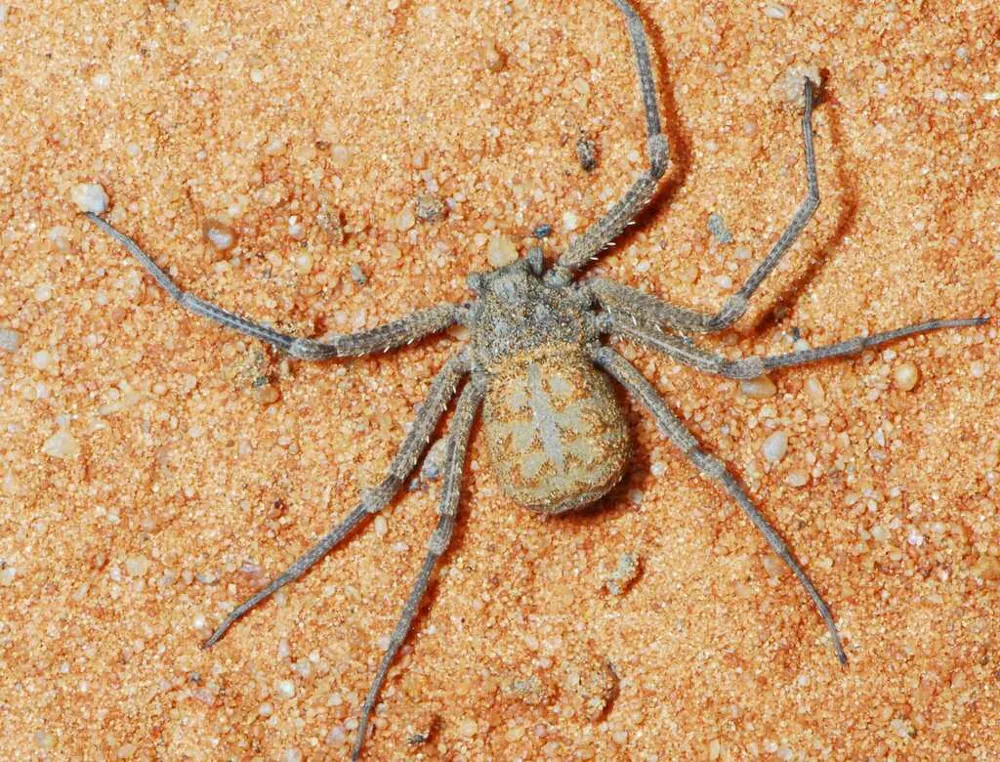
 Nola ezagutu
Pozoi-ahalmena
Pozoia letaginetatik edo hortzetatik ateratzen da kosk egiten duenean.
Zer egiten du bere pozoiak?
All Hexophthalma spiders produce venom with dermonecrotic effects, which means it can destroy skin and tissue. The damage is caused by proteins related to sphingomyelinase D, which are found in the venom of all sicariid spiders. For this species, the detailed effects on humans are unknown, because its venom has mainly been studied in the laboratory.1
Zein arriskutsua da pertsonentzat?
Arriskua pertsonentzat: LarriaKoska batek medikua behar du. Heriotzak oso arraroak dira.The spider is capable of a medically significant bite. Serious or even life-threatening wounds are possible, especially if the wound becomes infected or the venom spreads through the body. No bites from this spider in southern Africa have been proven, and contact with people is considered unlikely.1
Zer egiten du beldurtzen denean?
It relies on stillness and camouflage rather than running, and it can shift quickly across loose sand when disturbed.1
 Kosk egiten badu
- Garbitu koska eta jarri izotz-poltsa bat gainean minerako. Lortu mediku-laguntza mina handia bada, zabaltzen bada edo pertsona gaizki sentitzen bada.
Deitu beti lehenik zure larrialdi-zenbakira (112, 000, 911). Lehen sorospenei buruzko orientabide orokorra da hau, ez mediku-aholkua. Lehen sorospenen oinarriak
 Egon seguru
- Ez ukitu, ez harrapatu eta ez zirikatu inoiz animalia basati bat, txikia izan arren, eta lo edo hilda dagoela badirudi ere.
- Utzi tartea. Bat aurkitzen baduzu, egon lasai, egin atzera poliki eta utzi bere bidetik joaten.
- Batek kosk egiten badizu: egon lasai, egon geldi, deitu zure larrialdi-zenbakira (112, 000, 911) edo joan ospitalera azkar. Gogoratu nolakoa zen, argazki batek laguntzen du.
Ez dabil zure atzetik. Pozoia janaria harrapatzeko edo bere burua babesteko erabiltzen du, eta askoz nahiago du ezkutatu. Seguru egoteari buruz gehiago
Munduko zein tokitan?
Zein handia da?
Zein luzea da?
 zure hatz txikia baino laburragoa
 100 metro 330 segundotan egin litzake (gizakirik azkarrenak 9,6 behar ditu)
Zein handia da Six-eyed sand spider ZUREKIN alderatuta?
Matematika hutsa zure nabigatzailean. Ez da ezer gordetzen, ezta inora bidaltzen ere.
Zein azkarra da?


Datuak
Datuak nondik datozen
- Hexophthalma hahni (Wikipedia (CC BY-SA 4.0))
- Hexophthalma hahni (iNaturalist): izenak eta sailkapena.
- Venom Wiki: arrisku-maila, ohiko tamaina eta abiadura-kalkulua geureak dira. Ikusi nola kalkulatzen ditugun: Nola baloratzen dugun arriskua.
Orrialde honetako datu bakoitzak zenbaki bat du, bere iturrira eramaten zaituena. Zerbait gaizki badugu, barkatu, animalien zaleak gara, ez zientzia-aldizkari bat. Esaiguzu [email protected] helbidean eta konponduko dugu.
 Eskorpioia gose da! Venom Wiki pertsona bakar baten proiektua da: doakoa, iragarkirik eta jarraitzailerik gabe. Eskupeko txiki batek sarean mantentzen laguntzen du.Elikatu eskorpioia
 Mediterranean black widow
 Brown widow
 Noble false widow
 Darwin's bark spider
 Wasp spider
 Black button spider
 Black mamba
 Deathstalker
 Egyptian cobra
 Puff adder
 Boomslang
 Fat-tailed scorpion