
 Afirik
 Aazi
Aazi Orop
Orop Amerik Sud
 Ostarali e Oseyani
 Antarktik
 Geeci Pasifik
 Geeci Atlantik
 Geeci Enndo
 Geeci Arktik
 Geeci Mediteraane
 Geeci Boɗeewi
 Geeci Karayib
 Geeci Korayl
 Geeci Siin Sud
 Geeci Filipiin
 Geeci Andaman
 Geeci Nord
 Geeci Timor e Arafura
 Gulf Bengal
 Gulf Kaliforni
Asian common toad
 Tooke nder nguru mumNo ñaama: TeewuTookeejo ɓanndu, wanaa naatnoowo tooke
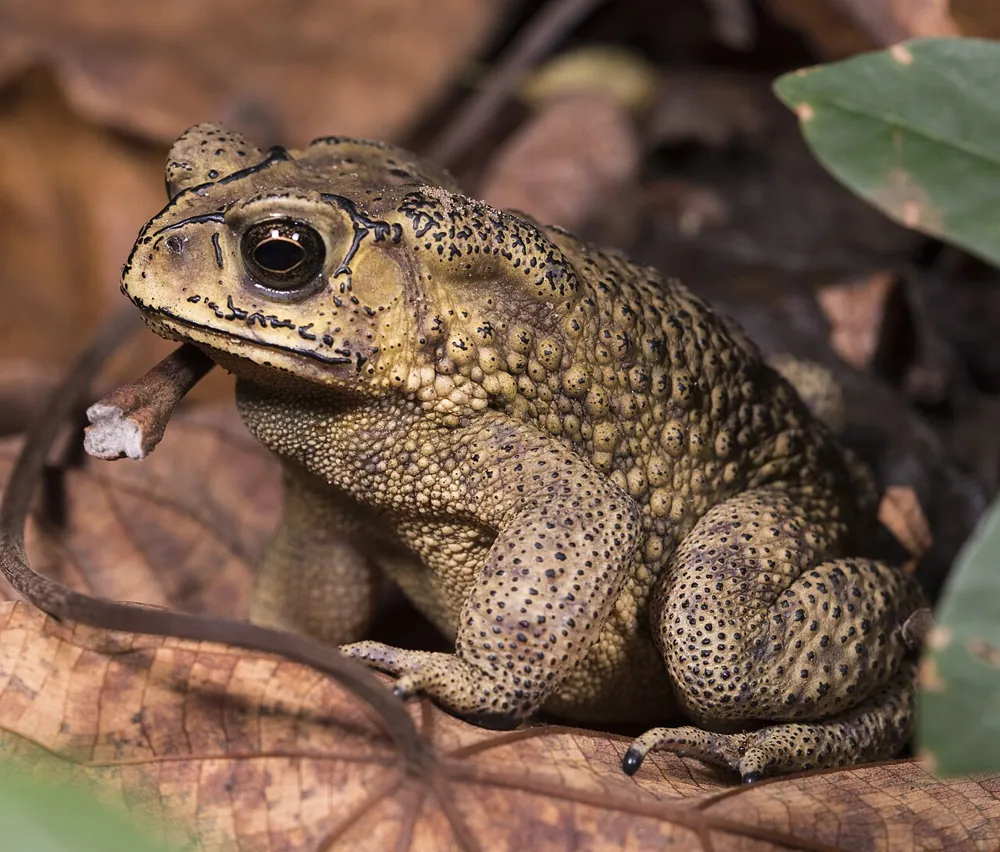
The Asian common toad is a large toad found across much of South and Southeast Asia. It grows to about 20 cm long and is often seen at night under street lamps. It matters because it has spread to places where it does not belong, and experts worry it could harm local wildlife.1

 Hono anndirtee ngal
- Grows to about 20 cm long1
- Back is yellowish or brownish, with black spines and ridges1
- Large, kidney-shaped or elongated parotoid glands behind the eyes, which are prominent1
- Ear drum (tympanum) is very distinct, at least two-thirds the width of the eye1
- Short, blunt snout and several bony ridges on top of the head1
Doole tooke
Nguru mum ko tooke. No musiiba meemugol ngal, meemugol ngal e ɗemngal walla ñaamugol ngal.
Ko honɗun tooke ɓanndu mum waɗata?
Its parotoid glands secrete milky white bufotoxin, a toxin, from its back. It uses this to deter predators. The toxin would beyond reasonable doubt severely affect native predators such as snakes, goannas and quolls.1
Hono musiiba mum heewiri e yimɓe?
Musiiba e yimɓe: Musiiba mawɗoSi neɗɗo meemii walla ñaamii ngal, yahu ka doktoro. Maayde no famɗi sanne.Ko honɗun ngal waɗata si ngal hulii?
Its glands in the back release toxin to deter predators.1
 Si neɗɗo meemii walla ñaamii ngal
- Si neɗɗo meemii gooto e majji: loot juuɗe ɗen no moƴƴi, wota meem gite walla hunuko. Si paykun walla kullal suudu meemii gooto e ɗemngal walla ñaamii gooto: noddu centre antipoison walla nimero ballal.
Adii fow noddu nimero ballal (112, 000, 911). Ɗum ko anndinal ballal adiingal, wanaa saaraangal doktoro. Ko adii nder ballal adiingal
 Reen hoore maa
- Wota a meem, wota a nanngu, wota a jalnu kullal ladde haa abada, hay si ko tokooso, hay si no yi'ee no ɗaanii walla maayii.
- Accu ngal nokku. Si a fotti e ngal, deeƴu, ruttu ɓaawo seeɗa seeɗa, accu ngal yaha laawol mum.
- Si a meemii walla a ñaamii ngal: wota a moomtu gite maa walla hunuko maa, loot juuɗe maa, heɓu ballal doktoro.
Ngal faalaaka gaañugol ma. Tooke mum woodi tun ngam wota huunde ñaam ngal. Ko ɓeydi fii reenugol hoore maa
Hoto nder aduna?
Hono mawniri?
Hono juutiri?
 juuti no kaaɗe mahirɗe 6 e diisa gooto
 no waawi taccugol meeteruuji 100 nder segonde 180 (neɗɗo ɓurɗo yaawugol sokli 9,6)
Hono Asian common toad mawniri, si fooɗondiraama e AN?
Ko limoore tun nder navigateur maa. Alaa ko danndetee walla ko neldetee ka nokku woo.
Hono yaawiri?


Humpito
It has been described as one of Australia's '10 most unwanted' species, and as potentially more damaging than the cane toad.1
Madagascar's native predators lack resistance to its toxins, which could affect local wildlife there.1
Tadpoles have been shown to be able to recognise their kin.1
Tadpoles grown in sibling groups metamorphosed faster than those kept in mixed groups.1
Ngam ganduɓe tooke
Ɗo humpitooji ɗin iwri
- Duttaphrynus melanostictus (Wikipedia (CC BY-SA 4.0))
- Duttaphrynus melanostictus (iNaturalist): inɗe e ŋoordingol (classification).
- Venom Wiki: tolno musiiba, mawnugol aadaajo e miijo yaawugol ko amen. Ndaar no min ƴeewtirta ɗum: Hono min tolnirta musiiba.
Kala humpito nder ngoo hello no jogii limoore hollirnde iwdi mum. Si min juumii, yaafo, min ko yiɗɓe kulle, wanaa jaaynde ganndal. Haalan min e [email protected], min feewnitan.
 Yaare nden no weelaa! Venom Wiki ko golle neɗɗo gooto: ko yoɓetaake, alaa piiblisite, alaa reweteeɓe. Kopporde tokooso no walla heddingol ɗum e enternet.Ñaamnu yaare nden
Ko ɓeydi e fedde wootere: Paaɓe tooke, krapooji e tritonuuji
 Japanese fire-bellied newtPaaɓe tooke, krapooji e tritonuujiNo sokli doktoroWota a meem
 Common toadPaaɓe tooke, krapooji e tritonuujiNo muusi tunWota a meem
 Oriental fire-bellied toadPaaɓe tooke, krapooji e tritonuujiAlaa musiiba
 Asiatic toadPaaɓe tooke, krapooji e tritonuujiNo muusi tunWota a meem
 Emperor newtPaaɓe tooke, krapooji e tritonuujiNo muusi tunWota a meem
 Himalayan newtPaaɓe tooke, krapooji e tritonuujiNo muusi tunWota a meem
 Yaare oolnde maayde
 Kobra Enndo
 Wipeeri cerkeeje siy Enndo
 Kobra laamɗo
 Wipeeri fuufoowndi
 Bowngal Russell
.jpg)