
 Afirik
 Aazi
Aazi Orop
Orop Amerik Sud
 Ostarali e Oseyani
 Antarktik
 Geeci Pasifik
 Geeci Atlantik
 Geeci Enndo
 Geeci Arktik
 Geeci Mediteraane
 Geeci Boɗeewi
 Geeci Karayib
 Geeci Korayl
 Geeci Siin Sud
 Geeci Filipiin
 Geeci Andaman
 Geeci Nord
 Geeci Timor e Arafura
 Gulf Bengal
 Gulf Kaliforni
Fringed ornamental tarantula
 Ŋatgol
The fringed ornamental tarantula is a large spider that lives high in trees. It is found only in Sri Lanka, and its bright, patterned body makes it one of the most striking tarantulas. Its bite is considered medically significant, so it is worth knowing about.1

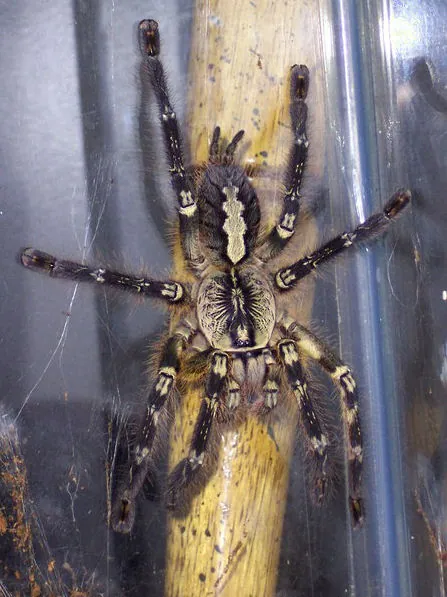
 Hono anndirtee ngal
- The top of the body (carapace) is greenish yellow or purplish.1
- Females have yellow undersides, and the thighs of the third and fourth pairs of legs are black with a large blue-grey spot.1
- Males are greenish brown, and their markings are less prominent.1
- Females can reach a legspan of about 25 cm.1
No jiibondiree e: It is easily told apart from other tiger spiders by its greenish yellow or purplish top side.1
Doole tooke ŋatgol
Tooke no yaltira ñiiƴe mum tuma ngal ŋatata.
Ko honɗun tooke mum waɗata (ŋatgol walla jukkugol)?
The venom may cause intense pain and extreme muscle cramping. This is judged from the experiences of keepers who have been bitten by this species, rather than from recorded cases of human harm.1
Hono musiiba mum heewiri e yimɓe?
Musiiba e yimɓe: Musiiba mawɗoŊatgol no haani doktoro. Maayde no famɗi sanne.No death from a tarantula bite has ever been recorded. This species is still considered to have a medically significant bite because of the pain and cramping its venom may cause.1
 Si no ŋata
- Loot nokku ŋataaɗo on, ɓuuɓnu. Heɓu ballal doktoro si muusu ngu no tiiɗi walla neɗɗo on no yi'a o selliraali.
Adii fow noddu nimero ballal (112, 000, 911). Ɗum ko anndinal ballal adiingal, wanaa saaraangal doktoro. Ko adii nder ballal adiingal
 Reen hoore maa
- Wota a meem, wota a nanngu, wota a jalnu kullal ladde haa abada, hay si ko tokooso, hay si no yi'ee no ɗaanii walla maayii.
- Accu ngal nokku. Si a fotti e ngal, deeƴu, ruttu ɓaawo seeɗa seeɗa, accu ngal yaha laawol mum.
- Si gooto e majji ŋatii ma: deeƴu, wota a dillu, noddu nimero ballal (112, 000, 911) walla yahu lopitaan law. Jogo e hakkille no ngal nanndi, natal no walla.
Ngal faalaaka gaañugol ma. Ngal no huutora tooke mum ngam nanngugol ñaamdu walla reenugol hoore mum, ngal ɓuri yiɗugol suuɗaade. Ko ɓeydi fii reenugol hoore maa
Hoto nder aduna?
Hono mawniri?
Hono juutiri?
 juuti no kaaɗe mahirɗe 8 e diisa gooto
 no waawi taccugol meeteruuji 100 nder segonde 170 (neɗɗo ɓurɗo yaawugol sokli 9,6)
Hono Fringed ornamental tarantula mawniri, si fooɗondiraama e AN?
Ko limoore tun nder navigateur maa. Alaa ko danndetee walla ko neldetee ka nokku woo.
Hono yaawiri?


Humpito
It may live in a mutually beneficial relationship with frogs such as Ramanella nagaoi, sharing tree holes that can contain eggs or juveniles from the spider, the frog, or both.1
In a related observation, a frog (Chiasmocleis ventrimaculata) and a different tarantula (Xenesthis immanis) were seen together, with the spider protecting the frog from predators and the frog guarding the spider's eggs from ants.1
When tree holes are scarce, several of these spiders may live together in the same tree.1
Its legspan is probably the second largest in its genus, behind Poecilotheria rufilata.1
Ɗo humpitooji ɗin iwri
- Poecilotheria ornata (Wikipedia (CC BY-SA 4.0))
- Poecilotheria ornata (iNaturalist): inɗe e ŋoordingol (classification).
- Venom Wiki: tolno musiiba, mawnugol aadaajo e miijo yaawugol ko amen. Ndaar no min ƴeewtirta ɗum: Hono min tolnirta musiiba.
Kala humpito nder ngoo hello no jogii limoore hollirnde iwdi mum. Si min juumii, yaafo, min ko yiɗɓe kulle, wanaa jaaynde ganndal. Haalan min e [email protected], min feewnitan.
 Yaare nden no weelaa! Venom Wiki ko golle neɗɗo gooto: ko yoɓetaake, alaa piiblisite, alaa reweteeɓe. Kopporde tokooso no walla heddingol ɗum e enternet.Ñaamnu yaare nden
Ko ɓeydi e fedde wootere: Taranteeli e funnel-web
 Gooty sapphire tarantulaTaranteeli e funnel-webNo sokli doktoro
 Indian ornamental tarantulaTaranteeli e funnel-webNo sokli doktoro
 Cobalt blue tarantulaTaranteeli e funnel-webNo muusi tun
 Chinese bird spiderTaranteeli e funnel-webNo sokli doktoro
 Chinese black earth tiger tarantulaTaranteeli e funnel-webNo sokli doktoro
 Japanese funnel-web spiderTaranteeli e funnel-webNo sokli doktoro
 Yaare oolnde maayde
 Kobra Enndo
 Wipeeri cerkeeje siy Enndo
 Kobra laamɗo
 Wipeeri fuufoowndi
 Bowngal Russell