
 Afirik
 Aazi
Aazi Orop
Orop Amerik Sud
 Ostarali e Oseyani
 Antarktik
 Geeci Pasifik
 Geeci Atlantik
 Geeci Enndo
 Geeci Arktik
 Geeci Mediteraane
 Geeci Boɗeewi
 Geeci Karayib
 Geeci Korayl
 Geeci Siin Sud
 Geeci Filipiin
 Geeci Andaman
 Geeci Nord
 Geeci Timor e Arafura
 Gulf Bengal
 Gulf Kaliforni
Mamushi
 Ŋatgol
The mamushi is a pit viper, a type of snake that has heat-sensing pits between its eyes and nostrils. It lives in Japan, in places such as swamps, meadows and farmland. It matters because its bite is one of the most dangerous of Japan's snakes.1



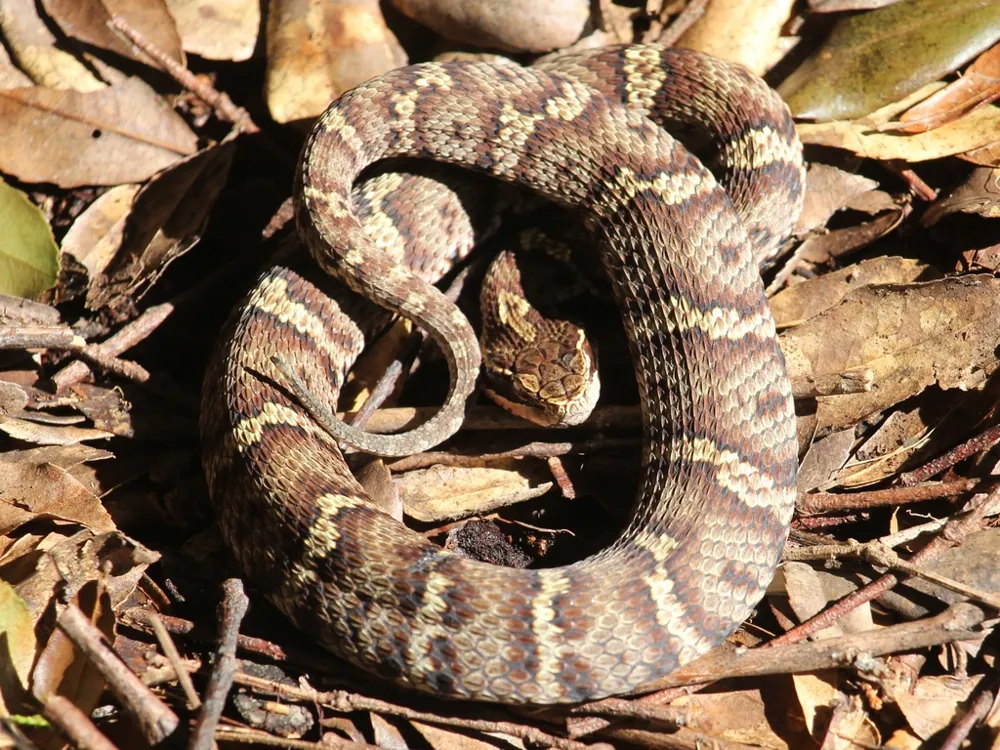
 Hono anndirtee ngal
- Background colour is pale grey, reddish-brown or yellow-brown.1
- A series of irregular blotches runs along the body. Each blotch has a black border and often a lighter centre.1
- The head is dark brown or black, with beige or pale-grey sides.1
- Adults are typically 45 to 81 cm long.1
- It has excellent camouflage and often hides among plants or leaf litter.1
No jiibondiree e: It is similar to the cottonmouths and copperheads (Agkistrodon) of the Americas, and it was long considered part of the same group.1
Doole tooke ŋatgol
Tooke no yaltira ñiiƴe mum tuma ngal ŋatata.
Ko honɗun tooke mum waɗata (ŋatgol walla jukkugol)?
Its venom is mostly haemolytic, meaning it breaks down red blood cells. It also contains two neurotoxins, which attack the nerves, and an anticoagulant, which stops blood from clotting. Reported effects include kidney failure, visual disturbances and palsy (paralysis).1
Hono musiiba mum heewiri e yimɓe?
Musiiba e yimɓe: Musiiba sanneNo waawi warugol neɗɗo mo safraaka.About 2000 to 3000 people in Japan are bitten by a mamushi each year. Approximately 10 die annually. Severe bites require intensive care, and typical bite victims need about one week of hospital treatment.1
 Kabaaru moƴƴo: doktoroɓe no njogii lekki (sérum antivenimeux) walla safaara ngam ɗum.1
 Si no ŋata
- Treatment is given in hospital. It involves cutting the wound to remove venom and injecting mamushi antivenom. Pregnant women who are bitten have had miscarriages, so medical care is essential.1
- Haɗu neɗɗo on dillagol, deeƴnu mo, jogo koyngal walla jungo ŋataaɗo on e toownde ɓernde, ittu baagiiji e ko tiiɗi fow, yahra mo lopitaan law.
Adii fow noddu nimero ballal (112, 000, 911). Ɗum ko anndinal ballal adiingal, wanaa saaraangal doktoro. Ko adii nder ballal adiingal
 Reen hoore maa
- Wota a meem, wota a nanngu, wota a jalnu kullal ladde haa abada, hay si ko tokooso, hay si no yi'ee no ɗaanii walla maayii.
- Accu ngal nokku. Si a fotti e ngal, deeƴu, ruttu ɓaawo seeɗa seeɗa, accu ngal yaha laawol mum.
- Si gooto e majji ŋatii ma: deeƴu, wota a dillu, noddu nimero ballal (112, 000, 911) walla yahu lopitaan law. Jogo e hakkille no ngal nanndi, natal no walla.
Ngal faalaaka gaañugol ma. Ngal no huutora tooke mum ngam nanngugol ñaamdu walla reenugol hoore mum, ngal ɓuri yiɗugol suuɗaade. Ko ɓeydi fii reenugol hoore maa
Hoto nder aduna?
Hono mawniri?
Hono juutiri?
 juuti no ulluuɗi suudu 1,5, hinere haa lawol
 juuti no banaanaaji 5 jokkondirɗi
 no waawi taccugol meeteruuji 100 nder segonde 110 (neɗɗo ɓurɗo yaawugol sokli 9,6)
Hono Mamushi mawniri, si fooɗondiraama e AN?
Ko limoore tun nder navigateur maa. Alaa ko danndetee walla ko neldetee ka nokku woo.
Hono yaawiri?


Humpito
Recovery takes a long time. Bite victims may need several months to fully recover, even after hospital treatment and weeks of follow-up care.1
It is highly resistant to its own venom because its blood contains neutralising factors, including phospholipase A2 (PLA2) inhibitors.1
Its beta-toxin acts before the nerve junction, so anticholinesterase drugs cannot block or treat its effects.1
Its venom contains a peptide called ablomin, which is very similar in amino acid sequence to helothermine, a venom peptide of the Mexican beaded lizard.1
It is considered one of the most venomous snakes in Japan, along with the yamakagashi and the Okinawan habu.1
Its venom varies very little across Japan in either potency or effects.1
Ɗo humpitooji ɗin iwri
- Mamushi (Wikipedia (CC BY-SA 4.0))
- Gloydius blomhoffii (iNaturalist): inɗe e ŋoordingol (classification).
- Venom Wiki: tolno musiiba, mawnugol aadaajo e miijo yaawugol ko amen. Ndaar no min ƴeewtirta ɗum: Hono min tolnirta musiiba.
Kala humpito nder ngoo hello no jogii limoore hollirnde iwdi mum. Si min juumii, yaafo, min ko yiɗɓe kulle, wanaa jaaynde ganndal. Haalan min e [email protected], min feewnitan.
 Yaare nden no weelaa! Venom Wiki ko golle neɗɗo gooto: ko yoɓetaake, alaa piiblisite, alaa reweteeɓe. Kopporde tokooso no walla heddingol ɗum e enternet.Ñaamnu yaare nden
 Brown spotted pit viper
 Habu
Habu Hump-nosed viper
 Hundred-pace viper
 Malayan pit viper
 Mangshan pit viper
 Deathstalker
 Indian cobra
 Indian saw-scaled viper
 King cobra
 Puff adder
 Bowngal Russell