
 Afirik
 Asiya
Asiya Turai
Turai Amerik Worgo
 Australiya e Oseaniya
 Antarktika
 Baharu Pasifik
 Baharu Atlantik
 Baharu Indiya
 Baharu Arktik
 Baharu Mediterane
 Baharu Boɗeeru
 Baharu Karibiya
 Baharu Koral
 Baharu Ciina Worgo
 Baharu Filipin
 Baharu Andaman
 Baharu Rewo
 Baharu Timor e Arafura
 Baharu Bengal
 Baharu Kaliforniya
European purseweb spider
 Ina ŋata
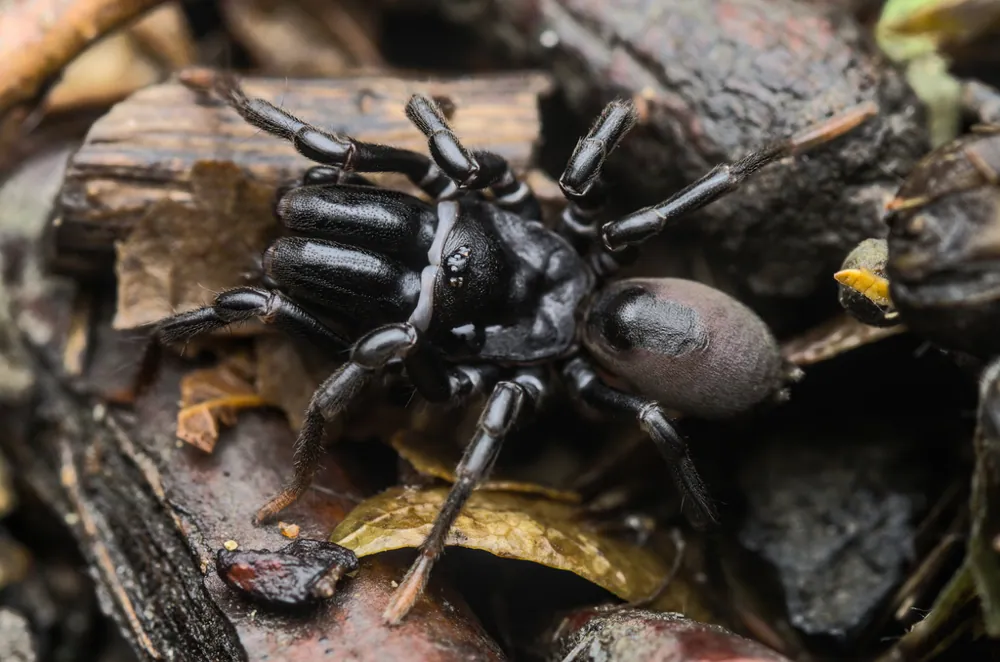
The European purseweb spider is a small, hidden spider that lives in the ground. It is found in mainland Europe, Great Britain and North Africa, and it is the only mygalomorph spider found in the Nordic countries and the United Kingdom. It is special because it builds a silk tube partly under the ground and catches insects that walk onto it.1

 No anndirto nde
- Black or brownish in colour1
- Not particularly large: males are 7–9 mm and females are 10–15 mm long1
- Builds a silk tube that is partly underground, with the part above ground covered in leaves and other debris1
- Usually stays inside its web and does not leave except to mate1
- Young spiderlings are often very lightly coloured1
Ina jiiɓindiree e: It looks much like Atypus piceus. Spiderlings of the European purseweb spider are often very lightly coloured, and its three-part posterior spinnerets do not have a light blot, which helps tell them apart.1
Doole tooke
Tooke ina yalta e ñiiƴe mum si nde ŋatii.
Hol no nde woni bone e yimɓe?
Bone e yimɓe: HoyɗoNo fiɗol nyaaku walla ɓuri famɗude. Ɓadii alaa bone e yimɓe. Si nde ŋatii
- Lootu ŋatol ngol, ɓuuɓnu ngol. Heɓu ballal doktaa si muusu ina tiiɗi walla neɗɗo oo ɓanndu mum welaani.
Sahaa fof, noddu lamba ballal yaawngal (112, 000, 911) ko adii. Ɗum ko ballal arano kuuɓal, wonaa wasiyya doktaa. Aslu ballal arano
 Reen hoore maa
- Taa memu, taa nanngu, taa aaɓnu dabbaare ladde abada, hay pamaro, hay si ina wayi no ɗaanii walla maayii.
- Accu nde nokku. Si a fottii e gooto, deeƴu, ruttu caggal seeɗa seeɗa, accu nde yaha laawol mum.
- Si gooto e majji ŋatii ma: deeƴu, taa dillu, noddu lamba ballal yaawngal (112, 000, 911) walla yah asibiti law. Siftor no nde wayri, foto ina walla.
Nde ɗaɓɓaaki ma. Nde huutora tooke mum ngam nanngude ñaamdu walla reende hoore mum, nde ɓuri yiɗde suuɗaade. Ɓeydu anndude no reentorto
Hol to e aduna?
Hol no nde mawni?
Hol no nde juuti?
 ɓuri famɗude njuuteendi feɗeendu maa pamaru
 ina waawi dogde meeter 100 nder sakan 330 (neɗɗo ɓurɗo yaawde ina haani 9,6)
Hol no European purseweb spider mawni, fottindaade e AAN?
Hiisa tan nder browser maa. Alaa ko mooftetee walla ko neletee.
Hol no nde yaawi?


Anndal
Its fangs point straight down rather than crossing, as in other mygalomorph spiders.1
Autumn is its mating season. The male enters the female's burrow, where they live together until the male dies soon after mating.1
It is a mygalomorph spider, and it is the only mygalomorph spider found in the Nordic countries and the United Kingdom.1
It becomes sexually mature at about 4 years old.1
Feññinoowo goonga
Fenaande: The European purseweb spider lives in Ireland.
Goonga: It was once listed for Ireland, based on a single silk tube found in 1896. This is now thought to be most likely from a plant nursery import, and the species is no longer recognised as living on the island.1
Ɗo anndal iwi
- Atypus affinis (Wikipedia (CC BY-SA 4.0))
- Atypus affinis (iNaturalist): inɗe e tolnugol.
- Venom Wiki: darja bone, mawnude woowaaɗo e miijo yaawre ko amen. Ndaar no min hiisirta ɗum: No min betiri bone.
Kala anndal e ngoo hello ina jogii limre hollirnde iwdi mum. Si min juumii, accu min, min yiɗɓe dabbaaji, wonaa jaridaa ganndal. Wiy min e [email protected] min feewnitay.
 Yaare nden ina heege! Venom Wiki ko golle neɗɗo gooto: meere, tawa tallaaji alaa, trackers alaa. Ballal pamarngal ina walla heddinde ɗum e internet.Ñaamnu yaare nden
Goɗɗi e fedde wootere: Tarantula e funnel-web
 Gibraltar funnel-web spiderTarantula e funnel-webIna muusa tan
 Andalusian tarantulaTarantula e funnel-webAlaa bone
 Gizo-gizo funnel-web SydneyTarantula e funnel-webWarooɗo
 Goliath birdeaterTarantula e funnel-webIna muusa tan
 Mexican redknee tarantulaTarantula e funnel-webAlaa bone
 Northern tree-dwelling funnel-web spiderTarantula e funnel-webWarooɗo
Ina wona kadi e: Turai
 Common European adderViper e adderIna haani doktaa
 Spanish flyDabbaaji goɗɗi tooke memde walla ñaamdeIna haani doktaaTaa memu
 Common waspNyaakuuje, zanzaro e zanzaro mawɓeIna muusa tan
 European hornetNyaakuuje, zanzaro e zanzaro mawɓeIna muusa tan
 Fire salamanderKwaɗoji tooke, kwaɗoji mawɗi e newtIna muusa tanTaa memu
 Western honey beeNyaakuuje, zanzaro e zanzaro mawɓeIna muusa tan