
 Afirik
 Asiya
Asiya Turai
Turai Amerik Worgo
 Australiya e Oseaniya
 Antarktika
 Baharu Pasifik
 Baharu Atlantik
 Baharu Indiya
 Baharu Arktik
 Baharu Mediterane
 Baharu Boɗeeru
 Baharu Karibiya
 Baharu Koral
 Baharu Ciina Worgo
 Baharu Filipin
 Baharu Andaman
 Baharu Rewo
 Baharu Timor e Arafura
 Baharu Bengal
 Baharu Kaliforniya
Italian scorpion
 Ina fiɗa
The Italian scorpion is a small scorpion that lives around the Mediterranean and in parts of southern Europe. It is the largest scorpion in its genus, and it often lives in and around buildings and ruins. It is considered harmless to people.1



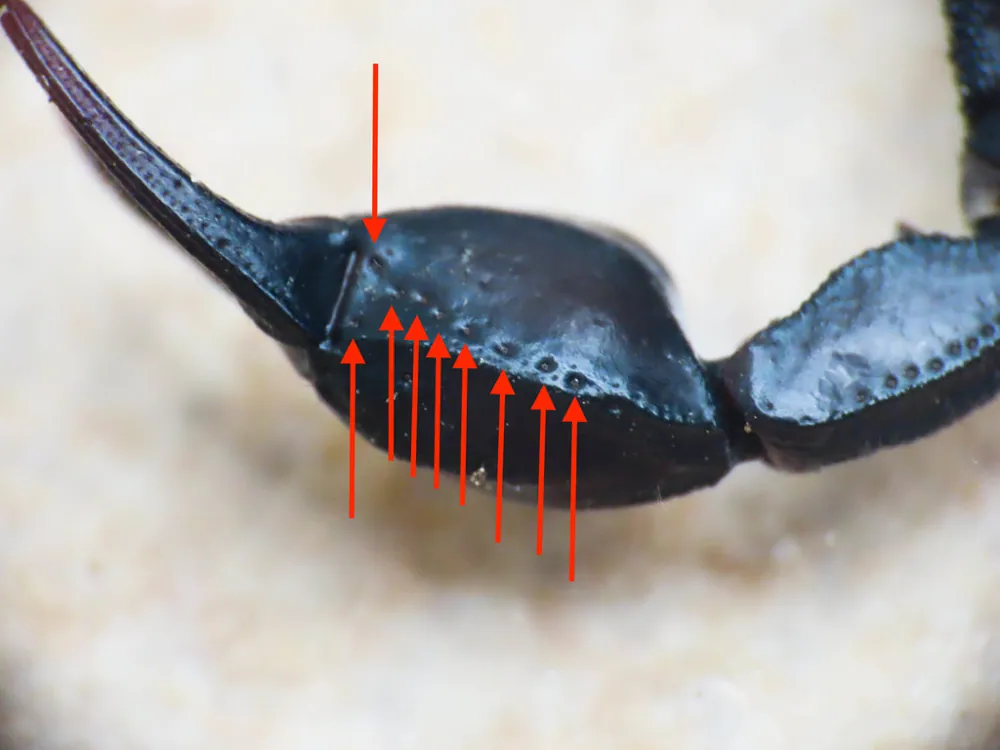
 No anndirto nde
- Colour ranges from dark reddish brown to bluish black.1
- The underside and tail tip (telson) are slightly lighter than the rest of the body.1
- It is the largest species in its genus, with adults reaching up to 5 cm long.1
- It is nocturnal, so it is mostly active at night and hides during the day.1
Ina jiiɓindiree e: It is sometimes confused with Tetratrichobothrius flavicaudis. Scorpions in the genus Euscorpius are generally very similar, so identification is often difficult. Its larger size can help.1
Doole tooke
Tooke ina yalta e fiɗirgal.
Hol no nde woni bone e yimɓe?
Bone e yimɓe: HoyɗoNo fiɗol nyaaku walla ɓuri famɗude. Ɓadii alaa bone e yimɓe.It rarely uses its stinger and is considered harmless. It has a mild temperament and spends most of its life hiding.1
 Si nde fiɗii
- If stung, it is enough to clean and disinfect the wound.1
- Ɓuuɓnu fiɗol ngol e kankara, deeƴin neɗɗo oo taa o dilla. Heɓu ballal doktaa law, haa teeŋti e sukaaɓe: yaaje goɗɗe ina mbaroo sukaaɓe.
Sahaa fof, noddu lamba ballal yaawngal (112, 000, 911) ko adii. Ɗum ko ballal arano kuuɓal, wonaa wasiyya doktaa. Aslu ballal arano
 Reen hoore maa
- Taa memu, taa nanngu, taa aaɓnu dabbaare ladde abada, hay pamaro, hay si ina wayi no ɗaanii walla maayii.
- Accu nde nokku. Si a fottii e gooto, deeƴu, ruttu caggal seeɗa seeɗa, accu nde yaha laawol mum.
- Si gooto e majji fiɗii ma: deeƴu, taa dillu, noddu lamba ballal yaawngal (112, 000, 911) walla yah asibiti law. Siftor no nde wayri, foto ina walla.
Nde ɗaɓɓaaki ma. Nde huutora tooke mum ngam nanngude ñaamdu walla reende hoore mum, nde ɓuri yiɗde suuɗaade. Ɓeydu anndude no reentorto
Hol to e aduna?
Hol no nde mawni?
Hol no nde juuti?
 ɓuri famɗude njuuteendi feɗeendu maa pamaru
 ina waawi dogde meeter 100 nder sakan 300 (neɗɗo ɓurɗo yaawde ina haani 9,6)
Hol no Italian scorpion mawni, fottindaade e AAN?
Hiisa tan nder browser maa. Alaa ko mooftetee walla ko neletee.
Hol no nde yaawi?


Anndal
Females carry their young on their back. The young leave their mother after their first moult, which happens about 6 or 7 days after birth.1
In the wild it is thought to live between 4 and 8 years, and one individual in a laboratory lived for over 10 years.1
Males need 5 to 6 moults to become adults, and females need 6 to 7.1
Feññinoowo goonga
Fenaande: Italian scorpions are dangerous to people because they have a sting.
Goonga: It is considered harmless. It rarely uses its stinger, and a sting only needs cleaning and disinfecting.1
Ɗo anndal iwi
- Euscorpius italicus (Wikipedia (CC BY-SA 4.0))
- Euscorpius italicus (iNaturalist): inɗe e tolnugol.
- Venom Wiki: darja bone, mawnude woowaaɗo e miijo yaawre ko amen. Ndaar no min hiisirta ɗum: No min betiri bone.
Kala anndal e ngoo hello ina jogii limre hollirnde iwdi mum. Si min juumii, accu min, min yiɗɓe dabbaaji, wonaa jaridaa ganndal. Wiy min e [email protected] min feewnitay.
 Yaare nden ina heege! Venom Wiki ko golle neɗɗo gooto: meere, tawa tallaaji alaa, trackers alaa. Ballal pamarngal ina walla heddinde ɗum e internet.Ñaamnu yaare nden
Goɗɗi e fedde wootere: Yaaje
 Common yellow scorpion
 European yellow-tailed scorpion
 Greek giant scorpion
 Iberian yellow scorpion
 Mediterranean checkered scorpion
 Blind Pyrenean scorpion
Ina wona kadi e: Turai
 Common European adderViper e adderIna haani doktaa
 Spanish flyDabbaaji goɗɗi tooke memde walla ñaamdeIna haani doktaaTaa memu
 Common waspNyaakuuje, zanzaro e zanzaro mawɓeIna muusa tan
 European hornetNyaakuuje, zanzaro e zanzaro mawɓeIna muusa tan
 Fire salamanderKwaɗoji tooke, kwaɗoji mawɗi e newtIna muusa tanTaa memu
 Western honey beeNyaakuuje, zanzaro e zanzaro mawɓeIna muusa tan