
 Afrik
Afrik Aazi
Aazi Orop
Orop Amerik Worgo
 Ostaraali e Oseyaani
 Antarktik
 Geec Pasifik
 Geec Atlantik
 Geec Enndo
 Geec Arktik
 Geec Mediteraane
 Geec Boɗeejo
 Geec Karayib
 Geec Korayl
 Geec Siin Worgo
 Geec Filipiin
 Geec Andaman
 Geec Rewo
 Geec Timor e Arafura
 Gulf Bengal
 Gulf Kaliforni
European paper wasp
 Jukkugol
The European paper wasp is a yellow and black social wasp that builds nests from chewed plant fibre mixed with saliva, which looks like grey paper. It lives in warm, temperate parts of Europe, North Africa and Asia, and it has spread to many other continents. It matters because it has become a common invasive species in North America.1

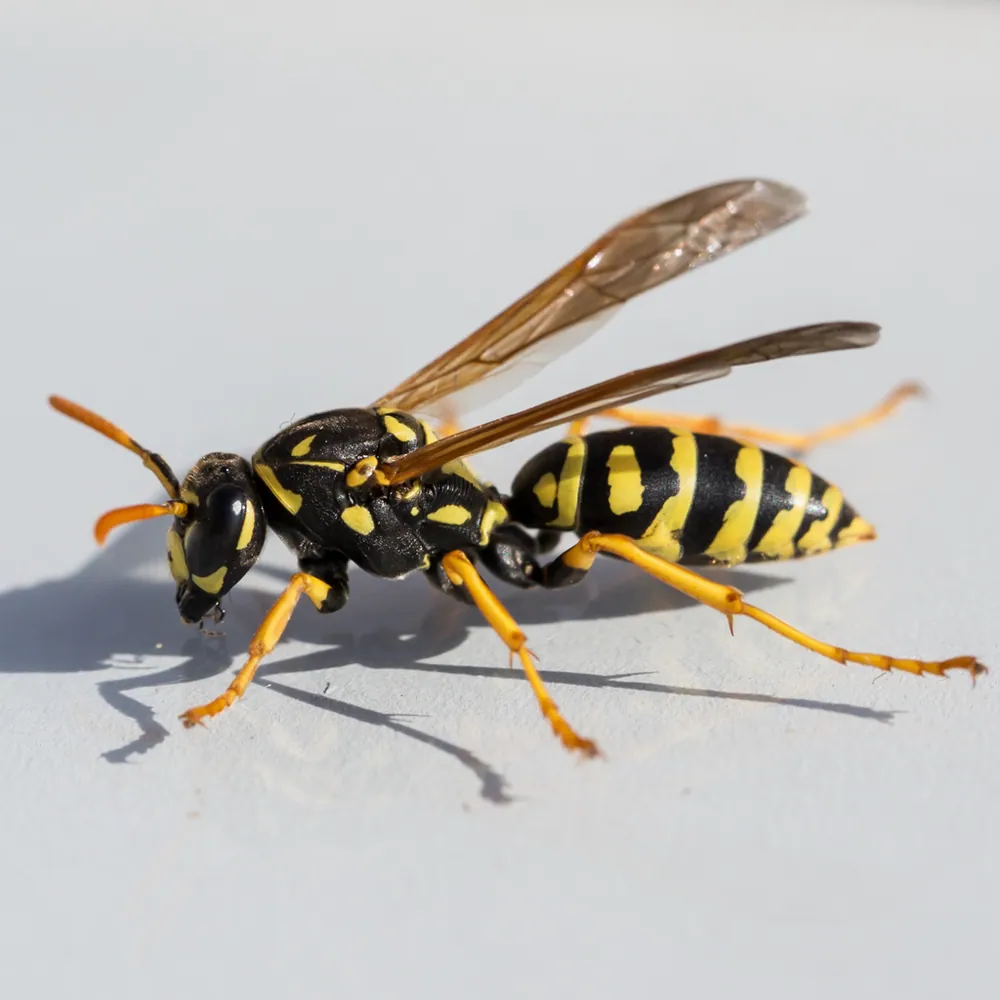
 No anndirte ngal
- Its body is coloured entirely yellow and black.1
- The female's mandible (jaw) is black and sometimes has a yellow spot.1
- The outer half of the antennae (feelers) is orange-yellow.1
- Wings are about 8.5 to 13 mm long, with little variation between individuals.1
- Males have curled antennae and no stinger.1
Ina heewi waylondireede e: Its yellow and black body is similar to that of Vespula germanica, one of the most common and defensive wasps in its native range. In older literature it was often confused with Polistes gallicus, which is now recognised as a separate species.1
Doole tooke
Tooke ngal ina yaltira jukkirgal.
Hol no bone mum heewiri e yimɓe?
Bone e yimɓe: MuusɗoIna waawi muusde sanne, kono hertaani wonde huunde mawnde.Hol ko ngal waɗata so ina hula?
Its bright yellow and black colouring is a warning colour, and its nests are built in well-protected places to help it avoid predators.1
 So ina jukka
- Ittu jukkirgal ñaaki ngal e ñiggude, ɓuuɓnu nokku oo.
- So neɗɗo oo ina tampa e foofaade, yeeso walla daande mum ina ufoo, walla ina yiɗi yanaade, ɗum ko urgence allergi: noddu nimero urgence, huutoro stylo adrénaline mum so tawii ina jogii.
Adii fof noddu nimero urgence (112, 000, 911). Ɗum ko anndinal ballal adiingal, wonaa saaraangal doktoor. Ko adii e ballal adiingal
 Reen hoore maa
- Wota a meem, wota a nanngu, wota a ñiŋŋu kullal ladde haa abada, hay so ngal ina famɗi, hay so ina nanndi e ɗaaniingal walla maayngal.
- Accu ngal nokku. So a fotti e ngal, deƴƴu, ruttu ɓaawo seeɗa seeɗa, accu ngal yaha laawol mum.
- So gooto jukkii ma: deƴƴu, wota a dillu, noddu nimero urgence (112, 000, 911) walla yahu opitaal law. Jogo e hakkille no ngal nanndi, natal ina walla.
Ngal faalaaka gaañde ma. Ina huutoroo tooke mum ngam nanngude ñaamdu walla reenaade, ina ɓuri yiɗde suuɗaade. Ɓeydu anndude no reentortoo
Hol to e aduna?
Hol no mawniri?
Hol no juutiri?
 tokooso haa ina waawi jooɗaade e dow ceŋol hondu maa
 ina waawi diwde taƴde nokku ball timmuɗo e segonde 15
Hol no European paper wasp mawniri, so fooɗondiraama e AN?
Limgal tan e navigatoor maa. Alaa ko danndetee walla ko neldetee.
Hol no yaawiri?


Humpito
Its colonies can include many unrelated wasps: about 35% of the wasps in a colony are unrelated, which is unusual for social insects.1
Males' abdominal spots vary in size, location and pattern, and they signal social rank within the colony.1
If the queen is removed from a nest, the second most dominant female takes over her role.1
In spring, some North American colonies have been seen with more than 80 wasps joining to reuse and expand an old nest.1
The first North American record was in Massachusetts in the late 1970s, and it had spread across the northeastern USA by 1995.1
Feññinoowo fenaande
Fenaande: The species name is sometimes spelled "dominulus", as authors wrongly assumed the name was an adjective.
Goonga: Dominula is a noun meaning "little mistress", so under the International Code of Zoological Nomenclature it does not change when the species moves genus.1
Ɗo humpito iwri
- European paper wasp (Wikipedia (CC BY-SA 4.0))
- Polistes dominula (iNaturalist): inɗe e ceergal.
- Venom Wiki: tolno bone, mawnude heewnde e miijo yaawde ko amen. Yiy no men keɓirta ɗum: No men tolnirta bone.
Kala humpito e ngoo hello ina jogii limoore hollirnde iwdi mum. So men juumii, yaafo, men ko yiɗɓe kulle, wonaa jaaynde ganndal. Wiy men e [email protected], men feewnita.
 Yaare nden ina weelaa! Venom Wiki ko golle neɗɗo gooto: yoɓetaake, alaa ko jeeyetee, alaa rewɓe. Ndokkal seeɗa ina walla ngam heddude e enternet.Ñaam yaare nden
Goɗɗe e nder fedde wootere: Ñaaki, ɗuggi e ɗuggi mawɗi
 Asian giant hornetÑaaki, ɗuggi e ɗuggi mawɗiIna waawi warde
 Common waspÑaaki, ɗuggi e ɗuggi mawɗiIna muusi tan
 European hornetÑaaki, ɗuggi e ɗuggi mawɗiIna muusi tan
 Western honey beeÑaaki, ɗuggi e ɗuggi mawɗiIna muusi tan
 Giant honey beeÑaaki, ɗuggi e ɗuggi mawɗiIna sokli doktoor
 Asian hornetÑaaki, ɗuggi e ɗuggi mawɗiIna muusi tan
Ina wuuri kadi e: Orop
 Common European adderƁoɗɗi wipeerIna sokli doktoor
 Spanish flyKulle goɗɗe jogiiɗe tooke ɓannduIna sokli doktoorWota a meem
 Fire salamanderÑaari tooke, ñaari e newtsIna muusi tanWota a meem
 Blunt-nosed viperƁoɗɗi wipeerIna waawi warde
 Nose-horned viperƁoɗɗi wipeerIna waawi warde
 Ottoman viperƁoɗɗi wipeerIna waawi warde