
 Afrik
Afrik Aazi
Aazi Orop
Orop Amerik Worgo
 Ostaraali e Oseyaani
 Antarktik
 Geec Pasifik
 Geec Atlantik
 Geec Enndo
 Geec Arktik
 Geec Mediteraane
 Geec Boɗeejo
 Geec Karayib
 Geec Korayl
 Geec Siin Worgo
 Geec Filipiin
 Geec Andaman
 Geec Rewo
 Geec Timor e Arafura
 Gulf Bengal
 Gulf Kaliforni
Green-head ant
 Jukkugol
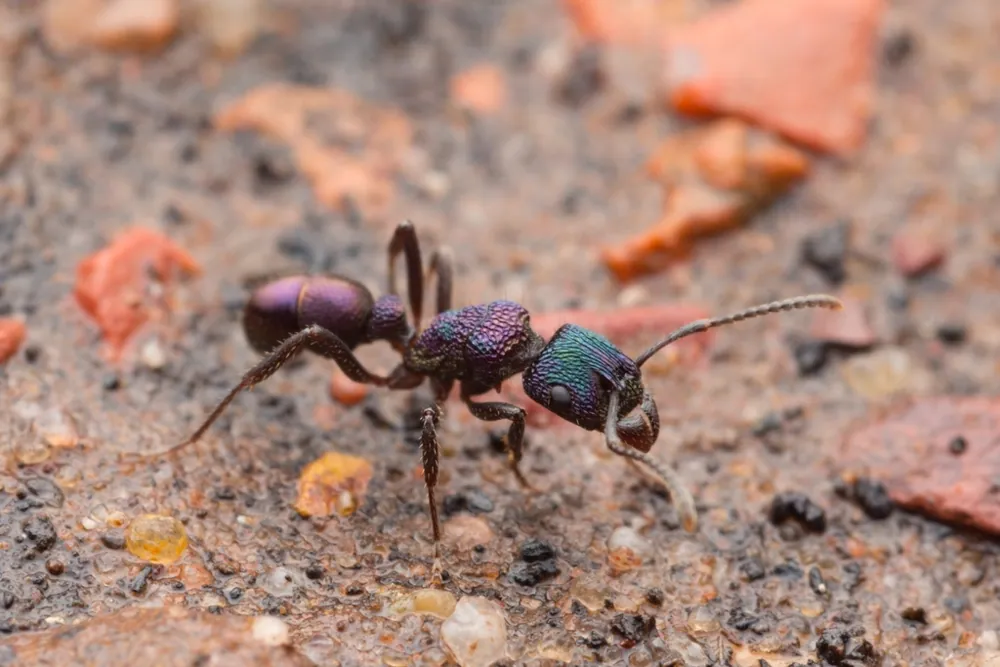
The green-head ant is a small, shiny ant that lives in Australia. It has a metallic colour that can look green, purple or reddish-violet. It is one of the most widespread insects in Australia, and it can give a painful, venomous sting.1


 No anndirte ngal
- Measures 5 to 7 mm long.1
- Metallic colour that varies by region, from green to purple or reddish-violet.1
- Hard, heavily armoured body with a single-segmented waist.1
- Queens and workers look similar and differ mainly in size. Males are the smallest and look black and dark.1
Ina heewi waylondireede e: Residents of northern Queensland use the name 'green ant' for the green-tree ant (Oecophylla smaragdina), so the two can be confused by name. The name 'green-head ant' is more specific.1
Doole tooke
Tooke ngal ina yaltira jukkirgal.
Hol ko tooke ŋatgol mum waɗata?
The sting is painful and venomous. It can cause anaphylactic shock, a severe allergic reaction, in people who are sensitive to it.1
Hol no bone mum heewiri e yimɓe?
Bone e yimɓe: MuusɗoIna waawi muusde sanne, kono hertaani wonde huunde mawnde.The sting can cause anaphylactic shock in sensitive people. Ordinary stings are described as painful.1
 So ina jukka
- Loot nokkuuje jukkaaɗe ɗee, ɓuuɓnu ɗe.
- So neɗɗo oo ina tampa e foofaade, yeeso walla daande mum ina ufoo, walla ina yiɗi yanaade, ɗum ko urgence allergi: noddu nimero urgence.
Adii fof noddu nimero urgence (112, 000, 911). Ɗum ko anndinal ballal adiingal, wonaa saaraangal doktoor. Ko adii e ballal adiingal
 Reen hoore maa
- Wota a meem, wota a nanngu, wota a ñiŋŋu kullal ladde haa abada, hay so ngal ina famɗi, hay so ina nanndi e ɗaaniingal walla maayngal.
- Accu ngal nokku. So a fotti e ngal, deƴƴu, ruttu ɓaawo seeɗa seeɗa, accu ngal yaha laawol mum.
- So gooto jukkii ma: deƴƴu, wota a dillu, noddu nimero urgence (112, 000, 911) walla yahu opitaal law. Jogo e hakkille no ngal nanndi, natal ina walla.
Ngal faalaaka gaañde ma. Ina huutoroo tooke mum ngam nanngude ñaamdu walla reenaade, ina ɓuri yiɗde suuɗaade. Ɓeydu anndude no reentortoo
Hol to e aduna?
Hol no mawniri?
Hol no juutiri?
 tokooso haa ina waawi jooɗaade e dow ceŋol hondu maa
Hol no Green-head ant mawniri, so fooɗondiraama e AN?
Limgal tan e navigatoor maa. Alaa ko danndetee walla ko neldetee.
Hol no yaawiri?


Humpito
Green-head ants are among the first insects to appear in burnt-off areas, arriving once the embers have stopped smouldering.1
Workers can reproduce with winged males, so queens are rarely produced in colonies.1
They are useful to farmers because they prey on agricultural pests such as beetles, moths and termites.1
They help plants by scattering and eating seeds from a variety of species, which plays an important role in seed dispersal.1
The short-beaked echidna and a number of bird species prey on them.1
The ant was introduced to New Zealand, where it was first seen in 1959, probably on cargoes of timber.1
Feññinoowo fenaande
Fenaande: The name 'green ant' always means the green-head ant.
Goonga: In northern Queensland, residents use the name 'green ant' for the green-tree ant, so the shortened name can cause confusion.1
Ɗo humpito iwri
- Green-head ant (Wikipedia (CC BY-SA 4.0))
- Rhytidoponera metallica (iNaturalist): inɗe e ceergal.
- Venom Wiki: tolno bone, mawnude heewnde e miijo yaawde ko amen. Yiy no men keɓirta ɗum: No men tolnirta bone.
Kala humpito e ngoo hello ina jogii limoore hollirnde iwdi mum. So men juumii, yaafo, men ko yiɗɓe kulle, wonaa jaaynde ganndal. Wiy men e [email protected], men feewnita.
 Yaare nden ina weelaa! Venom Wiki ko golle neɗɗo gooto: yoɓetaake, alaa ko jeeyetee, alaa rewɓe. Ndokkal seeɗa ina walla ngam heddude e enternet.Ñaam yaare nden
 Bulldog ant
 Jack jumper ant
 Green weaver ant
 Black-banded jumper ant
 Giant bull ant
 Inchman ant
 Taipan daande geec
 Death adder heewndi
 Mboddi ooleeri fuɗnaange
 Taypan pellital
 Araañe funnel-web Sidnee
 Laddeewu Tiger