
 Afrik
Afrik Aazi
Aazi Orop
Orop Amerik Worgo
 Ostaraali e Oseyaani
 Antarktik
 Geec Pasifik
 Geec Atlantik
 Geec Enndo
 Geec Arktik
 Geec Mediteraane
 Geec Boɗeejo
 Geec Karayib
 Geec Korayl
 Geec Siin Worgo
 Geec Filipiin
 Geec Andaman
 Geec Rewo
 Geec Timor e Arafura
 Gulf Bengal
 Gulf Kaliforni
King brown snake
 Ŋatgol
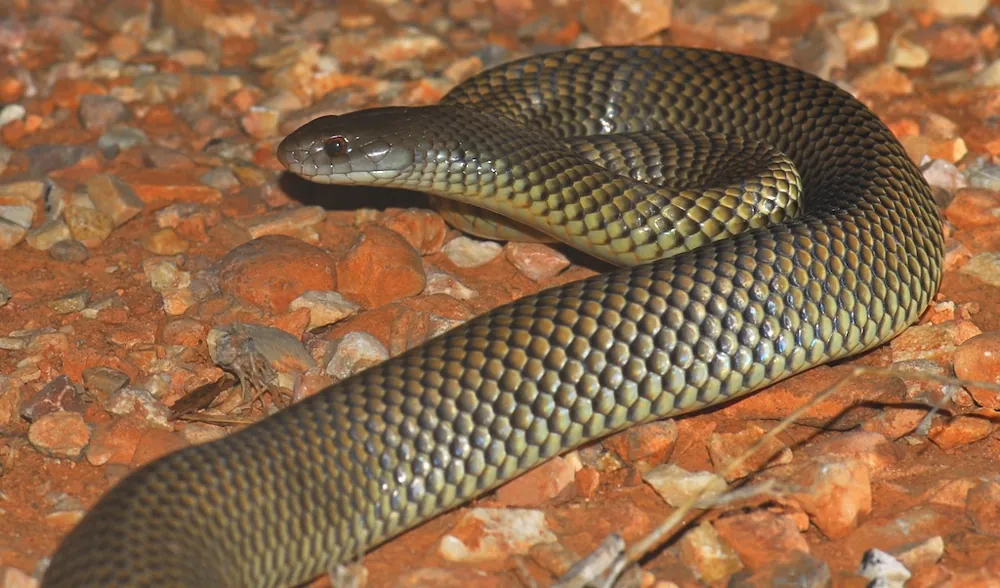
The king brown snake is a highly venomous snake and the largest land-dwelling venomous snake in Australia. It lives across northern, western and Central Australia. Its size and venom make it one of the most important snakes to recognise in the region.1



 No anndirte ngal
- A large, robust snake that can reach 2.0 to 2.5 m, with a maximum confirmed length of 3.3 m.1
- Colour varies by area: tan in the north, and darker brown to blackish in the south.1
- Scales are two-toned, giving the upper body a reticulated (net-like) pattern.1
- The belly is cream, white or salmon, and often has orange marks.1
- The head is slightly wider than the body, with small eyes that have red-brown irises and a dark tongue.1
Ina heewi waylondireede e: King brown snakes can be confused with brown snakes of the genus Pseudonaja, olive pythons, water pythons, spotted mulga snakes and coastal taipans. In eastern brown snakes, the temporolabial scale and last supralabial scale (scales above the mouth) are fused. In king brown snakes, they are separate.1
Doole tooke
Tooke ngal ina yaltira ñiiƴe mum so ina ŋata.
Hol ko tooke ŋatgol mum waɗata?
The venom is not as potent as that of Australia's other dangerous snakes, but it can cause severe effects if delivered in large enough amounts. Its main effect is on striated (skeletal) muscle, which can cause paralysis through muscle damage. It also commonly affects blood clotting (coagulopathy).1
Hol no bone mum heewiri e yimɓe?
Bone e yimɓe: Bone sanneIna waawi warde neɗɗo mo safraaka.Deaths from its bites have been recorded, with the most recent in 1969. Extensive pain and swelling often occur at the bite site, and necrosis (death of tissue) occurs rarely.1
 Kabaaru moƴƴo: doktooruuji ina njogii lekki (sérum antivenimeux) walla safaara ngam ɗum.1
 So ina ŋata
- Victims are treated with black snake (not brown snake) antivenom.1
- Habbugol ɗiwɗiingol (immobilisation): taarnu bando elastik tiiɗɗo e dow nokku ŋataaɗo, refti yawnu e dow terɗe ndee fof, haɓɓu attel, haɗ neɗɗo oo dillaade fey haa ballal hewta.
- Wota a loot nokku ŋataaɗo oo: opitaal ina waawi ƴeewde tooke heddiiɗo e nguru ngam suɓaade sérum antivenimeux moƴƴo.
Adii fof noddu nimero urgence (112, 000, 911). Ɗum ko anndinal ballal adiingal, wonaa saaraangal doktoor. Ko adii e ballal adiingal
 Reen hoore maa
- Wota a meem, wota a nanngu, wota a ñiŋŋu kullal ladde haa abada, hay so ngal ina famɗi, hay so ina nanndi e ɗaaniingal walla maayngal.
- Accu ngal nokku. So a fotti e ngal, deƴƴu, ruttu ɓaawo seeɗa seeɗa, accu ngal yaha laawol mum.
- So gooto ŋatii ma: deƴƴu, wota a dillu, noddu nimero urgence (112, 000, 911) walla yahu opitaal law. Jogo e hakkille no ngal nanndi, natal ina walla.
Ngal faalaaka gaañde ma. Ina huutoroo tooke mum ngam nanngude ñaamdu walla reenaade, ina ɓuri yiɗde suuɗaade. Ɓeydu anndude no reentortoo
Hol to e aduna?
Hol no mawniri?
Hol no juutiri?
Hol no teddiri?
 juutde no dawaaɗi 3, hinere haa lawol
 juutde no banaanaaji 18 sammondiraaɗi
 hedde teddude no ullundu galle
 ina waawi taƴde 100 meeteer e segonde 41 (neɗɗo ɓurɗo yaawde ina sokli 9,6)
Hol no King brown snake mawniri, so fooɗondiraama e AN?
Limgal tan e navigatoor maa. Alaa ko danndetee walla ko neldetee.
Hol no yaawiri?


Humpito
Its name causes a real problem: its venom is not neutralised by brown snake antivenom, so the name has been criticised by medical researchers.1
It is the largest terrestrial venomous snake in Australia.1
In the Kaytetye language of Central Australia, it is called atetherr-ayne-wene, meaning "budgerigar-eater".1
Despite its common name, it belongs to the black snake genus Pseudechis and is only distantly related to true brown snakes.1
Males are around 20% larger than females.1
It has been reported to live up to 25 years in captivity.1
Feññinoowo fenaande
Fenaande: Because it is called a brown snake, brown snake antivenom will treat its bite.
Goonga: Its venom is not neutralised by brown snake antivenom. Victims are treated with black snake antivenom.1
Ngam ganduɓe tooke
- Innde ganndal
- Pseudechis australis
- Fedde
- Ɓoɗɗi Ostaraali
- Ɓesngu
- Elapidae2
- Ordre
- Squamata
- Leyɗe mawɗe
- Ostaraali e Oseyaani
- Ɓiɓɓe tokooso
- King brown snakes lay eggs. A female produces a clutch of four to 19 eggs, usually around 10, which take 70 to 100 days to hatch.1
- Juuteendi nguurndam
- hedde duuɓi 251
- Hol no ngal woniri e ladde
- Least concern (IUCN), though its numbers may have declined with the spread of the cane toad.1
- Bone e yimɓe
- 4 / 5: Bone sanne3
Ɗo humpito iwri
- King brown snake (Wikipedia (CC BY-SA 4.0))
- Pseudechis australis (iNaturalist): inɗe e ceergal.
- Venom Wiki: tolno bone, mawnude heewnde e miijo yaawde ko amen. Yiy no men keɓirta ɗum: No men tolnirta bone.
Kala humpito e ngoo hello ina jogii limoore hollirnde iwdi mum. So men juumii, yaafo, men ko yiɗɓe kulle, wonaa jaaynde ganndal. Wiy men e [email protected], men feewnita.
 Yaare nden ina weelaa! Venom Wiki ko golle neɗɗo gooto: yoɓetaake, alaa ko jeeyetee, alaa rewɓe. Ndokkal seeɗa ina walla ngam heddude e enternet.Ñaam yaare nden
Goɗɗe e nder fedde wootere: Ɓoɗɗi Ostaraali
 Taipan daande geec
 Death adder heewndi
 Mboddi ooleeri fuɗnaange
 Taypan pellital
 Laddeewu Tiger
 Collett's snake
Ina wuuri kadi e: Ostaraali e Oseyaani
 Araañe funnel-web SidneeTaranteel e funnel-webBareejo
 Redback spiderAraañeejiIna sokli doktoor
 Brown tree snakeƁoɗɗi ñiiƴe ɓaawoIna muusi tan
 Hooded pitohuiKulle goɗɗe jogiiɗe tooke ɓannduIna muusi tanWota a meem
 PlatypusKulle muynooje jogiiɗe tookeIna muusi tan
 Northern tree-dwelling funnel-web spiderTaranteel e funnel-webBareejo