
 Afrik
Afrik Aazi
Aazi Orop
Orop Amerik Worgo
 Ostaraali e Oseyaani
 Antarktik
 Geec Pasifik
 Geec Atlantik
 Geec Enndo
 Geec Arktik
 Geec Mediteraane
 Geec Boɗeejo
 Geec Karayib
 Geec Korayl
 Geec Siin Worgo
 Geec Filipiin
 Geec Andaman
 Geec Rewo
 Geec Timor e Arafura
 Gulf Bengal
 Gulf Kaliforni
Red-bellied black snake
 Ŋatgol
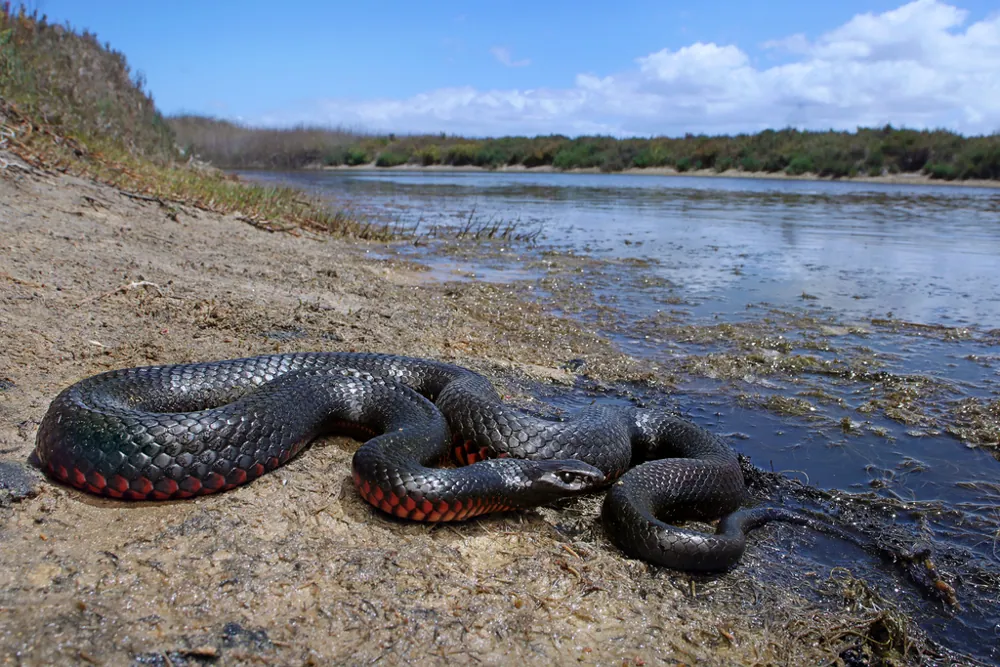
The red-bellied black snake is a venomous snake found along the east coast of Australia, where it is one of the most commonly met snakes. It is glossy black on top, with bright red or orange sides. It often lives near water, and it sometimes turns up in backyards in towns and cities.1



 No anndirte ngal
- Glossy black upperparts with a light-grey snout and a completely black tail1
- Bright red or orange flanks that fade to a pink or dull red belly1
- No well-defined neck, so the head merges into the body1
- Adults average about 1.25 m in total length, including the tail1
Ina heewi waylondireede e: Juveniles look similar to the eastern small-eyed snake, but that species lacks red flanks. Other similar snakes include the blue-bellied black snake and copperheads of the genus Austrelaps.1
Doole tooke
Tooke ngal ina yaltira ñiiƴe mum so ina ŋata.
Hol ko tooke ŋatgol mum waɗata?
Its venom contains neurotoxins, which attack the nerves, myotoxins, which damage muscle, and coagulants, which affect blood clotting. It also has haemolytic properties, meaning it can break down red blood cells. Bites can cause severe pain, local swelling, prolonged bleeding and local tissue death, especially on a finger. Victims can also lose their sense of smell, and nausea, vomiting, headache, abdominal pain, diarrhoea or heavy sweating can follow.1
Hol no bone mum heewiri e yimɓe?
Bone e yimɓe: Ina tiiɗiŊatgol ina sokli doktoor. Maayde ina famɗi sanne.No deaths have been recorded from its bite. It is less venomous than many other Australian elapid snakes, but it can still cause significant illness. It accounted for 16% of identified snakebite victims in Australia between 2005 and 2015. Severe local reactions may need surgery or, rarely, amputation.1
Hol ko ngal waɗata so ina hula?
It is not aggressive and usually withdraws. If provoked, it raises its head and front body into a striking stance, widens and flattens its neck, and may bite as a last resort.1
 So ina ŋata
- Habbugol ɗiwɗiingol (immobilisation): taarnu bando elastik tiiɗɗo e dow nokku ŋataaɗo, refti yawnu e dow terɗe ndee fof, haɓɓu attel, haɗ neɗɗo oo dillaade fey haa ballal hewta.
- Wota a loot nokku ŋataaɗo oo: opitaal ina waawi ƴeewde tooke heddiiɗo e nguru ngam suɓaade sérum antivenimeux moƴƴo.
Adii fof noddu nimero urgence (112, 000, 911). Ɗum ko anndinal ballal adiingal, wonaa saaraangal doktoor. Ko adii e ballal adiingal
 Reen hoore maa
- Wota a meem, wota a nanngu, wota a ñiŋŋu kullal ladde haa abada, hay so ngal ina famɗi, hay so ina nanndi e ɗaaniingal walla maayngal.
- Accu ngal nokku. So a fotti e ngal, deƴƴu, ruttu ɓaawo seeɗa seeɗa, accu ngal yaha laawol mum.
- So gooto ŋatii ma: deƴƴu, wota a dillu, noddu nimero urgence (112, 000, 911) walla yahu opitaal law. Jogo e hakkille no ngal nanndi, natal ina walla.
Ngal faalaaka gaañde ma. Ina huutoroo tooke mum ngam nanngude ñaamdu walla reenaade, ina ɓuri yiɗde suuɗaade. Ɓeydu anndude no reentortoo
Hol to e aduna?
Hol no mawniri?
Hol no juutiri?
Hol no teddiri?

 juutde no dawaaɗi 2,5, hinere haa lawol
 juutde no banaanaaji 14 sammondiraaɗi
 ina waawi taƴde 100 meeteer e segonde 46 (neɗɗo ɓurɗo yaawde ina sokli 9,6)
Hol no Red-bellied black snake mawniri, so fooɗondiraama e AN?
Limgal tan e navigatoor maa. Alaa ko danndetee walla ko neldetee.
Hol no yaawiri?


Humpito
It can stay underwater for as long as 23 minutes after fleeing into water.1
Some populations have evolved increased resistance to cane toad toxin in less than 75 years.1
Males of the species may wrestle in ritualised combat in spring, and rarely bite while doing so.1
A male was reported to travel 1,220 m in a single day while roaming for mates in spring.1
In winter it becomes relatively inactive rather than truly hibernating, and groups of up to six have been found under concrete slabs.1
Feññinoowo fenaande
Fenaande: The red-bellied black snake is harmless and not venomous, because it has no visible fangs.
Goonga: It is venomous and front-fanged, like all elapid snakes. It is less dangerous than many other Australian species, and no deaths have been recorded from its bite.1
Ngam ganduɓe tooke
- Innde ganndal
- Pseudechis porphyriacus
- Fedde
- Ɓoɗɗi Ostaraali
- Ɓesngu
- Elapidae2
- Ordre
- Squamata
- Leyɗe mawɗe
- Ostaraali e Oseyaani
- Ɓiɓɓe tokooso
- It gives birth to live young, usually in February or March, with between eight and 40 young per litter.1
- Juuteendi nguurndam
- hedde duuɓi 251
- Hol no ngal woniri e ladde
- Least concern (IUCN), although its numbers are thought to be declining1
- Bone e yimɓe
- 3 / 5: Ina tiiɗi3
Ɗo humpito iwri
- Red-bellied black snake (Wikipedia (CC BY-SA 4.0))
- Pseudechis porphyriacus (iNaturalist): inɗe e ceergal.
- Venom Wiki: tolno bone, mawnude heewnde e miijo yaawde ko amen. Yiy no men keɓirta ɗum: No men tolnirta bone.
Kala humpito e ngoo hello ina jogii limoore hollirnde iwdi mum. So men juumii, yaafo, men ko yiɗɓe kulle, wonaa jaaynde ganndal. Wiy men e [email protected], men feewnita.
 Yaare nden ina weelaa! Venom Wiki ko golle neɗɗo gooto: yoɓetaake, alaa ko jeeyetee, alaa rewɓe. Ndokkal seeɗa ina walla ngam heddude e enternet.Ñaam yaare nden
Goɗɗe e nder fedde wootere: Ɓoɗɗi Ostaraali
 Taipan daande geec
 Death adder heewndi
 Mboddi ooleeri fuɗnaange
 Taypan pellital
 Laddeewu Tiger
 Collett's snake
Ina wuuri kadi e: Ostaraali e Oseyaani
 Araañe funnel-web SidneeTaranteel e funnel-webBareejo
 Redback spiderAraañeejiIna sokli doktoor
 Brown tree snakeƁoɗɗi ñiiƴe ɓaawoIna muusi tan
 Hooded pitohuiKulle goɗɗe jogiiɗe tooke ɓannduIna muusi tanWota a meem
 PlatypusKulle muynooje jogiiɗe tookeIna muusi tan
 Northern tree-dwelling funnel-web spiderTaranteel e funnel-webBareejo