
 Afrique
 Asie
Asie Europe
 Amérique du Sud
 Australie et Océanie
 Antarctique
 Océan Pacifique
 Océan Atlantique
 Océan Indien
 Océan Arctique
 Mer Méditerranée
 Mer Rouge
 Mer des Caraïbes
 Mer de Corail
 Mer de Chine méridionale
 Mer des Philippines
 Mer d'Andaman
 Mer du Nord
 Mer de Timor et d'Arafura
 Golfe du Bengale
 Golfe de Californie
Fen raft spider
 Morsures
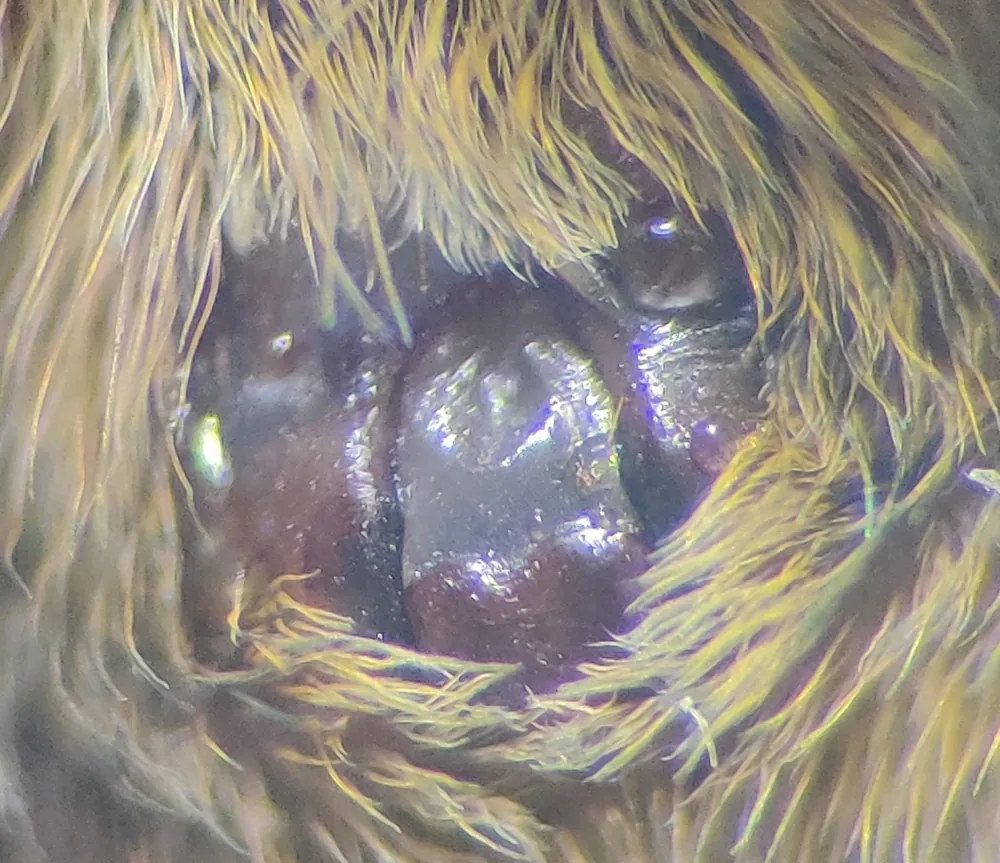
The fen raft spider is a large spider that lives on the edges of still, slow-moving water in Europe. It hunts from plants at the water's edge and can even run across the surface of a pond. It is rare, and it is protected in many places.1


 Comment le reconnaître
- It is a large spider within its range. Adult females have bodies slightly over 2 cm long and a leg span of about 7 cm.1
- It is usually black or brown, with white or cream stripes along the sides of the body.1
- It is often found sitting on plant stems at the water's edge, with its back legs on a stem and its front legs on the water.1
Souvent confondu avec : It is very similar in appearance to the closely related raft spider, Dolomedes fimbriatus, and the two are often misidentified. Identification can be difficult.1
Puissance du venin
Le venin sort par ses crochets ou ses dents quand il mord.
À quel point est-il dangereux pour l'homme ?
Danger pour l'homme: LégerComme une piqûre d'abeille ou moins. Pratiquement inoffensif pour l'homme. S'il mord
- Lave la morsure et mets de la glace contre la douleur. Va voir un médecin si la douleur est forte, s'étend ou si la personne se sent mal.
Appelle toujours d'abord ton numéro d'urgence (112, 000, 911). Ce sont des conseils généraux de premiers secours, pas un avis médical. Les bases des premiers secours
 Reste en sécurité
- Ne touche, n'attrape et n'embête jamais un animal sauvage, même petit, et même s'il a l'air endormi ou mort.
- Laisse-lui de la place. Si tu en croises un, reste calme, recule doucement et laisse-le passer son chemin.
- S'il te mord : reste calme, ne bouge pas, appelle ton numéro d'urgence (112, 000, 911) ou va vite à l'hôpital. Souviens-toi de quoi il avait l'air, une photo aide.
Il ne t'en veut pas. Il utilise son venin pour attraper sa nourriture ou se protéger, et il préfère de loin se cacher. Plus d'infos pour rester en sécurité
Où dans le monde ?
Quelle taille fait-il ?
Quelle longueur fait-il ?
 aussi long que 2 briques de construction en ligne
 pourrait parcourir 100 mètres en 280 secondes (l'humain le plus rapide met 9,6)
Quelle taille fait Fen raft spider comparé à TOI ?
Juste des calculs dans ton navigateur. Rien n'est enregistré ni envoyé nulle part.
À quelle vitesse va-t-il ?


Faits
It can run across the surface of water by using surface tension, the force that keeps the water's skin intact.1
It can also hunt underwater by running down plant stems, and it can use this route to escape predators.1
It detects prey using sensory hairs on its legs, which pick up the vibrations made when prey hits the water.1
Before hatching, the female builds a tent-like nursery web on plants above the water, where she guards the young.1
In 2010, around 1,600 hand-reared spiderlings were released at a new UK site, which were fed on fruit flies.1
Males mate early in the season and most die by late July. Females survive until the end of summer.1
Pour les experts en venin
- Nom scientifique
- Dolomedes plantarius
- Groupe
- Araignées
- Famille
- Dolomedidae2
- Ordre
- Araneae
- Continents
- Europe
- Petits
- The female lays several hundred eggs in a silk sac about 10 mm across, which she carries under her body for around three weeks.1
- Durée de vie
- environ 2,5 ans1
- Comment il se porte dans la nature
- Vulnerable (IUCN Red List). In the UK it is Nationally Rare and protected by law.1
- Danger pour l'homme
- 1 / 5: Léger3
D'où viennent les faits
- Great raft spider (Wikipedia (CC BY-SA 4.0))
- Dolomedes plantarius (iNaturalist): noms et classification.
- Venom Wiki: le niveau de danger, la taille typique et la vitesse estimée sont les nôtres. Regarde comment on les calcule : Comment on évalue le danger.
Chaque fait sur cette page a un numéro qui renvoie à sa source. Si on s'est trompés, désolés, on est des fans d'animaux, pas une revue scientifique. Dis-le-nous à [email protected] et on corrigera.
 Le scorpion a faim ! Venom Wiki est le projet d'une seule personne : gratuit, sans pub et sans traceurs. Un petit pourboire aide à le garder en ligne.Nourris le scorpion
Plus du même groupe: Araignées
 Mediterranean black widow
 Diving bell spider
 European yellow sac spider
 Noble false widow
 Tarantula wolf spider
 Daddy long-legs spider
Vit aussi en: Europe
 Common European adderVipèresNécessite un médecin
 Spanish flyAutres animaux vénéneuxNécessite un médecinNe pas toucher
 Common waspAbeilles, guêpes et frelonsFait juste mal
 European hornetAbeilles, guêpes et frelonsFait juste mal
 Fire salamanderGrenouilles toxiques, crapauds et tritonsFait juste malNe pas toucher
 Western honey beeAbeilles, guêpes et frelonsFait juste mal