
 Afrika
 Ázsia
Ázsia Európa
 Dél-Amerika
 Ausztrália és Óceánia
 Antarktisz
 Csendes-óceán
 Atlanti-óceán
 Indiai-óceán
 Északi-sarki-óceán
 Földközi-tenger
 Vörös-tenger
 Karib-tenger
 Korall-tenger
 Dél-kínai-tenger
 Fülöp-tenger
 Andamán-tenger
 Északi-tenger
 Timor-tenger és Arafura-tenger
 Bengáli-öböl
 Kaliforniai-öböl
Compass jellyfish
 Csalánozó csápok
The compass jellyfish is a common jellyfish that lives in cool coastal seas of the northeast Atlantic, including the North Sea and the Mediterranean. Its bell has a pattern that looks like the face of a compass, which gives it its name. Its tentacles carry stinging cells, so it is best left alone.1



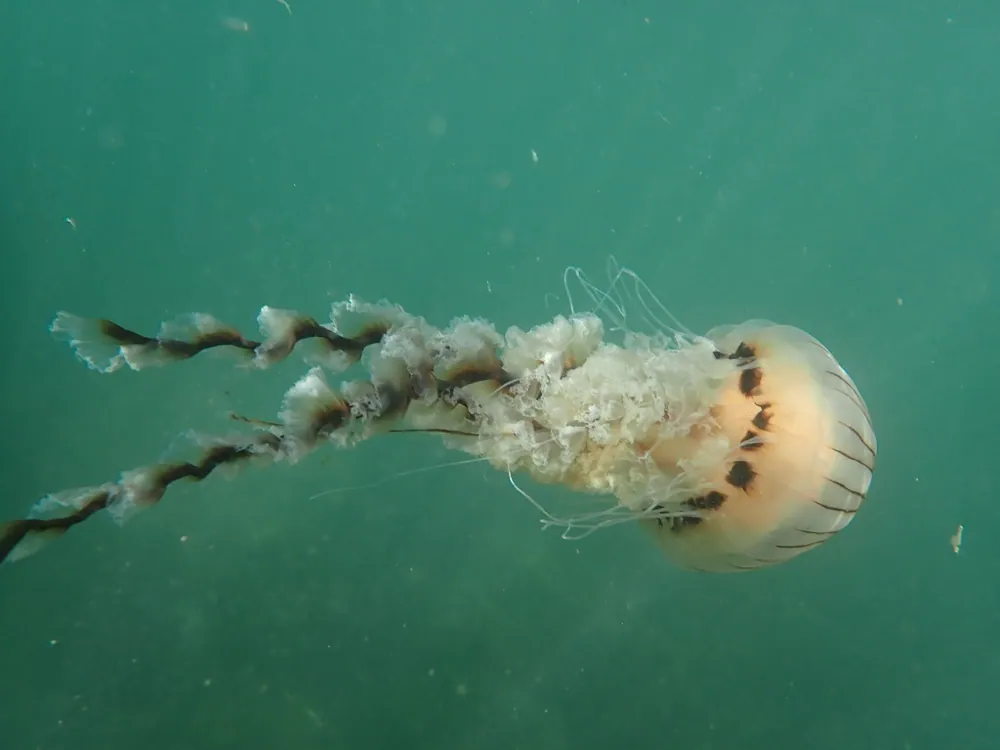
 Hogyan ismerd fel
- Adults have a bell 15 to 25 cm across, usually yellowish white with some brown.1
- The bell has 16 brown, elongated V-shaped markings around a central brown spot.1
- It has 24 tentacles arranged in eight groups of three.1
- It has four oral arms that are noticeably longer than the tentacles and look folded and frilly.1
- Juveniles lack the compass pattern. They look white and polka-dotted, with a reddish fringe on the bell edge.1
Gyakran összetévesztik ezzel: Records of this species from the southeastern Atlantic, including South Africa, were caused by confusion with close relatives: C. africana, C. fulgida and an undescribed species tentatively called "C. agulhensis".1
Méregerő
Több ezer apró csalánsejt sül el, ha valami hozzáér.
Mit tesz a mérge?
Each tentacle has stinging cells used to capture prey and to defend against predators. Jellyfish stings are painful and can be deadly to humans.1
Mennyire veszélyes az emberre?
Veszély az emberre: FájdalmasNagyon tud fájni, de szinte soha nem súlyos.Jellyfish stings are painful and sometimes deadly to humans.1
Mit csinál, ha megijed?
Stinging cells on its tentacles are used to defend it from predators.1
 Ha csíp
- Gyere ki a vízből, és szedd le a csápokat (kesztyűben vagy egy ruhadarabbal).
- Trópusi kockamedúzánál: önts ecetet a csípésekre legalább 30 másodpercig, hívj segítséget, és készülj fel az újraélesztésre. Portugál gályánál és a legtöbb másiknál: öblítsd le tengervízzel, aztán forró vízzel enyhítsd a fájdalmat.
Mindig először a segélyhívó számot hívd (112, 000, 911). Ez általános elsősegély-tájékoztató, nem orvosi tanács. Elsősegély alapjai
 Maradj biztonságban
- Soha ne érints meg, ne fogj meg és ne bosszants vadállatot, még ha kicsi is, és még ha alszik vagy döglöttnek tűnik is.
- Hagyj neki helyet. Ha találkozol eggyel, maradj nyugodt, lassan lépj hátra, és hagyd, hogy menjen a maga útján.
- Ha megcsíp: maradj nyugodt, ne mozogj, hívd a segélyhívó számot (112, 000, 911), vagy juss el gyorsan kórházba. Jegyezd meg, hogyan nézett ki, egy fotó sokat segít.
Nem akar elkapni téged. A mérgét arra használja, hogy élelmet fogjon vagy megvédje magát, és sokkal szívesebben elbújik. Még több a biztonságról
Hol él a világban?
Mekkora?
Milyen hosszú?
 olyan hosszú, mint 8 játék építőkocka egy sorban
Mekkora Compass jellyfish hozzád képest?
Csak matek a böngésződben. Semmit nem mentünk és nem küldünk el sehova.
Milyen gyors?


Tények
Males release sperm from their mouths into the water, and females can fertilise sperm from several males.1
Adults often carry a parasite called Hyperia medusarum, which settles inside the body, especially the gonads.1
Compass jellyfish have very few predators. Leatherback sea turtles and ocean sunfish are known to eat them.1
Warmer winters allow longer release periods for young, and the species is predicted to move further north as the seas warm.1
Tévhitromboló
Tévhit: Compass jellyfish live in the southeastern Atlantic, including South Africa.
Az igazság: Earlier records from there were due to confusion with close relatives. The species lives in the northeast Atlantic.1
Méregszakértőknek
- Tudományos név
- Chrysaora hysoscella
- Csoport
- Medúzák és tengeri csalánozók
- Család
- Pelagiidae2
- Rend
- Semaeostomeae
- Kontinensek
- Atlanti-óceán, Földközi-tenger, Északi-tenger, Az óceánok
- Kicsinyek
- Females release planular larvae, which settle on the seabed and grow into polyps. The polyps then release young medusae.1
- Veszély az emberre
- 2 / 5: Fájdalmas3
Honnan származnak a tények
- Chrysaora hysoscella (Wikipedia (CC BY-SA 4.0))
- Chrysaora hysoscella (iNaturalist): nevek és rendszertan.
- Venom Wiki: a veszélyszint, a tipikus méret és a sebességbecslés a saját értékelésünk. Nézd meg, hogyan számoljuk ki: Hogyan értékeljük a veszélyt.
Ezen az oldalon minden tény mellett van egy szám, amely a forrására mutat. Ha valamit elrontottunk, bocsi, mi állatrajongók vagyunk, nem tudományos folyóirat. Írj nekünk ide: [email protected], és kijavítjuk.
 A skorpió éhes! A Venom Wiki egyszemélyes projekt: ingyenes, reklámok és nyomkövetés nélkül. Egy kis borravaló segít, hogy online maradjon.Etesd meg a skorpiót
Még több ugyanebből a csoportból: Medúzák és tengeri csalánozók
 Ausztrál kockamedúzaMedúzák és tengeri csalánozókHalálosNe nyúlj hozzá
 Irukandji jellyfishMedúzák és tengeri csalánozókÖlni is tudNe nyúlj hozzá
 Portuguese man o' warMedúzák és tengeri csalánozókOrvos kellNe nyúlj hozzá
 Lion's mane jellyfishMedúzák és tengeri csalánozókCsak fájNe nyúlj hozzá
 Moon jellyfishMedúzák és tengeri csalánozókÁrtalmatlan
 Common kingslayerMedúzák és tengeri csalánozókÖlni is tudNe nyúlj hozzá
 Hawksbill sea turtle
 Blue sea dragon
 Greenland shark
 Common octopus
 Common stingray
 Greater weever