
 Afrịka
 Eshia
Eshia Yurop
Yurop Ndịda Amerika
 Ọstrelia na Oshenia
 Antaktika
 Oké Osimiri Pasifik
 Oké Osimiri Atlantik
 Oké Osimiri India
 Oké Osimiri Arktik
 Osimiri Mediterenian
 Osimiri Uhie
 Osimiri Karibịan
 Osimiri Coral
 Osimiri Ndịda China
 Osimiri Filipin
 Osimiri Andaman
 Osimiri Ugwu (North Sea)
 Osimiri Timor na Arafura
 Ọwara Bengal
 Ọwara California
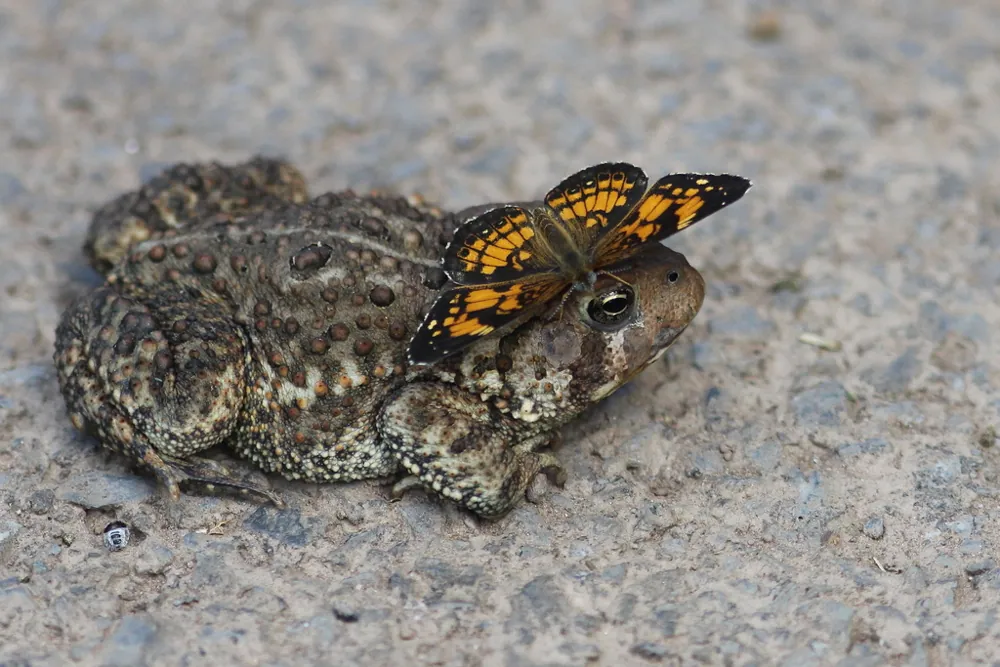
American toad
 Nsị n'akpụkpọ ahụ ya
The American toad is a common toad found across the eastern half of Canada and the United States. It lives in forests, grasslands and gardens, and it breeds in shallow ponds and pools. It matters because it eats many insects and other small creatures, and its skin releases a substance that can irritate eyes and harm small animals such as dogs.1
 Otú ị ga-esi mata ya
- Adults are usually 5 to 9 cm long.1
- Skin colour varies from yellow to brown to black, and can be solid or speckled. It changes with habitat colours, humidity, stress and temperature.1
- Spots on the back contain only one or two warts, and the lower legs have enlarged warts.1
- The parotoid glands are the same colour as the surrounding skin.1
- Breeding males give a high trill lasting 6 to 30 seconds that sounds like a ringing telephone.1
A na-agwakọkarị ya na: Fowler's toad, Woodhouse's toad, the Canadian toad, the southern toad and the Gulf Coast toad can look similar. Fowler's toad never has a spotted belly, and its cranial crests touch the parotoid glands. The American toad's crests almost never touch the glands. The Canadian toad's crests join to form a raised bump, which the American toad's do not. The southern toad's crests form two distinct knobs.1
Ike nsị
Akpụkpọ ahụ ya nwere nsị. Ọ dị egwu imetụ ya aka, iracha ya ma ọ bụ iri ya.
Gịnị ka nsị dị n'ahụ ya na-eme?
The American toad does not inject venom. Its parotoid glands secrete bufotoxin, a poisonous substance that makes the toad unpalatable to predators. It is a mild poison compared with other poisonous toads and frogs, but it can irritate human eyes and mucous membranes and is dangerous to smaller animals such as dogs when swallowed.1
Kedu otú o si dị egwu nye mmadụ?
Ihe ize ndụ nye mmadụ: ObereDị ka ịgba aṅụ ma ọ bụ nke na-erughị ya. Ọ fọrọ nke nta ka ọ ghara ịdị njọ nye mmadụ.Bufotoxin is a mild poison. It can irritate human eyes and mucous membranes, and it is dangerous to smaller animals, such as dogs, if they swallow it.1
Gịnị ka ọ na-eme mgbe ụjọ tụrụ ya?
When threatened, the toad releases bufotoxin from its parotoid glands, which makes it unpleasant to eat.1
 Ọ bụrụ na mmadụ metụrụ ya aka ma ọ bụ rie ya
- Ọ bụrụ na mmadụ metụrụ otu aka: saa aka nke ọma, emetụkwala anya ma ọ bụ ọnụ aka. Ọ bụrụ na nwatakịrị ma ọ bụ anụ ụlọ rachara otu ma ọ bụ rie ya: kpọọ ụlọ ọrụ ndụmọdụ nsị (poison centre) ma ọ bụ nọmba mberede gị.
Na-ebu ụzọ kpọọ nọmba mberede gị mgbe niile (112, 000, 911). Nke a bụ ndụmọdụ enyemaka mbụ n'ozuzu, ọ bụghị ndụmọdụ ọgwụ. Isi ihe enyemaka mbụ
 Nọrọ na nchekwa
- Emetụla anụ ọhịa aka, ejidela ya, emekwala ya ihe ọjọọ, ọbụna obere, ọbụna ma ọ dị ka ọ na-ehi ụra ma ọ bụ nwụọ anwụ.
- Nye ya ohere. Ọ bụrụ na ị zutere otu, dị jụụ, laghachi azụ nwayọ, hapụ ya ka ọ gaa ụzọ ya.
- Ọ bụrụ na i metụrụ ya aka ma ọ bụ rie ya: ehichala anya gị ma ọ bụ ọnụ gị, saa aka gị, chọọkwa enyemaka ọgwụ.
Ọ naghị achụ gị. Nsị ya dị naanị ka ihe ọ bụla ghara iri ya. Ihe ndị ọzọ gbasara ịnọ na nchekwa
Ọ hà aṅaa?
Kedu otú o si dị ogologo?
 dị ogologo dị ka blọk egwuregwu 3 n'ahịrị
 nwere ike ịgba ọsọ mita 100 n'ime sekọnd 180 (mmadụ kacha ọsọ chọrọ 9,6)
Kedu otú American toad si hà ma e jiri ya tụnyere GỊ?
Naanị mgbakọ na mwepụ n'ime browser gị. Ọ dịghị ihe echekwara ma ọ bụ ezigara ebe ọ bụla.
Kedu otú o si agba ọsọ?


Eziokwu
Some American toads have lived for over 30 years, and one female was reported to be living healthily into her late 30s.1
Toads avoid mating with their siblings. Males' calls seem to help females recognise their close relatives.1
Toad tadpoles produce toxic chemicals in their skin that discourage some predators. Most fish learn quickly to avoid eating them.1
Their skin colour can change with their surroundings, humidity, stress and temperature.1
Tadpoles swim in very shallow water, often among thick grass, and gather in schools during the day to reduce predation.1
Toadlets often leave the water together in large groups and migrate to shaded forest areas near where they were bred.1
Maka ndị ọkachamara nsị
- Aha sayensị
- Anaxyrus americanus
- Otu
- Awọ nsị, awọ ala na newt
- Ezinụlọ
- Bufonidae2
- Usoro
- Anura
- Kọntinent dị iche iche
- Ugwu Amerika
- Ụmụ ọhụrụ
- Females lay two long ropes containing 2,000 to 20,000 small black eggs, each 1 to 2 mm across, surrounded by jelly. The eggs hatch into tadpoles in 3 to 12 days.1
- Ogologo ndụ
- ihe dị ka afọ 301
- Ihe ize ndụ nye mmadụ
- 1 / 5: Obere3
Ebe eziokwu ndị a si
- American toad (Wikipedia (CC BY-SA 4.0))
- Anaxyrus americanus (iNaturalist): aha na nhazi ọkwa.
- Venom Wiki: ọkwa ihe ize ndụ, nha nkịtị na nchepụta ọsọ bụ nke anyị. Lee otú anyị si achọpụta ha: Otú anyị si atụ ihe ize ndụ.
Eziokwu ọ bụla dị na peeji a nwere nọmba na-egosi ebe o si. Ọ bụrụ na anyị mehiere ihe, ndo, anyị bụ ndị hụrụ anụmanụ n'anya, ọ bụghị akwụkwọ akụkọ sayensị. Gwa anyị na [email protected], anyị ga-edozi ya.
 Akpị agụụ na-agụ! Venom Wiki bụ ọrụ otu onye: n'efu, na-enweghị mgbasa ozi na ndị na-esochi gị. Obere onyinye na-enyere aka idebe ya n'ịntanetị.Nye akpị nri
Ndị ọzọ si n'otu ahụ: Awọ nsị, awọ ala na newt
 Cane toadAwọ nsị, awọ ala na newtỌ chọrọ dọkịtaEmetụla ya aka
 Strawberry poison-dart frogAwọ nsị, awọ ala na newtNaanị na-afụ ụfụEmetụla ya aka
 California newtAwọ nsị, awọ ala na newtNwere ike igbu mmadụEmetụla ya aka
 Rough-skinned newtAwọ nsị, awọ ala na newtNwere ike igbu mmadụEmetụla ya aka
 Colorado River toadAwọ nsị, awọ ala na newtỌ chọrọ dọkịtaEmetụla ya aka
 Panamanian golden frogAwọ nsị, awọ ala na newtỌ chọrọ dọkịtaEmetụla ya aka
 Terciopelo
 Eastern coral snake
 Eastern diamondback rattlesnake
 Eyelash viper
 Timber rattlesnake
 Western diamondback rattlesnake