
 Afrịka
 Eshia
Eshia Yurop
Yurop Ndịda Amerika
 Ọstrelia na Oshenia
 Antaktika
 Oké Osimiri Pasifik
 Oké Osimiri Atlantik
 Oké Osimiri India
 Oké Osimiri Arktik
 Osimiri Mediterenian
 Osimiri Uhie
 Osimiri Karibịan
 Osimiri Coral
 Osimiri Ndịda China
 Osimiri Filipin
 Osimiri Andaman
 Osimiri Ugwu (North Sea)
 Osimiri Timor na Arafura
 Ọwara Bengal
 Ọwara California
Blackspotted puffer
 Nwere nsị ma e rie yaNri ya: Ntakịrị ihe niileNwere nsị n'ahụ, ọ naghị agba nsị
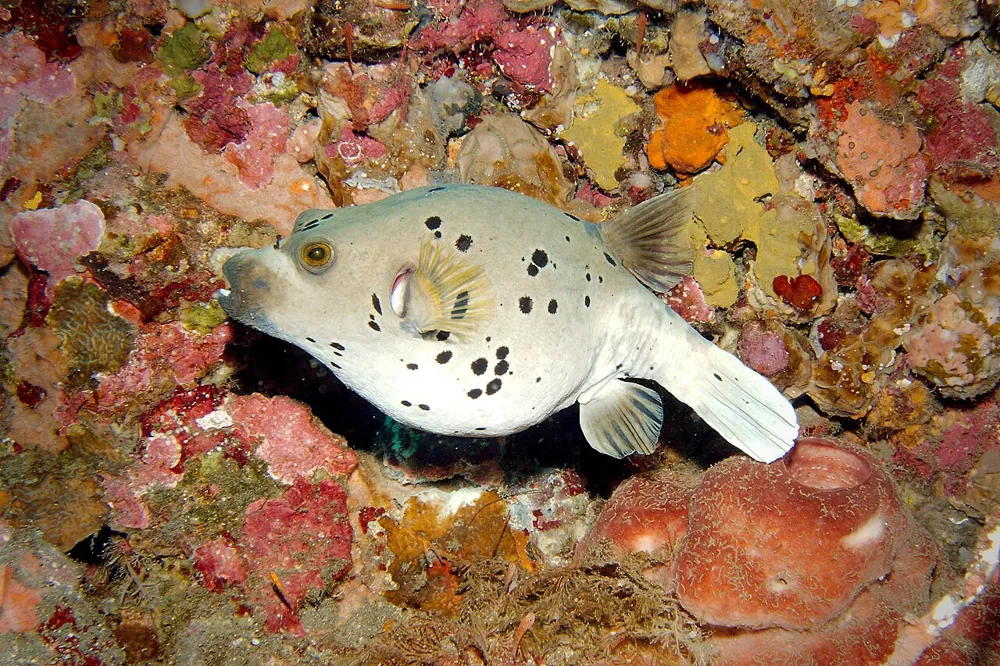
The blackspotted puffer is a small tropical sea fish that lives on coral reefs and in lagoons across the Indian and Pacific Oceans. It is poisonous rather than venomous, so it is dangerous to eat but does not bite or sting.1


.jpg)
 Otú ị ga-esi mata ya
- Small, oval, rounded body with no scales; the skin is smooth.1
- Short snout with two pairs of nostrils and four strong teeth.1
- Background colour varies: grey, light brown, bluish, bright yellow or orangey yellow, and sometimes two colours such as blue and yellow.1
- Skin covered in dark blotches of varying size and shape.1
- Dark colouring around the eyes and mouth.1
A na-agwakọkarị ya na: The yellow colour forms are very similar to those of Arothron meleagris, but they can be told apart. The fully yellow form is much rarer in this species (about 1% of individuals, compared with 10% in A. meleagris). It usually keeps dark markings around the mouth, eyes and base of the dorsal fin, while A. meleagris is uniformly yellow with black spots.1
Ike nsị
Ọ na-emerụ ahụ naanị ma ihe riri ya.
Gịnị ka nsị dị n'ahụ ya na-eme?
It is not venomous. It holds tetrodotoxin, a deadly poison that protects it from predators.1
Kedu otú o si dị egwu nye mmadụ?
Ihe ize ndụ nye mmadụ: Ọ dị egwu nke ukwuuỌ nwere ike igbu onye na-enwetaghị ọgwụgwọ.Its tetrodotoxin is deadly. The risk comes from eating or handling the fish.1
Gịnị ka ọ na-eme mgbe ụjọ tụrụ ya?
When threatened, it inflates its body by swallowing air or water.1
 Ọ bụrụ na mmadụ metụrụ ya aka ma ọ bụ rie ya
- Ọ bụrụ na mmadụ riri ya ma ọ bụ nwee mgbaàmà mgbe o risịrị ya: kpọọ nọmba mberede gị ma ọ bụ ụlọ ọrụ ndụmọdụ nsị (poison centre) ozugbo.
Na-ebu ụzọ kpọọ nọmba mberede gị mgbe niile (112, 000, 911). Nke a bụ ndụmọdụ enyemaka mbụ n'ozuzu, ọ bụghị ndụmọdụ ọgwụ. Isi ihe enyemaka mbụ
 Nọrọ na nchekwa
- Emetụla anụ ọhịa aka, ejidela ya, emekwala ya ihe ọjọọ, ọbụna obere, ọbụna ma ọ dị ka ọ na-ehi ụra ma ọ bụ nwụọ anwụ.
- Nye ya ohere. Ọ bụrụ na ị zutere otu, dị jụụ, laghachi azụ nwayọ, hapụ ya ka ọ gaa ụzọ ya.
- Ọ bụrụ na i metụrụ ya aka ma ọ bụ rie ya: ehichala anya gị ma ọ bụ ọnụ gị, saa aka gị, chọọkwa enyemaka ọgwụ.
Ọ naghị achụ gị. Nsị ya dị naanị ka ihe ọ bụla ghara iri ya. Ihe ndị ọzọ gbasara ịnọ na nchekwa
Ebee n'ụwa?
Ọ hà aṅaa?
Kedu otú o si dị ogologo?
 dị ogologo dị ka blọk egwuregwu 10 n'ahịrị
 nwere ike igwu mmiri ogologo nnukwu ọdọ igwu mmiri (50 m) n'ime sekọnd 45
Kedu otú Blackspotted puffer si hà ma e jiri ya tụnyere GỊ?
Naanị mgbakọ na mwepụ n'ime browser gị. Ọ dịghị ihe echekwara ma ọ bụ ezigara ebe ọ bụla.
Kedu otú o si agba ọsọ?
Eziokwu
Its tetrodotoxin poison is strong enough to protect it from predators.1
It has no scales, and its skin is covered with dark blotches.1
It has no pelvic fins and no lateral line.1
It is active during the day and lives alone, defending its own territory.1
It has four strong teeth set in a terminal mouth.1
Maka ndị ọkachamara nsị
- Aha sayensị
- Arothron nigropunctatus
- Otu
- Anụmanụ ndị ọzọ nwere nsị n'ahụ
- Ezinụlọ
- Tetraodontidae2
- Usoro
- Tetraodontiformes
- Kọntinent dị iche iche
- Oké Osimiri Pasifik, Oké Osimiri India, Osimiri Uhie, Osimiri Coral, Osimiri Filipin, Osimiri Ndịda China, Osimiri Timor na Arafura, Ọwara Bengal, Oké osimiri niile
- Ihe ize ndụ nye mmadụ
- 4 / 5: Ọ dị egwu nke ukwuu3
Ebe eziokwu ndị a si
- Blackspotted puffer (Wikipedia (CC BY-SA 4.0))
- Arothron nigropunctatus (iNaturalist): aha na nhazi ọkwa.
- Venom Wiki: ọkwa ihe ize ndụ, nha nkịtị na nchepụta ọsọ bụ nke anyị. Lee otú anyị si achọpụta ha: Otú anyị si atụ ihe ize ndụ.
Eziokwu ọ bụla dị na peeji a nwere nọmba na-egosi ebe o si. Ọ bụrụ na anyị mehiere ihe, ndo, anyị bụ ndị hụrụ anụmanụ n'anya, ọ bụghị akwụkwọ akụkọ sayensị. Gwa anyị na [email protected], anyị ga-edozi ya.
 Akpị agụụ na-agụ! Venom Wiki bụ ọrụ otu onye: n'efu, na-enweghị mgbasa ozi na ndị na-esochi gị. Obere onyinye na-enyere aka idebe ya n'ịntanetị.Nye akpị nri
Ndị ọzọ si n'otu ahụ: Anụmanụ ndị ọzọ nwere nsị n'ahụ
 Japanese pufferfishAnụmanụ ndị ọzọ nwere nsị n'ahụNa-egbu egbu
 Hawksbill sea turtleAnụmanụ ndị ọzọ nwere nsị n'ahụNwere ike igbu mmadụ
 Greenland sharkAnụmanụ ndị ọzọ nwere nsị n'ahụNaanị na-afụ ụfụ
 Silver-cheeked toadfishAnụmanụ ndị ọzọ nwere nsị n'ahụNa-egbu egbu
 White-spotted pufferAnụmanụ ndị ọzọ nwere nsị n'ahụNwere ike igbu mmadụ
 Long-spine porcupinefishAnụmanụ ndị ọzọ nwere nsị n'ahụỌ chọrọ dọkịta
Ọ na-ebikwa na: Oké Osimiri Pasifik
 Australian box jellyfishJelifish na anụ osimiri na-agba agbaNa-egbu egbuEmetụla ya aka
 Geography coneEjula cone na octopusNa-egbu egbu
 Greater blue-ringed octopusEjula cone na octopusNa-egbu egbu
 Southern blue-ringed octopusEjula cone na octopusNa-egbu egbu
 Irukandji jellyfishJelifish na anụ osimiri na-agba agbaNwere ike igbu mmadụEmetụla ya aka
 Reef stonefishAzụ na-agba nsịNwere ike igbu mmadụEmetụla ya aka