
 Afrịka
 Eshia
Eshia Yurop
Yurop Ndịda Amerika
 Ọstrelia na Oshenia
 Antaktika
 Oké Osimiri Pasifik
 Oké Osimiri Atlantik
 Oké Osimiri India
 Oké Osimiri Arktik
 Osimiri Mediterenian
 Osimiri Uhie
 Osimiri Karibịan
 Osimiri Coral
 Osimiri Ndịda China
 Osimiri Filipin
 Osimiri Andaman
 Osimiri Ugwu (North Sea)
 Osimiri Timor na Arafura
 Ọwara Bengal
 Ọwara California
Eastern hognose snake
 Ịta
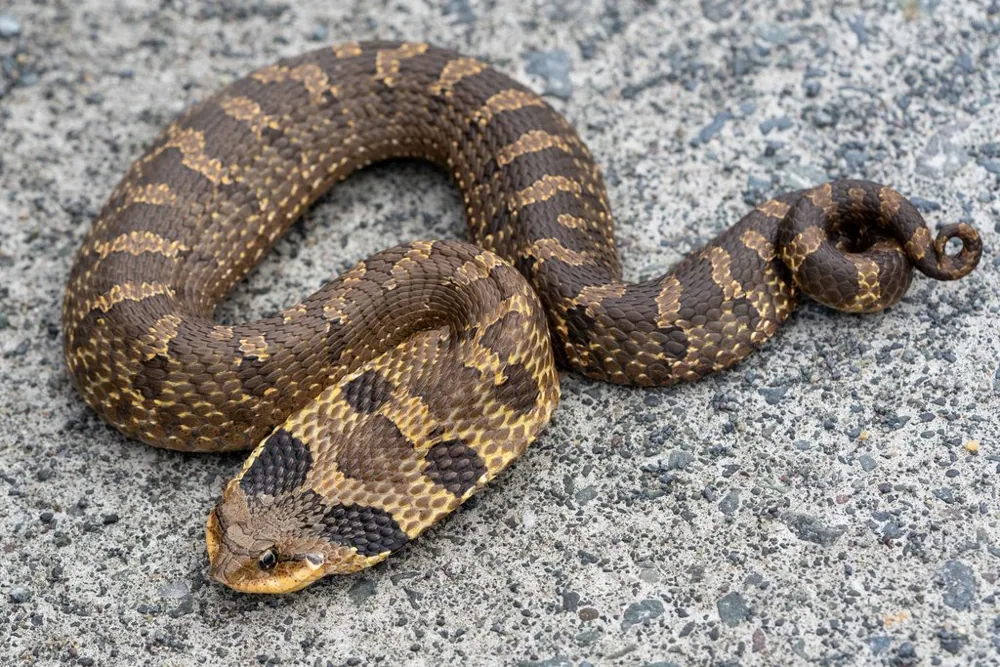
ỊtaThe eastern hognose snake is a stout, rear-fanged snake that lives across eastern and central North America. It has an upturned snout, which it uses for digging in sandy soil. It is mildly venomous, but its venom is aimed at toads and frogs and is not deadly to people.1

 Otú ị ga-esi mata ya
- Stout body with an upturned snout1
- Colour varies widely by area, from red, green or orange to brown, grey or black, sometimes blotched, checkered or plain1
- Belly is usually a solid grey, yellow or cream colour1
- The underside of the tail is lighter than the belly1
- Adults average 71 cm in total length, and females are larger than males1
Ike nsị
Nsị na-esi n'eze nsị ya ma ọ bụ eze ya apụta mgbe ọ na-ata.
Gịnị ka nsị ọ na-agba na-eme?
Its venom is mild and is adapted to amphibian prey. It is delivered through enlarged rear teeth from the Duvernoy's gland. In people who are allergic to the snake's saliva, a bite can cause local swelling, burning, discolouration and bleeding from the wound.1
Kedu otú o si dị egwu nye mmadụ?
Ihe ize ndụ nye mmadụ: ObereDị ka ịgba aṅụ ma ọ bụ nke na-erughị ya. Ọ fọrọ nke nta ka ọ ghara ịdị njọ nye mmadụ.The venom is harmless to most people, and no human deaths have been documented. People who are allergic to its saliva may have local symptoms such as swelling and bleeding.1
Gịnị ka ọ na-eme mgbe ụjọ tụrụ ya?
It flattens its neck, raises its head like a cobra, hisses and strikes with a closed mouth to bluff. If that fails, it rolls onto its back, plays dead, releases a foul musk and lets its tongue hang out.1
 Ọ bụrụ na ọ tara
- Saa ebe ọ tara, mee ka onye ahụ dị jụụ, chọọkwa enyemaka ọgwụ. Ụfọdụ ụdị (dịka boomslang) nwere ike igbu mmadụ ọtụtụ awa ka e mesịrị.
Na-ebu ụzọ kpọọ nọmba mberede gị mgbe niile (112, 000, 911). Nke a bụ ndụmọdụ enyemaka mbụ n'ozuzu, ọ bụghị ndụmọdụ ọgwụ. Isi ihe enyemaka mbụ
 Nọrọ na nchekwa
- Emetụla anụ ọhịa aka, ejidela ya, emekwala ya ihe ọjọọ, ọbụna obere, ọbụna ma ọ dị ka ọ na-ehi ụra ma ọ bụ nwụọ anwụ.
- Nye ya ohere. Ọ bụrụ na ị zutere otu, dị jụụ, laghachi azụ nwayọ, hapụ ya ka ọ gaa ụzọ ya.
- Ọ bụrụ na otu tara gị: dị jụụ, emegharịla ahụ, kpọọ nọmba mberede gị (112, 000, 911) ma ọ bụ gaa ụlọ ọgwụ ngwa ngwa. Cheta ka o si dị, foto na-enye aka.
Ọ naghị achụ gị. Ọ na-eji nsị ya ejide nri ma ọ bụ chebe onwe ya, ọ ga-akakwa mma n'anya ya ịzo onwe ya. Ihe ndị ọzọ gbasara ịnọ na nchekwa
Ọ hà aṅaa?
Kedu otú o si dị ogologo?
 dị ogologo dị ka nwamba ụlọ 2.5 site n'imi ruo n'ọdụ
 dị ogologo dị ka unere 6 a tọgbọrọ n'ahịrị
 nwere ike ịgba ọsọ mita 100 n'ime sekọnd 73 (mmadụ kacha ọsọ chọrọ 9,6)
Kedu otú Eastern hognose snake si hà ma e jiri ya tụnyere GỊ?
Naanị mgbakọ na mwepụ n'ime browser gị. Ọ dịghị ihe echekwara ma ọ bụ ezigara ebe ọ bụla.
Kedu otú o si agba ọsọ?


Eziokwu
One individual was seen playing dead for 45 minutes before moving away.1
It is resistant to the skin poisons of toads, probably because of its enlarged adrenal glands, which release large amounts of hormones to counter the toxins.1
When threatened, it often bluffs by striking with its mouth closed, and it does not try to bite.1
It is a rear-fanged snake, and its enlarged teeth are at the back of the upper jaw.1
Females can store sperm until spring, so they can be fertilised later.1
Onye na-ekpughe akụkọ ụgha
Akụkọ ụgha: The eastern hognose snake is a dangerous, deadly snake.
Eziokwu: It is only mildly venomous, and its venom is aimed at amphibians. No human deaths have been documented, although some people who are allergic to its saliva may have local symptoms.1
Maka ndị ọkachamara nsị
- Aha sayensị
- Heterodon platirhinos
- Otu
- Agwọ nwere eze nsị n'azụ ọnụ
- Ezinụlọ
- Colubridae2
- Usoro
- Squamata
- Kọntinent dị iche iche
- Ugwu Amerika
- Ụmụ ọhụrụ
- Females lay up to 40 eggs, with an average of about 25, usually in June or early July. The hatchlings are about 16.5 to 21 cm long.1
- Otú ọ na-eme n'ọhịa
- Least concern (IUCN Red List, assessed 2007). It is a species of increasing conservation concern in the northeastern part of its range.1
- Ihe ize ndụ nye mmadụ
- 1 / 5: Obere3
Ebe eziokwu ndị a si
- Eastern hognose snake (Wikipedia (CC BY-SA 4.0))
- Heterodon platirhinos (iNaturalist): aha na nhazi ọkwa.
- Venom Wiki: ọkwa ihe ize ndụ, nha nkịtị na nchepụta ọsọ bụ nke anyị. Lee otú anyị si achọpụta ha: Otú anyị si atụ ihe ize ndụ.
Eziokwu ọ bụla dị na peeji a nwere nọmba na-egosi ebe o si. Ọ bụrụ na anyị mehiere ihe, ndo, anyị bụ ndị hụrụ anụmanụ n'anya, ọ bụghị akwụkwọ akụkọ sayensị. Gwa anyị na [email protected], anyị ga-edozi ya.
 Akpị agụụ na-agụ! Venom Wiki bụ ọrụ otu onye: n'efu, na-enweghị mgbasa ozi na ndị na-esochi gị. Obere onyinye na-enyere aka idebe ya n'ịntanetị.Nye akpị nri
Ndị ọzọ si n'otu ahụ: Agwọ nwere eze nsị n'azụ ọnụ
 Western hognose snakeAgwọ nwere eze nsị n'azụ ọnụAdịghị njọ
 Brown vine snakeAgwọ nwere eze nsị n'azụ ọnụAdịghị njọ
 Green vine snakeAgwọ nwere eze nsị n'azụ ọnụAdịghị njọ
 Desert night snakeAgwọ nwere eze nsị n'azụ ọnụAdịghị njọ
 Night snakeAgwọ nwere eze nsị n'azụ ọnụAdịghị njọ
 Sonoran lyre snakeAgwọ nwere eze nsị n'azụ ọnụAdịghị njọ
 Terciopelo
 Eastern coral snake
 Eastern diamondback rattlesnake
 Eyelash viper
 Timber rattlesnake
 Western diamondback rattlesnake