
 Afrịka
 Eshia
Eshia Yurop
Yurop Ndịda Amerika
 Ọstrelia na Oshenia
 Antaktika
 Oké Osimiri Pasifik
 Oké Osimiri Atlantik
 Oké Osimiri India
 Oké Osimiri Arktik
 Osimiri Mediterenian
 Osimiri Uhie
 Osimiri Karibịan
 Osimiri Coral
 Osimiri Ndịda China
 Osimiri Filipin
 Osimiri Andaman
 Osimiri Ugwu (North Sea)
 Osimiri Timor na Arafura
 Ọwara Bengal
 Ọwara California
Sonoran lyre snake
 Ịta
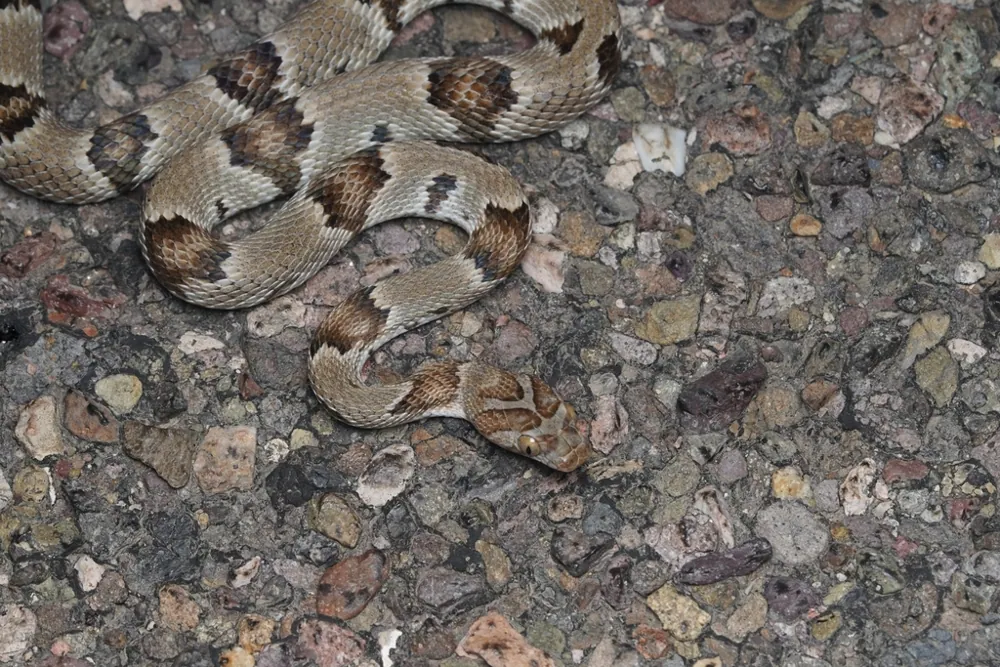
ỊtaThe Sonoran lyre snake is a slender, medium to large snake with a distinctive V-shaped mark on top of its head. It lives among rocks in the American Southwest and northwestern Mexico. It is a rear-fanged snake, so its fangs sit at the back of its mouth.1



 Otú ị ga-esi mata ya
- A V-shaped or lyre-like mark on the top of the head, which gives it its name1
- Pale grey, tan or light brown ground colour1
- 18 to 31 dark brown saddles or blotches along the back, with pale edges1
- A dark bar across the snout between the eyes1
- A broad, flat head that is clearly wider than its slim neck, with large eyes that have vertical pupils1
Ike nsị
Nsị na-esi n'eze nsị ya ma ọ bụ eze ya apụta mgbe ọ na-ata.
Gịnị ka nsị ọ na-agba na-eme?
It is a rear-fanged (opisthoglyphous) snake, meaning its fangs are at the back of the mouth. Its venom is relatively mild and is adapted to subdue small, fast lizards and mammals. Because the fangs are at the back, it usually has to chew on its target to inject enough venom.1
Kedu otú o si dị egwu nye mmadụ?
Ihe ize ndụ nye mmadụ: ObereDị ka ịgba aṅụ ma ọ bụ nke na-erughị ya. Ọ fọrọ nke nta ka ọ ghara ịdị njọ nye mmadụ.The venom is generally considered harmless to people. A bite may cause mild pain and swelling around the bite, but it is not medically significant.1
 Ọ bụrụ na ọ tara
- Saa ebe ọ tara, mee ka onye ahụ dị jụụ, chọọkwa enyemaka ọgwụ. Ụfọdụ ụdị (dịka boomslang) nwere ike igbu mmadụ ọtụtụ awa ka e mesịrị.
Na-ebu ụzọ kpọọ nọmba mberede gị mgbe niile (112, 000, 911). Nke a bụ ndụmọdụ enyemaka mbụ n'ozuzu, ọ bụghị ndụmọdụ ọgwụ. Isi ihe enyemaka mbụ
 Nọrọ na nchekwa
- Emetụla anụ ọhịa aka, ejidela ya, emekwala ya ihe ọjọọ, ọbụna obere, ọbụna ma ọ dị ka ọ na-ehi ụra ma ọ bụ nwụọ anwụ.
- Nye ya ohere. Ọ bụrụ na ị zutere otu, dị jụụ, laghachi azụ nwayọ, hapụ ya ka ọ gaa ụzọ ya.
- Ọ bụrụ na otu tara gị: dị jụụ, emegharịla ahụ, kpọọ nọmba mberede gị (112, 000, 911) ma ọ bụ gaa ụlọ ọgwụ ngwa ngwa. Cheta ka o si dị, foto na-enye aka.
Ọ naghị achụ gị. Ọ na-eji nsị ya ejide nri ma ọ bụ chebe onwe ya, ọ ga-akakwa mma n'anya ya ịzo onwe ya. Ihe ndị ọzọ gbasara ịnọ na nchekwa
Ọ hà aṅaa?
Kedu otú o si dị ogologo?
 dị ogologo dị ka nwamba ụlọ 2 site n'imi ruo n'ọdụ
 dị ogologo dị ka unere 5 a tọgbọrọ n'ahịrị
 nwere ike ịgba ọsọ mita 100 n'ime sekọnd 71 (mmadụ kacha ọsọ chọrọ 9,6)
Kedu otú Sonoran lyre snake si hà ma e jiri ya tụnyere GỊ?
Naanị mgbakọ na mwepụ n'ime browser gị. Ọ dịghị ihe echekwara ma ọ bụ ezigara ebe ọ bụla.
Kedu otú o si agba ọsọ?


Eziokwu
Its front teeth are long and curved, its middle teeth are shorter, and its rear fangs are long and grooved.1
Its genus name, Trimorphodon, means 'three-shaped teeth', because it has three kinds of teeth in its upper jaw.1
Although it is mostly a rock dweller, it can climb steep cliffs and sometimes trees or shrubs.1
Maka ndị ọkachamara nsị
- Aha sayensị
- Trimorphodon lambda
- Otu
- Agwọ nwere eze nsị n'azụ ọnụ
- Ezinụlọ
- Colubridae2
- Usoro
- Squamata
- Kọntinent dị iche iche
- Ugwu Amerika
- Ụmụ ọhụrụ
- It lays eggs. A female lays a clutch of 7 to 20 eggs in summer, and the young hatch in late summer to early fall.1
- Otú ọ na-eme n'ọhịa
- Least Concern (IUCN Red List)1
- Ihe ize ndụ nye mmadụ
- 1 / 5: Obere3
Ebe eziokwu ndị a si
- Trimorphodon lambda (Wikipedia (CC BY-SA 4.0))
- Trimorphodon lambda (iNaturalist): aha na nhazi ọkwa.
- Venom Wiki: ọkwa ihe ize ndụ, nha nkịtị na nchepụta ọsọ bụ nke anyị. Lee otú anyị si achọpụta ha: Otú anyị si atụ ihe ize ndụ.
Eziokwu ọ bụla dị na peeji a nwere nọmba na-egosi ebe o si. Ọ bụrụ na anyị mehiere ihe, ndo, anyị bụ ndị hụrụ anụmanụ n'anya, ọ bụghị akwụkwọ akụkọ sayensị. Gwa anyị na [email protected], anyị ga-edozi ya.
 Akpị agụụ na-agụ! Venom Wiki bụ ọrụ otu onye: n'efu, na-enweghị mgbasa ozi na ndị na-esochi gị. Obere onyinye na-enyere aka idebe ya n'ịntanetị.Nye akpị nri
Ndị ọzọ si n'otu ahụ: Agwọ nwere eze nsị n'azụ ọnụ
 Western hognose snakeAgwọ nwere eze nsị n'azụ ọnụAdịghị njọ
 Brown vine snakeAgwọ nwere eze nsị n'azụ ọnụAdịghị njọ
 Eastern hognose snakeAgwọ nwere eze nsị n'azụ ọnụAdịghị njọ
 Green vine snakeAgwọ nwere eze nsị n'azụ ọnụAdịghị njọ
 Desert night snakeAgwọ nwere eze nsị n'azụ ọnụAdịghị njọ
 Night snakeAgwọ nwere eze nsị n'azụ ọnụAdịghị njọ
 Terciopelo
 Eastern coral snake
 Eastern diamondback rattlesnake
 Eyelash viper
 Timber rattlesnake
 Western diamondback rattlesnake