
 Afrịka
 Eshia
Eshia Yurop
Yurop Ndịda Amerika
 Ọstrelia na Oshenia
 Antaktika
 Oké Osimiri Pasifik
 Oké Osimiri Atlantik
 Oké Osimiri India
 Oké Osimiri Arktik
 Osimiri Mediterenian
 Osimiri Uhie
 Osimiri Karibịan
 Osimiri Coral
 Osimiri Ndịda China
 Osimiri Filipin
 Osimiri Andaman
 Osimiri Ugwu (North Sea)
 Osimiri Timor na Arafura
 Ọwara Bengal
 Ọwara California
False water cobra
 Ịta
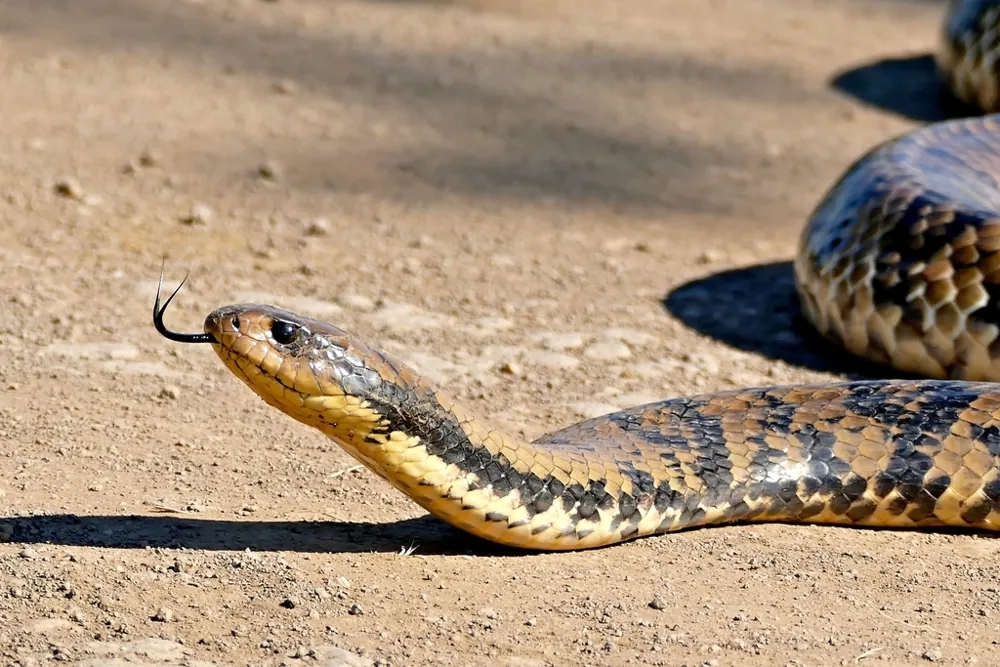
ỊtaThe false water cobra is a large snake that lives in South America. It is named after true cobras because it flattens its neck to look bigger when threatened, but it is not a true cobra. It is mildly venomous, and its bites rarely cause serious harm to people.1



 Otú ị ga-esi mata ya
- Background colour is olive green or brown, with dark spots and bands over much of the body.1
- Bands and colour grow darker towards the tail.1
- Large eyes with round pupils. The tongue is black.1
- Belly is yellow or brown with dark flecks, which form three dotted lines. Males tend to be yellow underneath and females brown.1
- Hatchlings and juveniles are much darker and lack the dark eyes of adults.1
A na-agwakọkarị ya na: Its pattern and colouring look somewhat like those of true water cobras (Boulengerina). The easiest difference to see is the hood: when threatened, the false water cobra stays horizontal, while a true cobra rears up.1
Ike nsị
Nsị na-esi n'eze nsị ya ma ọ bụ eze ya apụta mgbe ọ na-ata.
Gịnị ka nsị ọ na-agba na-eme?
This snake has enlarged rear teeth that are not grooved, and they are linked to a gland that produces oral secretions with proteolytic activity, meaning they break down proteins. In the few serious cases, symptoms included severe swelling, bruising, numbness, itching and dizziness. Most bites cause only mild pain and minor swelling.1
Kedu otú o si dị egwu nye mmadụ?
Ihe ize ndụ nye mmadụ: Na-afụ ụfụỌ nwere ike ịfụ ụfụ nke ukwuu, mana ọ naghị adịkarị njọ.Many bites have been recorded, but only four cases of significant reaction in humans are reported for this species. It is considered mildly venomous.1
Gịnị ka ọ na-eme mgbe ụjọ tụrụ ya?
When threatened, it flattens its neck like a cobra, and can flatten lower parts of its body too, to look larger and more intimidating.1
 Ọ bụrụ na ọ tara
- Saa ebe ọ tara, mee ka onye ahụ dị jụụ, chọọkwa enyemaka ọgwụ. Ụfọdụ ụdị (dịka boomslang) nwere ike igbu mmadụ ọtụtụ awa ka e mesịrị.
Na-ebu ụzọ kpọọ nọmba mberede gị mgbe niile (112, 000, 911). Nke a bụ ndụmọdụ enyemaka mbụ n'ozuzu, ọ bụghị ndụmọdụ ọgwụ. Isi ihe enyemaka mbụ
 Nọrọ na nchekwa
- Emetụla anụ ọhịa aka, ejidela ya, emekwala ya ihe ọjọọ, ọbụna obere, ọbụna ma ọ dị ka ọ na-ehi ụra ma ọ bụ nwụọ anwụ.
- Nye ya ohere. Ọ bụrụ na ị zutere otu, dị jụụ, laghachi azụ nwayọ, hapụ ya ka ọ gaa ụzọ ya.
- Ọ bụrụ na otu tara gị: dị jụụ, emegharịla ahụ, kpọọ nọmba mberede gị (112, 000, 911) ma ọ bụ gaa ụlọ ọgwụ ngwa ngwa. Cheta ka o si dị, foto na-enye aka.
Ọ naghị achụ gị. Ọ na-eji nsị ya ejide nri ma ọ bụ chebe onwe ya, ọ ga-akakwa mma n'anya ya ịzo onwe ya. Ihe ndị ọzọ gbasara ịnọ na nchekwa
Ọ hà aṅaa?
Kedu otú o si dị ogologo?
Kedu otú o si dị arọ?
 dị ogologo dị ka nkịta 3 site n'imi ruo n'ọdụ
 dị ogologo dị ka unere 17 a tọgbọrọ n'ahịrị
 ọ dị arọ ihe dị ka nwamba ụlọ
 nwere ike ịgba ọsọ mita 100 n'ime sekọnd 54 (mmadụ kacha ọsọ chọrọ 9,6)
Kedu otú False water cobra si hà ma e jiri ya tụnyere GỊ?
Naanị mgbakọ na mwepụ n'ime browser gị. Ọ dịghị ihe echekwara ma ọ bụ ezigara ebe ọ bụla.
Kedu otú o si agba ọsọ?


Eziokwu
Captive-bred individuals can become quite tame and trusting, and many show a high level of intelligence.1
Temperaments vary a lot: some individuals are docile, while others are defensive or even aggressive.1
Males are much smaller than females, a difference called sexual dimorphism.1
It is mainly active during the day, which gives it good daytime vision thanks to its large eyes.1
Onye na-ekpughe akụkọ ụgha
Akụkọ ụgha: It is a true cobra.
Eziokwu: It is not a true cobra. It hoods in a similar way, but stays horizontal instead of rearing up.1
Ebe eziokwu ndị a si
- Hydrodynastes gigas (Wikipedia (CC BY-SA 4.0))
- Hydrodynastes gigas (iNaturalist): aha na nhazi ọkwa.
- Venom Wiki: ọkwa ihe ize ndụ, nha nkịtị na nchepụta ọsọ bụ nke anyị. Lee otú anyị si achọpụta ha: Otú anyị si atụ ihe ize ndụ.
Eziokwu ọ bụla dị na peeji a nwere nọmba na-egosi ebe o si. Ọ bụrụ na anyị mehiere ihe, ndo, anyị bụ ndị hụrụ anụmanụ n'anya, ọ bụghị akwụkwọ akụkọ sayensị. Gwa anyị na [email protected], anyị ga-edozi ya.
 Akpị agụụ na-agụ! Venom Wiki bụ ọrụ otu onye: n'efu, na-enweghị mgbasa ozi na ndị na-esochi gị. Obere onyinye na-enyere aka idebe ya n'ịntanetị.Nye akpị nri
Ndị ọzọ si n'otu ahụ: Agwọ nwere eze nsị n'azụ ọnụ
 Baron's green racerAgwọ nwere eze nsị n'azụ ọnụNaanị na-afụ ụfụ
 Brown vine snakeAgwọ nwere eze nsị n'azụ ọnụAdịghị njọ
 Green vine snakeAgwọ nwere eze nsị n'azụ ọnụAdịghị njọ
 Lichtenstein's green racerAgwọ nwere eze nsị n'azụ ọnụỌ chọrọ dọkịta
 Peruvian slender snakeAgwọ nwere eze nsị n'azụ ọnụỌ chọrọ dọkịta
 Chilean green racerAgwọ nwere eze nsị n'azụ ọnụNaanị na-afụ ụfụ
 Golden poison frog
 Terciopelo
 Brazilian wandering spider
 Eyelash viper
 Golden lancehead
 South American bushmaster