
 Afrịka
 Eshia
Eshia Yurop
Yurop Ndịda Amerika
 Ọstrelia na Oshenia
 Antaktika
 Oké Osimiri Pasifik
 Oké Osimiri Atlantik
 Oké Osimiri India
 Oké Osimiri Arktik
 Osimiri Mediterenian
 Osimiri Uhie
 Osimiri Karibịan
 Osimiri Coral
 Osimiri Ndịda China
 Osimiri Filipin
 Osimiri Andaman
 Osimiri Ugwu (North Sea)
 Osimiri Timor na Arafura
 Ọwara Bengal
 Ọwara California
Lichtenstein's green racer
 Ịta
ỊtaLichtenstein's green racer is a long, green snake with a rear-fanged bite. It lives in parts of southern South America, including northern Argentina, Brazil, Bolivia and northwestern Paraguay. It is venomous, and its bite can cause serious harm, so it is worth knowing what it looks like.1



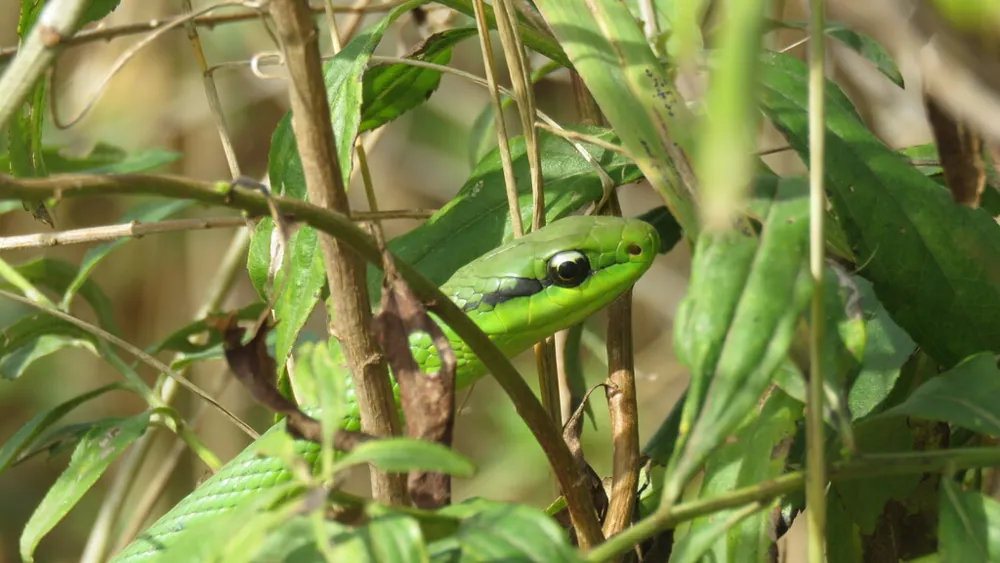
 Otú ị ga-esi mata ya
Ike nsị
Nsị na-esi n'eze nsị ya ma ọ bụ eze ya apụta mgbe ọ na-ata.
Gịnị ka nsị ọ na-agba na-eme?
Its venom is highly haemorrhagic, which means it causes bleeding, and it also breaks down fibrinogen, a protein needed for clotting. It also contains neurotoxic components that affect the nerves, and it is myotoxic, meaning it damages muscle. Common symptoms are pain, swelling, redness and bruising, and bruising can spread far from the bite, even up the arm or to the chest and abdomen.1
Kedu otú o si dị egwu nye mmadụ?
Ihe ize ndụ nye mmadụ: Ọ dị njọỊta ya chọrọ dọkịta. Ọnwụ anaghị adịkarị ma ọlị.Accidents are generally not serious, because the snake has difficulty injecting venom and produces only small amounts. However, there have been reports of serious bites needing medical treatment. In one recent severe case, the snake was allowed to bite for a long time, and the victim developed clotting problems, liver damage and severe swelling. Only one death has been reported, and it was a child.1
 Ọ bụrụ na ọ tara
- Serious bites need medical treatment. The antivenom made for Bothrops snakes is not suitable for bites from this snake.1
- Saa ebe ọ tara, mee ka onye ahụ dị jụụ, chọọkwa enyemaka ọgwụ. Ụfọdụ ụdị (dịka boomslang) nwere ike igbu mmadụ ọtụtụ awa ka e mesịrị.
Na-ebu ụzọ kpọọ nọmba mberede gị mgbe niile (112, 000, 911). Nke a bụ ndụmọdụ enyemaka mbụ n'ozuzu, ọ bụghị ndụmọdụ ọgwụ. Isi ihe enyemaka mbụ
 Nọrọ na nchekwa
- Emetụla anụ ọhịa aka, ejidela ya, emekwala ya ihe ọjọọ, ọbụna obere, ọbụna ma ọ dị ka ọ na-ehi ụra ma ọ bụ nwụọ anwụ.
- Nye ya ohere. Ọ bụrụ na ị zutere otu, dị jụụ, laghachi azụ nwayọ, hapụ ya ka ọ gaa ụzọ ya.
- Ọ bụrụ na otu tara gị: dị jụụ, emegharịla ahụ, kpọọ nọmba mberede gị (112, 000, 911) ma ọ bụ gaa ụlọ ọgwụ ngwa ngwa. Cheta ka o si dị, foto na-enye aka.
Ọ naghị achụ gị. Ọ na-eji nsị ya ejide nri ma ọ bụ chebe onwe ya, ọ ga-akakwa mma n'anya ya ịzo onwe ya. Ihe ndị ọzọ gbasara ịnọ na nchekwa
Ọ hà aṅaa?
Kedu otú o si dị ogologo?
 dị ogologo dị ka nwamba ụlọ 3 site n'imi ruo n'ọdụ
 dị ogologo dị ka unere 8 a tọgbọrọ n'ahịrị
 nwere ike ịgba ọsọ mita 100 n'ime sekọnd 65 (mmadụ kacha ọsọ chọrọ 9,6)
Kedu otú Lichtenstein's green racer si hà ma e jiri ya tụnyere GỊ?
Naanị mgbakọ na mwepụ n'ime browser gị. Ọ dịghị ihe echekwara ma ọ bụ ezigara ebe ọ bụla.
Kedu otú o si agba ọsọ?


Eziokwu
In laboratory mice, its venom had a lethality equivalent to that of Bothrops asper, a pit viper.1
It is rear-fanged, so its fangs are at the back of the mouth, and it chews venom into its prey through a grooved tooth.1
The venom is made in the Duvernoy's gland at the back of the mouth, and the snake must work hard to deliver it.1
Onye na-ekpughe akụkọ ụgha
Akụkọ ụgha: Bites from this snake are never serious.
Eziokwu: Most accidents are not serious, because the snake struggles to inject venom. Still, serious bites have happened, and one child has died, so any bite needs medical attention.1
Maka ndị ọkachamara nsị
- Aha sayensị
- Philodryas olfersii
- Otu
- Agwọ nwere eze nsị n'azụ ọnụ
- Ezinụlọ
- Colubridae2
- Usoro
- Squamata
- Kọntinent dị iche iche
- Ndịda Amerika
- Ụmụ ọhụrụ
- It lays eggs. Each egg is about 5 cm (about 2 inches) long, and a clutch contains 4 to 11 eggs, with larger females laying more.1
- Ihe ize ndụ nye mmadụ
- 3 / 5: Ọ dị njọ3
Ebe eziokwu ndị a si
- Philodryas olfersii (Wikipedia (CC BY-SA 4.0))
- Philodryas olfersii (iNaturalist): aha na nhazi ọkwa.
- Venom Wiki: ọkwa ihe ize ndụ, nha nkịtị na nchepụta ọsọ bụ nke anyị. Lee otú anyị si achọpụta ha: Otú anyị si atụ ihe ize ndụ.
Eziokwu ọ bụla dị na peeji a nwere nọmba na-egosi ebe o si. Ọ bụrụ na anyị mehiere ihe, ndo, anyị bụ ndị hụrụ anụmanụ n'anya, ọ bụghị akwụkwọ akụkọ sayensị. Gwa anyị na [email protected], anyị ga-edozi ya.
 Akpị agụụ na-agụ! Venom Wiki bụ ọrụ otu onye: n'efu, na-enweghị mgbasa ozi na ndị na-esochi gị. Obere onyinye na-enyere aka idebe ya n'ịntanetị.Nye akpị nri
Ndị ọzọ si n'otu ahụ: Agwọ nwere eze nsị n'azụ ọnụ
 Baron's green racerAgwọ nwere eze nsị n'azụ ọnụNaanị na-afụ ụfụ
 False water cobraAgwọ nwere eze nsị n'azụ ọnụNaanị na-afụ ụfụ
 Brown vine snakeAgwọ nwere eze nsị n'azụ ọnụAdịghị njọ
 Green vine snakeAgwọ nwere eze nsị n'azụ ọnụAdịghị njọ
 Peruvian slender snakeAgwọ nwere eze nsị n'azụ ọnụỌ chọrọ dọkịta
 Chilean green racerAgwọ nwere eze nsị n'azụ ọnụNaanị na-afụ ụfụ
 Golden poison frog
 Terciopelo
 Brazilian wandering spider
 Eyelash viper
 Golden lancehead
 South American bushmaster