
 Afrịka
 Eshia
Eshia Yurop
Yurop Ndịda Amerika
 Ọstrelia na Oshenia
 Antaktika
 Oké Osimiri Pasifik
 Oké Osimiri Atlantik
 Oké Osimiri India
 Oké Osimiri Arktik
 Osimiri Mediterenian
 Osimiri Uhie
 Osimiri Karibịan
 Osimiri Coral
 Osimiri Ndịda China
 Osimiri Filipin
 Osimiri Andaman
 Osimiri Ugwu (North Sea)
 Osimiri Timor na Arafura
 Ọwara Bengal
 Ọwara California
Giant Pacific octopus
 Ịta
ỊtaThe giant Pacific octopus is the largest octopus species on Earth. It lives along the coasts of the North Pacific, from Baja California up to Alaska and across to Japan and Korea. It plays an important part in the health of deep sea ecosystems.1



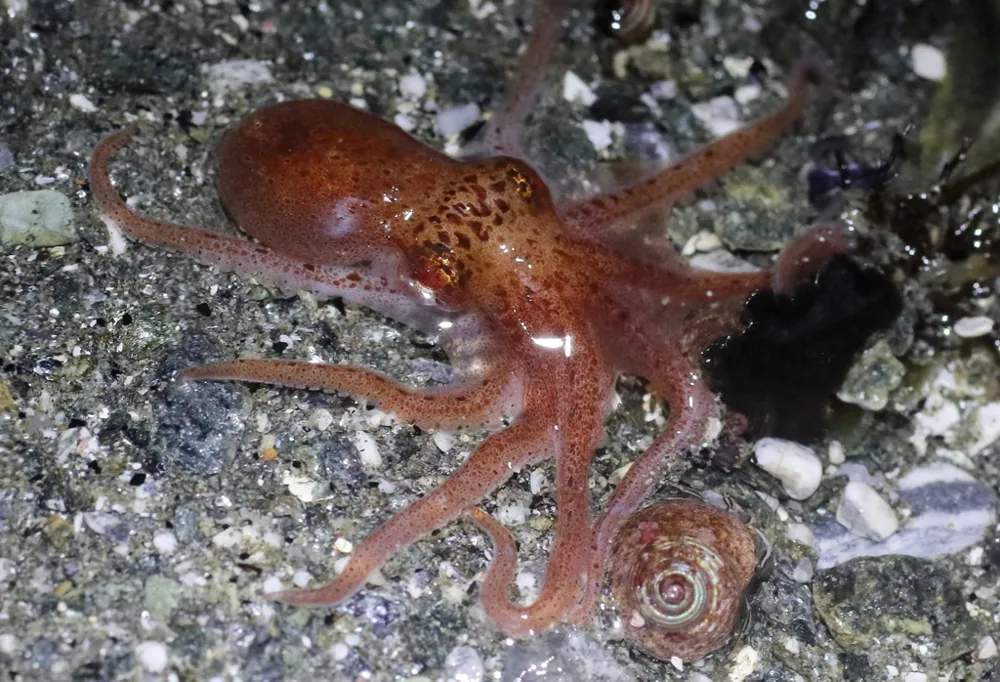
 Otú ị ga-esi mata ya
- It is the largest octopus species, with adults usually weighing around 15 kg.1
- Its arm span can reach up to 4.3 m.1
- Its largest suckers are about 6.4 cm across.1
- It is well camouflaged and often hides in kelp or its den.1
- Piles of shells and bones outside a den, called den litter, can show that one is nearby.1
Ike nsị
Nsị na-esi n'eze nsị ya ma ọ bụ eze ya apụta mgbe ọ na-ata.
Kedu otú o si dị egwu nye mmadụ?
Ihe ize ndụ nye mmadụ: ObereDị ka ịgba aṅụ ma ọ bụ nke na-erughị ya. Ọ fọrọ nke nta ka ọ ghara ịdị njọ nye mmadụ. Ọ bụrụ na ọ tara
- Mkpakọ na nkwụsi ahụ (pressure immobilisation): jiri bandeji na-agbatị agbatị (elastic bandage) kee ebe ọ tara nke ọma, wee kee ya gaa n'elu aka ma ọ bụ ụkwụ ahụ niile, jiri splint (osisi nkwado) kwado ya, mee ka onye ahụ ghara imegharị ahụ ma ọlị ruo mgbe enyemaka bịarutere.
- Octopus nwere mgbanaka acha anụnụ anụnụ ma ọ bụ ejula cone nwere ike ime ka mmadụ kwụsị iku ume mgbe ọ ka maara ihe: kpọọ maka enyemaka, dịkwa njikere inye ya ume nnapụta (ifu ume n'ọnụ ya) ruo mgbe ndị ụgbọ ndị ọrịa bịarutere were ọrụ ahụ.
Na-ebu ụzọ kpọọ nọmba mberede gị mgbe niile (112, 000, 911). Nke a bụ ndụmọdụ enyemaka mbụ n'ozuzu, ọ bụghị ndụmọdụ ọgwụ. Isi ihe enyemaka mbụ
 Nọrọ na nchekwa
- Emetụla anụ ọhịa aka, ejidela ya, emekwala ya ihe ọjọọ, ọbụna obere, ọbụna ma ọ dị ka ọ na-ehi ụra ma ọ bụ nwụọ anwụ.
- Nye ya ohere. Ọ bụrụ na ị zutere otu, dị jụụ, laghachi azụ nwayọ, hapụ ya ka ọ gaa ụzọ ya.
- Ọ bụrụ na otu tara gị: dị jụụ, emegharịla ahụ, kpọọ nọmba mberede gị (112, 000, 911) ma ọ bụ gaa ụlọ ọgwụ ngwa ngwa. Cheta ka o si dị, foto na-enye aka.
Ọ naghị achụ gị. Ọ na-eji nsị ya ejide nri ma ọ bụ chebe onwe ya, ọ ga-akakwa mma n'anya ya ịzo onwe ya. Ihe ndị ọzọ gbasara ịnọ na nchekwa
Ọ hà aṅaa?
Kedu otú o si dị ogologo?
Kedu otú o si dị arọ?
 dị ogologo dị ka nkịta 4 site n'imi ruo n'ọdụ
 dị ogologo dị ka unere 24 a tọgbọrọ n'ahịrị
 nwere ike igwu mmiri ogologo nnukwu ọdọ igwu mmiri (50 m) n'ime sekọnd 7.2
Kedu otú Giant Pacific octopus si hà ma e jiri ya tụnyere GỊ?
Naanị mgbakọ na mwepụ n'ime browser gị. Ọ dịghị ihe echekwara ma ọ bụ ezigara ebe ọ bụla.
Kedu otú o si agba ọsọ?

Eziokwu
Octopuses are ranked as the most intelligent invertebrates, and this species can recognise people it often meets and open childproof bottles.1
Its largest suckers can each support about 16 kg.1
The largest individual may have weighed 270 kg, with an arm span of 9.8 m, according to the fisherman who caught it.1
It spends about 94% of its time hidden in dens, kelp or camouflage.1
Unlike most octopuses, which live about one year, it lives three to five years.1
It is the largest octopus species on Earth.1
Maka ndị ọkachamara nsị
- Aha sayensị
- Enteroctopus dofleini
- Otu
- Ejula cone na octopus
- Ezinụlọ
- Enteroctopodidae2
- Usoro
- Octopoda
- Kọntinent dị iche iche
- Oké Osimiri Pasifik, Oké osimiri niile
- Ụmụ ọhụrụ
- The female lays between 120,000 and 400,000 eggs on a hard surface and guards them for about 6 months, until they hatch. She dies soon after the young hatch. Hatchlings are about the size of a grain of rice, and very few survive to adulthood.1
- Ogologo ndụ
- ihe dị ka afọ 51
- Ihe ize ndụ nye mmadụ
- 1 / 5: Obere3
Ebe eziokwu ndị a si
- Giant Pacific octopus (Wikipedia (CC BY-SA 4.0))
- Enteroctopus dofleini (iNaturalist): aha na nhazi ọkwa.
- Venom Wiki: ọkwa ihe ize ndụ, nha nkịtị na nchepụta ọsọ bụ nke anyị. Lee otú anyị si achọpụta ha: Otú anyị si atụ ihe ize ndụ.
Eziokwu ọ bụla dị na peeji a nwere nọmba na-egosi ebe o si. Ọ bụrụ na anyị mehiere ihe, ndo, anyị bụ ndị hụrụ anụmanụ n'anya, ọ bụghị akwụkwọ akụkọ sayensị. Gwa anyị na [email protected], anyị ga-edozi ya.
 Akpị agụụ na-agụ! Venom Wiki bụ ọrụ otu onye: n'efu, na-enweghị mgbasa ozi na ndị na-esochi gị. Obere onyinye na-enyere aka idebe ya n'ịntanetị.Nye akpị nri
Ndị ọzọ si n'otu ahụ: Ejula cone na octopus
 Geography coneEjula cone na octopusNa-egbu egbu
 Greater blue-ringed octopusEjula cone na octopusNa-egbu egbu
 Southern blue-ringed octopusEjula cone na octopusNa-egbu egbu
 Blue sea dragonEjula cone na octopusNaanị na-afụ ụfụ
 Common octopusEjula cone na octopusAdịghị njọ
 Blue-lined octopusEjula cone na octopusNa-egbu egbu
Ọ na-ebikwa na: Oké Osimiri Pasifik
 Australian box jellyfishJelifish na anụ osimiri na-agba agbaNa-egbu egbuEmetụla ya aka
 Japanese pufferfishAnụmanụ ndị ọzọ nwere nsị n'ahụNa-egbu egbu
 Hawksbill sea turtleAnụmanụ ndị ọzọ nwere nsị n'ahụNwere ike igbu mmadụ
 Irukandji jellyfishJelifish na anụ osimiri na-agba agbaNwere ike igbu mmadụEmetụla ya aka
 Reef stonefishAzụ na-agba nsịNwere ike igbu mmadụEmetụla ya aka
 Crown-of-thorns starfishUrchin, kpakpando osimiri na ikpuruỌ chọrọ dọkịtaEmetụla ya aka