
 Afrịka
 Eshia
Eshia Yurop
Yurop Ndịda Amerika
 Ọstrelia na Oshenia
 Antaktika
 Oké Osimiri Pasifik
 Oké Osimiri Atlantik
 Oké Osimiri India
 Oké Osimiri Arktik
 Osimiri Mediterenian
 Osimiri Uhie
 Osimiri Karibịan
 Osimiri Coral
 Osimiri Ndịda China
 Osimiri Filipin
 Osimiri Andaman
 Osimiri Ugwu (North Sea)
 Osimiri Timor na Arafura
 Ọwara Bengal
 Ọwara California
Green lynx spider
 Ịta
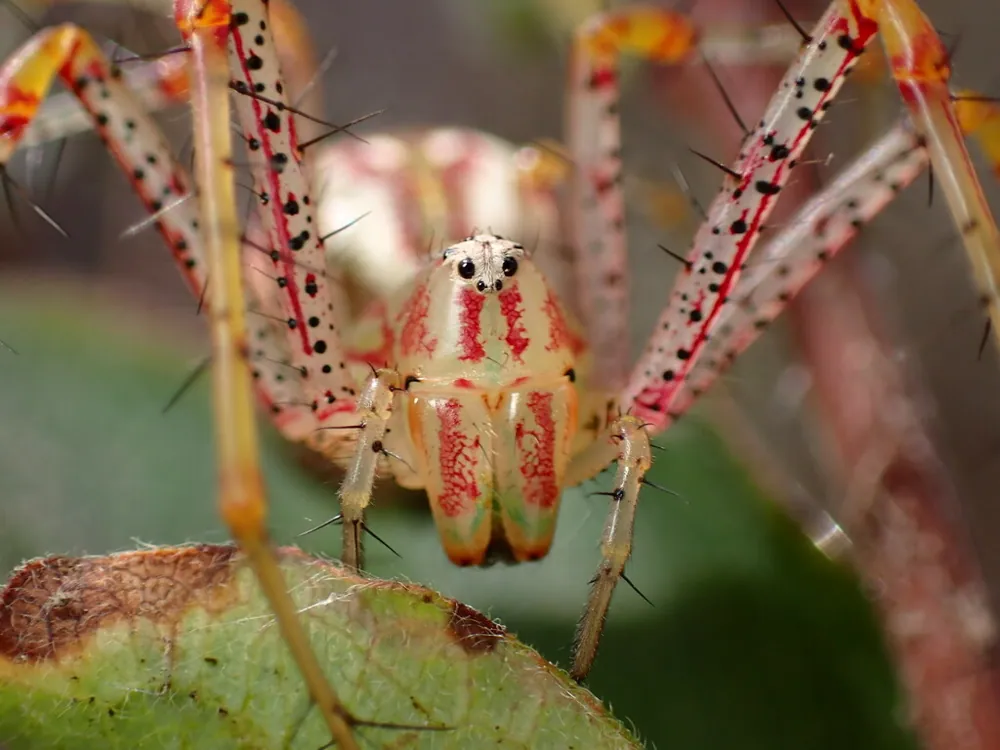
ỊtaThe green lynx spider is a bright green spider that hunts on plants instead of catching prey in a web. It is common in the southern United States, Mexico, Central America and parts of the West Indies. Its bite is painful but not deadly to people.1



 Otú ị ga-esi mata ya
- Bright green body, which may turn paler yellow late in the season, sometimes with reddish streaks1
- Often a red patch between the eyes, with a few red spots on the body1
- About six chevron-like marks on the upper surface of the abdomen, with the points facing forward1
- Legs green to yellow, with long black spines and a scattering of black spots1
- Females are larger than males; the male is more slender1
A na-agwakọkarị ya na: Peucetia longipalpis, the other Peucetia species found in the United States, is very similar. It has a shorter, fatter, more domed abdomen, and its markings on the upper surface are less pronounced.1
Ike nsị
Nsị na-esi n'eze nsị ya ma ọ bụ eze ya apụta mgbe ọ na-ata.
Gịnị ka nsị ọ na-agba na-eme?
Its bite is venomous and painful, but not deadly. In one case the swelling around the bite was 25 mm across and lasted two days. In another case, the swelling was 10 to 20 cm across.1
Kedu otú o si dị egwu nye mmadụ?
Ihe ize ndụ nye mmadụ: ObereDị ka ịgba aṅụ ma ọ bụ nke na-erughị ya. Ọ fọrọ nke nta ka ọ ghara ịdị njọ nye mmadụ.The green lynx spider very seldom bites humans. Its bite is painful but is not deadly.1
Gịnị ka ọ na-eme mgbe ụjọ tụrụ ya?
A female guarding her eggs hangs upside down from the egg sac and attacks anything that comes near, and she can squirt venom from her fangs up to about 30 cm.1
 Ọ bụrụ na ọ tara
- Saa ebe ọ tara, tinye akpa ice n'elu ya maka mgbu ahụ. Chọọ enyemaka ọgwụ ma ọ bụrụ na mgbu ahụ siri ike, gbasaa, ma ọ bụ na ahụ adịghị onye ahụ mma.
Na-ebu ụzọ kpọọ nọmba mberede gị mgbe niile (112, 000, 911). Nke a bụ ndụmọdụ enyemaka mbụ n'ozuzu, ọ bụghị ndụmọdụ ọgwụ. Isi ihe enyemaka mbụ
 Nọrọ na nchekwa
- Emetụla anụ ọhịa aka, ejidela ya, emekwala ya ihe ọjọọ, ọbụna obere, ọbụna ma ọ dị ka ọ na-ehi ụra ma ọ bụ nwụọ anwụ.
- Nye ya ohere. Ọ bụrụ na ị zutere otu, dị jụụ, laghachi azụ nwayọ, hapụ ya ka ọ gaa ụzọ ya.
- Ọ bụrụ na otu tara gị: dị jụụ, emegharịla ahụ, kpọọ nọmba mberede gị (112, 000, 911) ma ọ bụ gaa ụlọ ọgwụ ngwa ngwa. Cheta ka o si dị, foto na-enye aka.
Ọ naghị achụ gị. Ọ na-eji nsị ya ejide nri ma ọ bụ chebe onwe ya, ọ ga-akakwa mma n'anya ya ịzo onwe ya. Ihe ndị ọzọ gbasara ịnọ na nchekwa
Ọ hà aṅaa?
Kedu otú o si dị ogologo?
 ọ dị ogologo ihe dị ka pepa klip
 nwere ike ịgba ọsọ mita 100 n'ime sekọnd 300 (mmadụ kacha ọsọ chọrọ 9,6)
Kedu otú Green lynx spider si hà ma e jiri ya tụnyere GỊ?
Naanị mgbakọ na mwepụ n'ime browser gị. Ọ dịghị ihe echekwara ma ọ bụ ezigara ebe ọ bụla.
Kedu otú o si agba ọsọ?


Eziokwu
A female can squirt venom from her fangs for a distance of about 30 cm to defend her eggs.1
A pregnant female can change her colour to match her background, a process that takes about 16 days.1
The green lynx spider is studied for its use in farming, especially pest control in cotton fields.1
Late in the season, the spider can change from green to a paler yellow.1
Its young pass through eight stages of growth, called instars, before reaching adulthood.1
Onye na-ekpughe akụkọ ụgha
Akụkọ ụgha: The green lynx spider is a deadly spider that often bites people.
Eziokwu: It very seldom bites humans, and its bite, though painful, is not deadly.1
Maka ndị ọkachamara nsị
Ebe eziokwu ndị a si
- Peucetia viridans (Wikipedia (CC BY-SA 4.0))
- Peucetia viridans (iNaturalist): aha na nhazi ọkwa.
- Venom Wiki: ọkwa ihe ize ndụ, nha nkịtị na nchepụta ọsọ bụ nke anyị. Lee otú anyị si achọpụta ha: Otú anyị si atụ ihe ize ndụ.
Eziokwu ọ bụla dị na peeji a nwere nọmba na-egosi ebe o si. Ọ bụrụ na anyị mehiere ihe, ndo, anyị bụ ndị hụrụ anụmanụ n'anya, ọ bụghị akwụkwọ akụkọ sayensị. Gwa anyị na [email protected], anyị ga-edozi ya.
 Akpị agụụ na-agụ! Venom Wiki bụ ọrụ otu onye: n'efu, na-enweghị mgbasa ozi na ndị na-esochi gị. Obere onyinye na-enyere aka idebe ya n'ịntanetị.Nye akpị nri
 Brown recluse
 Southern black widow
 Northern black widow
 Western black widow
 Bold jumping spider
 Golden silk orb-weaver
 Terciopelo
 Eastern coral snake
 Eastern diamondback rattlesnake
 Eyelash viper
 Timber rattlesnake
 Western diamondback rattlesnake