
 Afrịka
 Eshia
Eshia Yurop
Yurop Ndịda Amerika
 Ọstrelia na Oshenia
 Antaktika
 Oké Osimiri Pasifik
 Oké Osimiri Atlantik
 Oké Osimiri India
 Oké Osimiri Arktik
 Osimiri Mediterenian
 Osimiri Uhie
 Osimiri Karibịan
 Osimiri Coral
 Osimiri Ndịda China
 Osimiri Filipin
 Osimiri Andaman
 Osimiri Ugwu (North Sea)
 Osimiri Timor na Arafura
 Ọwara Bengal
 Ọwara California
Lehmann's poison frog
 Nsị n'akpụkpọ ahụ ya
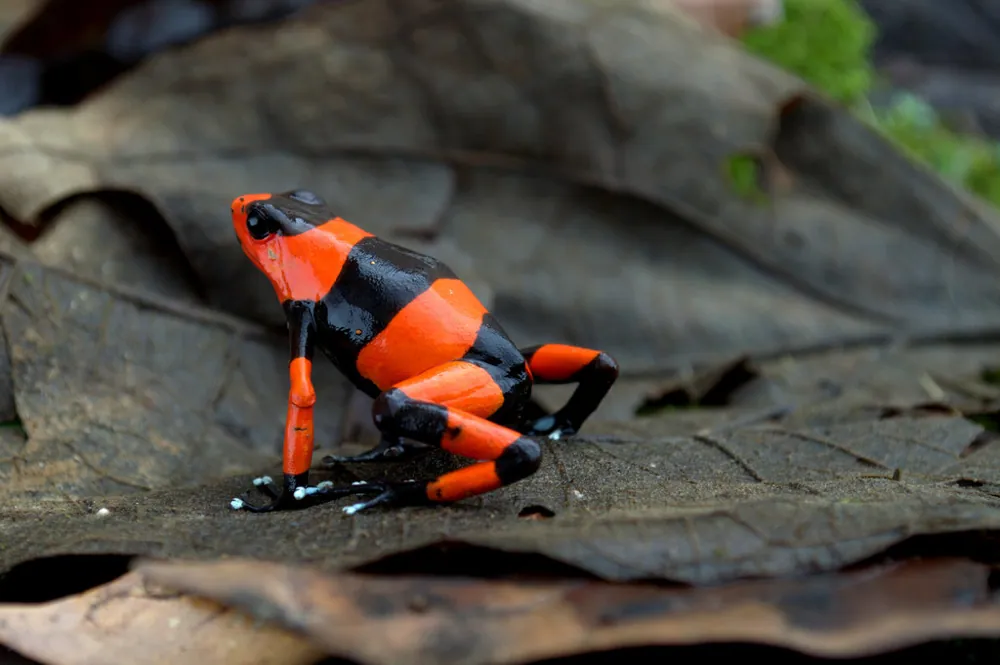
Lehmann's poison frog is a small, brightly marked frog that lives only in a small part of western Colombia. Its skin produces strong toxins, and its bright colours warn predators to leave it alone. It is critically endangered, so it matters for conservation as well as for safety.1


 Otú ị ga-esi mata ya
- Black or dark brown background with two bright, broad bands of colour round the body1
- Coloured bands on the arms and legs, and on the belly1
- Red, orange or yellow colour forms; each frog has its own unique pattern1
- Males have silver-tipped toes1
- Adults measure 31 to 36 mm from snout to vent1
A na-agwakọkarị ya na: The harlequin poison frog (Oophaga histrionicus) looks very similar and can interbreed with it. Scientists still debate whether Lehmann's poison frog is a separate species. The main difference is that Lehmann's frog lacks histrionicotoxins, a type of toxin found in the harlequin frog. Males also have calls that differ between northern and southern populations.1
Ike nsị
Akpụkpọ ahụ ya nwere nsị. Ọ dị egwu imetụ ya aka, iracha ya ma ọ bụ iri ya.
Gịnị ka nsị dị n'ahụ ya na-eme?
It is not venomous. Its skin produces toxins, including alkaloids such as pumiliotoxins, that can be very poisonous. Frogs bred in captivity are not poisonous, because their diet lacks the chemicals needed to make the toxins.1
Kedu otú o si dị egwu nye mmadụ?
Ihe ize ndụ nye mmadụ: Ọ dị njọỌ bụrụ na mmadụ metụ ya aka ma ọ bụ rie ya, gaa n'ebe dọkịta. Ọnwụ anaghị adịkarị ma ọlị.The skin toxins can be very poisonous to predators, and some native tribes of Colombia used them to coat their darts. Frogs in captivity are not poisonous.1
Gịnị ka ọ na-eme mgbe ụjọ tụrụ ya?
Its bright, vivid colours act as a warning to predators that it is inedible.1
 Ọ bụrụ na mmadụ metụrụ ya aka ma ọ bụ rie ya
- Ọ bụrụ na mmadụ metụrụ otu aka: saa aka nke ọma, emetụkwala anya ma ọ bụ ọnụ aka. Ọ bụrụ na nwatakịrị ma ọ bụ anụ ụlọ rachara otu ma ọ bụ rie ya: kpọọ ụlọ ọrụ ndụmọdụ nsị (poison centre) ma ọ bụ nọmba mberede gị.
Na-ebu ụzọ kpọọ nọmba mberede gị mgbe niile (112, 000, 911). Nke a bụ ndụmọdụ enyemaka mbụ n'ozuzu, ọ bụghị ndụmọdụ ọgwụ. Isi ihe enyemaka mbụ
 Nọrọ na nchekwa
- Emetụla anụ ọhịa aka, ejidela ya, emekwala ya ihe ọjọọ, ọbụna obere, ọbụna ma ọ dị ka ọ na-ehi ụra ma ọ bụ nwụọ anwụ.
- Nye ya ohere. Ọ bụrụ na ị zutere otu, dị jụụ, laghachi azụ nwayọ, hapụ ya ka ọ gaa ụzọ ya.
- Ọ bụrụ na i metụrụ ya aka ma ọ bụ rie ya: ehichala anya gị ma ọ bụ ọnụ gị, saa aka gị, chọọkwa enyemaka ọgwụ.
Ọ naghị achụ gị. Nsị ya dị naanị ka ihe ọ bụla ghara iri ya. Ihe ndị ọzọ gbasara ịnọ na nchekwa
Ọ hà aṅaa?
Kedu otú o si dị ogologo?
 ọ dị ogologo ihe dị ka pepa klip
 nwere ike ịgba ọsọ mita 100 n'ime sekọnd 97 (mmadụ kacha ọsọ chọrọ 9,6)
Kedu otú Lehmann's poison frog si hà ma e jiri ya tụnyere GỊ?
Naanị mgbakọ na mwepụ n'ime browser gị. Ọ dịghị ihe echekwara ma ọ bụ ezigara ebe ọ bụla.
Kedu otú o si agba ọsọ?


Eziokwu
In the wild, this frog is toxic, but frogs kept in captivity lose their toxicity because the toxins come from their diet.1
Tadpoles in the same pool may eat each other, so the male carries them to separate water pools.1
The male is the one who guards the eggs and carries the tadpoles on his back for two to four weeks.1
Its skin toxins are being studied for possible medicinal uses.1
Its bright colours are a warning, a strategy called aposematism.1
Onye na-ekpughe akụkọ ụgha
Akụkọ ụgha: Lehmann's poison frog is always poisonous.
Eziokwu: Wild frogs are toxic, but frogs bred in captivity are not, because their diet lacks the chemicals needed to make the poison.1
Maka ndị ọkachamara nsị
- Aha sayensị
- Oophaga lehmanni
- Otu
- Awọ nsị, awọ ala na newt
- Ezinụlọ
- Dendrobatidae2
- Usoro
- Anura
- Kọntinent dị iche iche
- Ndịda Amerika
- Ụmụ ọhụrụ
- The female lays a small number of large eggs on leaves about 1.2 metres above the forest floor. The male fertilises them, keeps them moist, then carries the tadpoles on his back to small water pools such as tree hollows and bromeliad rosettes.1
- Otú ọ na-eme n'ọhịa
- Critically endangered (IUCN); listed on CITES Appendix II1
- Ihe ize ndụ nye mmadụ
- 3 / 5: Ọ dị njọ3
Ebe eziokwu ndị a si
- Lehmann's poison frog (Wikipedia (CC BY-SA 4.0))
- Oophaga lehmanni (iNaturalist): aha na nhazi ọkwa.
- Venom Wiki: ọkwa ihe ize ndụ, nha nkịtị na nchepụta ọsọ bụ nke anyị. Lee otú anyị si achọpụta ha: Otú anyị si atụ ihe ize ndụ.
Eziokwu ọ bụla dị na peeji a nwere nọmba na-egosi ebe o si. Ọ bụrụ na anyị mehiere ihe, ndo, anyị bụ ndị hụrụ anụmanụ n'anya, ọ bụghị akwụkwọ akụkọ sayensị. Gwa anyị na [email protected], anyị ga-edozi ya.
 Akpị agụụ na-agụ! Venom Wiki bụ ọrụ otu onye: n'efu, na-enweghị mgbasa ozi na ndị na-esochi gị. Obere onyinye na-enyere aka idebe ya n'ịntanetị.Nye akpị nri
Ndị ọzọ si n'otu ahụ: Awọ nsị, awọ ala na newt
 Golden poison frogAwọ nsị, awọ ala na newtNa-egbu egbuEmetụla ya aka
 Cane toadAwọ nsị, awọ ala na newtỌ chọrọ dọkịtaEmetụla ya aka
 Dyeing poison dart frogAwọ nsị, awọ ala na newtNaanị na-afụ ụfụEmetụla ya aka
 Black-legged poison frogAwọ nsị, awọ ala na newtNwere ike igbu mmadụEmetụla ya aka
 Bruno's casque-headed frogAwọ nsị, awọ ala na newtỌ chọrọ dọkịtaEmetụla ya aka
 Harlequin poison frogAwọ nsị, awọ ala na newtỌ chọrọ dọkịtaEmetụla ya aka
 Terciopelo
 Brazilian wandering spider
 Eyelash viper
 Golden lancehead
 South American bushmaster
 Peruvian giant centipede