
 Afrịka
 Eshia
Eshia Yurop
Yurop Ndịda Amerika
 Ọstrelia na Oshenia
 Antaktika
 Oké Osimiri Pasifik
 Oké Osimiri Atlantik
 Oké Osimiri India
 Oké Osimiri Arktik
 Osimiri Mediterenian
 Osimiri Uhie
 Osimiri Karibịan
 Osimiri Coral
 Osimiri Ndịda China
 Osimiri Filipin
 Osimiri Andaman
 Osimiri Ugwu (North Sea)
 Osimiri Timor na Arafura
 Ọwara Bengal
 Ọwara California
Mexican beaded lizard
 Ịta
ỊtaThe Mexican beaded lizard is a venomous lizard found mainly in Mexico and southern Guatemala. It is one of only a few lizards known to have evolved a true venom delivery system. Its venom is also being studied for possible medicines.1



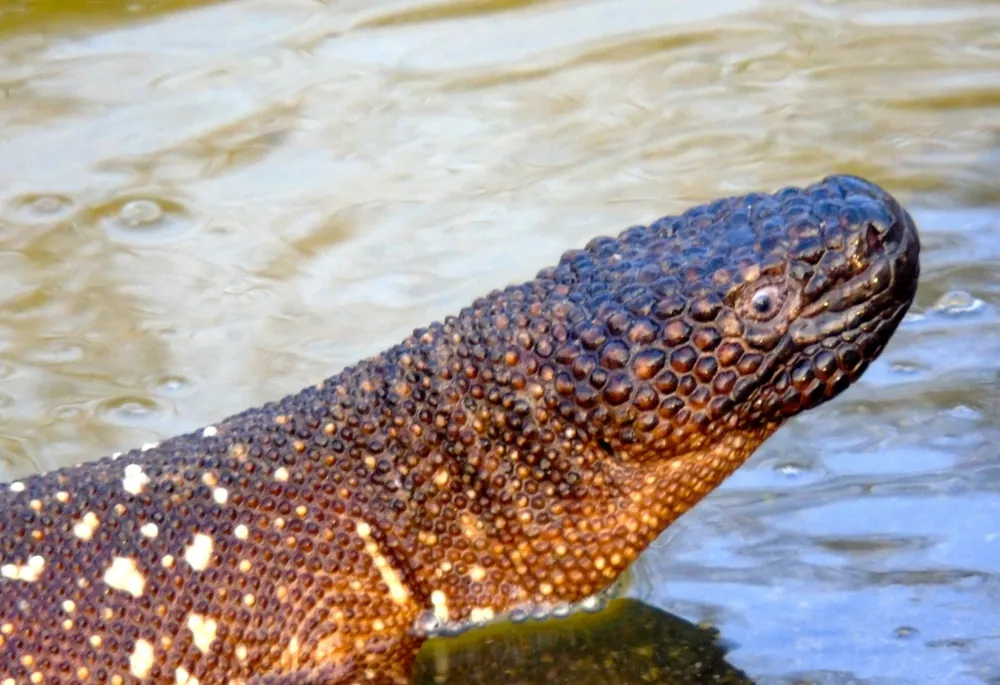
 Otú ị ga-esi mata ya
- Black with yellowish spots or bands.1
- Small, beadlike scales that do not overlap, which give it its name.1
- Stocky body with a broad head.1
- Short tail that stores fat, and does not regrow if broken.1
- Adults are 57 to 91 cm long.1
A na-agwakọkarị ya na: The Gila monster is its closest relative and looks similar. The Mexican beaded lizard is larger, and its colours are duller, black with yellowish bands.1
Ike nsị
Nsị na-esi n'eze nsị ya ma ọ bụ eze ya apụta mgbe ọ na-ata.
Gịnị ka nsị ọ na-agba na-eme?
Its venom is a weak hemotoxin, meaning it attacks blood and tissue. It can cause respiratory failure, which is when breathing fails. In humans, bites cause severe pain that can spread well beyond the bite and last up to 24 hours, along with swelling, weakness, sweating and a rapid drop in blood pressure.1
Kedu otú o si dị egwu nye mmadụ?
Ihe ize ndụ nye mmadụ: Ọ dị njọỊta ya chọrọ dọkịta. Ọnwụ anaghị adịkarị ma ọlị.Human deaths from its bites are rare. Eight human bites were documented in the past century, and almost all happened when people prodded captive lizards with a finger or bare foot.1
 Ọ bụrụ na ọ tara
- Saa ọnya ahụ, mee ka onye ahụ dị jụụ, chọọkwa enyemaka ọgwụ.
Na-ebu ụzọ kpọọ nọmba mberede gị mgbe niile (112, 000, 911). Nke a bụ ndụmọdụ enyemaka mbụ n'ozuzu, ọ bụghị ndụmọdụ ọgwụ. Isi ihe enyemaka mbụ
 Nọrọ na nchekwa
- Emetụla anụ ọhịa aka, ejidela ya, emekwala ya ihe ọjọọ, ọbụna obere, ọbụna ma ọ dị ka ọ na-ehi ụra ma ọ bụ nwụọ anwụ.
- Nye ya ohere. Ọ bụrụ na ị zutere otu, dị jụụ, laghachi azụ nwayọ, hapụ ya ka ọ gaa ụzọ ya.
- Ọ bụrụ na otu tara gị: dị jụụ, emegharịla ahụ, kpọọ nọmba mberede gị (112, 000, 911) ma ọ bụ gaa ụlọ ọgwụ ngwa ngwa. Cheta ka o si dị, foto na-enye aka.
Ọ naghị achụ gị. Ọ na-eji nsị ya ejide nri ma ọ bụ chebe onwe ya, ọ ga-akakwa mma n'anya ya ịzo onwe ya. Ihe ndị ọzọ gbasara ịnọ na nchekwa
Ọ hà aṅaa?
Kedu otú o si dị ogologo?
Kedu otú o si dị arọ?
 dị ogologo dị ka nwamba ụlọ 2 site n'imi ruo n'ọdụ
 dị ogologo dị ka unere 5 a tọgbọrọ n'ahịrịọ dị arọ ihe dị ka nwamba ụlọ
 nwere ike ịgba ọsọ mita 100 n'ime sekọnd 140 (mmadụ kacha ọsọ chọrọ 9,6)
Kedu otú Mexican beaded lizard si hà ma e jiri ya tụnyere GỊ?
Naanị mgbakọ na mwepụ n'ime browser gị. Ọ dịghị ihe echekwara ma ọ bụ ezigara ebe ọ bụla.
Kedu otú o si agba ọsọ?


Eziokwu
It is one of only two venomous beaded lizard species, and the only lizards known to have evolved an overt venom delivery system, along with the rest of its genus.1
Some compounds in its venom are being studied for possible treatments of diabetes, Alzheimer's disease and HIV. One of them, exendin-3, is the basis of the drug exenatide.1
The beaded lizard is immune to the effects of its own venom.1
It is larger than the Gila monster, with an average adult weight of 800 g, and large specimens exceed 2,000 g.1
Beaded lizards have forked pink tongues that they use to smell, with the help of a Jacobson's organ.1
Young beaded lizards are rarely seen, as they are believed to spend much of their early lives underground.1
Onye na-ekpughe akụkọ ụgha
Akụkọ ụgha: The beaded lizard is more venomous than a rattlesnake, can cause lightning strikes with its tail, or can make a pregnant woman miscarry by looking at her.
Eziokwu: These beliefs are incorrect. Its venom is weak, and human deaths are rare.1
Maka ndị ọkachamara nsị
- Aha sayensị
- Heloderma horridum
- Otu
- Ngwere na-agba nsị
- Ezinụlọ
- Helodermatidae2
- Usoro
- Squamata
- Kọntinent dị iche iche
- Ugwu Amerika
- Ụmụ ọhụrụ
- It lays clutches of 2 to 30 eggs in late summer or early fall, and the eggs hatch the following spring or summer.1
- Otú ọ na-eme n'ọhịa
- Threatened (Mexican law, category A). Listed on Appendix II of CITES.1
- Ihe ize ndụ nye mmadụ
- 3 / 5: Ọ dị njọ3
Ebe eziokwu ndị a si
- Mexican beaded lizard (Wikipedia (CC BY-SA 4.0))
- Heloderma horridum (iNaturalist): aha na nhazi ọkwa.
- Venom Wiki: ọkwa ihe ize ndụ, nha nkịtị na nchepụta ọsọ bụ nke anyị. Lee otú anyị si achọpụta ha: Otú anyị si atụ ihe ize ndụ.
Eziokwu ọ bụla dị na peeji a nwere nọmba na-egosi ebe o si. Ọ bụrụ na anyị mehiere ihe, ndo, anyị bụ ndị hụrụ anụmanụ n'anya, ọ bụghị akwụkwọ akụkọ sayensị. Gwa anyị na [email protected], anyị ga-edozi ya.
 Akpị agụụ na-agụ! Venom Wiki bụ ọrụ otu onye: n'efu, na-enweghị mgbasa ozi na ndị na-esochi gị. Obere onyinye na-enyere aka idebe ya n'ịntanetị.Nye akpị nri
Ndị ọzọ si n'otu ahụ: Ngwere na-agba nsị
 Gila monsterNgwere na-agba nsịỌ chọrọ dọkịta
 Chiapan beaded lizardNgwere na-agba nsịỌ chọrọ dọkịta
 Guatemalan beaded lizardNgwere na-agba nsịỌ chọrọ dọkịta
 Rio Fuerte beaded lizardNgwere na-agba nsịỌ chọrọ dọkịta
 Komodo dragonNgwere na-agba nsịNwere ike igbu mmadụ
 Desert monitorNgwere na-agba nsịNaanị na-afụ ụfụ
 Terciopelo
 Eastern coral snake
 Eastern diamondback rattlesnake
 Eyelash viper
 Timber rattlesnake
 Western diamondback rattlesnake