
 Afrịka
 Eshia
Eshia Yurop
Yurop Ndịda Amerika
 Ọstrelia na Oshenia
 Antaktika
 Oké Osimiri Pasifik
 Oké Osimiri Atlantik
 Oké Osimiri India
 Oké Osimiri Arktik
 Osimiri Mediterenian
 Osimiri Uhie
 Osimiri Karibịan
 Osimiri Coral
 Osimiri Ndịda China
 Osimiri Filipin
 Osimiri Andaman
 Osimiri Ugwu (North Sea)
 Osimiri Timor na Arafura
 Ọwara Bengal
 Ọwara California
Komodo dragon
 Ịta
ỊtaThe Komodo dragon is a very large lizard, and it is the biggest lizard alive today. It lives on a few small islands in Eastern Indonesia, where it hunts deer and pigs and sits at the top of its food chain. Adults occasionally attack people, so it is a dangerous animal to keep your distance from.1



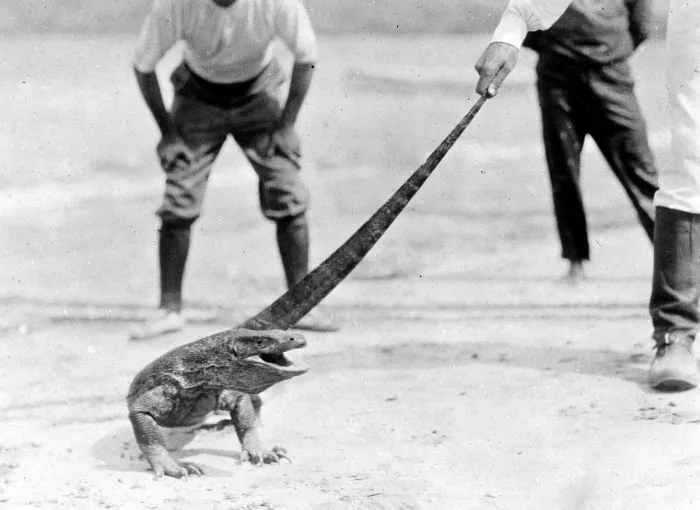
 Otú ị ga-esi mata ya
- A very large, heavy-bodied lizard. Males can reach 3 m in length.1
- A tail about as long as its body.1
- Armoured, bony scales that give the skin a rugged, chain-mail look.1
- Serrated, saw-like teeth, and saliva that is often tinged with blood.1
- A long, yellow, deeply forked tongue that it flicks like a snake.1
Ike nsị
Nsị na-esi n'eze nsị ya ma ọ bụ eze ya apụta mgbe ọ na-ata.
Kedu otú o si dị egwu nye mmadụ?
Ihe ize ndụ nye mmadụ: Ọ dị egwu nke ukwuuỌ nwere ike igbu onye na-enwetaghị ọgwụgwọ.Adult Komodo dragons occasionally attack humans, so they should be treated as dangerous. Their size and strength make any attack serious.1
 Ọ bụrụ na ọ tara
- Saa ọnya ahụ, mee ka onye ahụ dị jụụ, chọọkwa enyemaka ọgwụ.
Na-ebu ụzọ kpọọ nọmba mberede gị mgbe niile (112, 000, 911). Nke a bụ ndụmọdụ enyemaka mbụ n'ozuzu, ọ bụghị ndụmọdụ ọgwụ. Isi ihe enyemaka mbụ
 Nọrọ na nchekwa
- Emetụla anụ ọhịa aka, ejidela ya, emekwala ya ihe ọjọọ, ọbụna obere, ọbụna ma ọ dị ka ọ na-ehi ụra ma ọ bụ nwụọ anwụ.
- Nye ya ohere. Ọ bụrụ na ị zutere otu, dị jụụ, laghachi azụ nwayọ, hapụ ya ka ọ gaa ụzọ ya.
- Ọ bụrụ na otu tara gị: dị jụụ, emegharịla ahụ, kpọọ nọmba mberede gị (112, 000, 911) ma ọ bụ gaa ụlọ ọgwụ ngwa ngwa. Cheta ka o si dị, foto na-enye aka.
Ọ naghị achụ gị. Ọ na-eji nsị ya ejide nri ma ọ bụ chebe onwe ya, ọ ga-akakwa mma n'anya ya ịzo onwe ya. Ihe ndị ọzọ gbasara ịnọ na nchekwa
Ọ hà aṅaa?
Kedu otú o si dị ogologo?
Kedu otú o si dị arọ?
 dị ogologo dị ka nkịta 3 site n'imi ruo n'ọdụ
 dị ogologo dị ka unere 17 a tọgbọrọ n'ahịrị
 nwere ike ịgba ọsọ mita 100 n'ime sekọnd 18 (mmadụ kacha ọsọ chọrọ 9,6)
Kedu otú Komodo dragon si hà ma e jiri ya tụnyere GỊ?
Naanị mgbakọ na mwepụ n'ime browser gị. Ọ dịghị ihe echekwara ma ọ bụ ezigara ebe ọ bụla.
Kedu otú o si agba ọsọ?

Eziokwu
The Komodo dragon is the largest living lizard, and its size is unusual among reptiles.1
Its teeth are replaced about every 40 days, and it has up to five replacement teeth for each tooth position at any time.1
Fossils show that Komodo dragons once lived in Australia, where they existed alongside megalania, the largest land lizard ever.1
The 1926 expedition by W. Douglas Burden inspired the 1933 film King Kong.1
Onye na-ekpughe akụkọ ụgha
Akụkọ ụgha: Komodo dragons are deaf.
Eziokwu: They were once thought to be deaf, but a London Zoo keeper trained one to come to her voice even when she was out of sight. They hear low-pitched sounds, roughly between 400 and 2,000 hertz.1
Maka ndị ọkachamara nsị
- Aha sayensị
- Varanus komodoensis
- Otu
- Ngwere na-agba nsị
- Ezinụlọ
- Varanidae2
- Usoro
- Squamata
- Kọntinent dị iche iche
- Eshia
- Ụmụ ọhụrụ
- Mating happens between May and August, and females lay up to 20 eggs in September, in an abandoned megapode nest or a hole they dig themselves. The eggs take seven to eight months to hatch, usually in April. Young Komodo dragons take 8 to 11 years to mature.1
- Ogologo ndụ
- ihe dị ka afọ 301
- Otú ọ na-eme n'ọhịa
- Endangered1
- Ihe ize ndụ nye mmadụ
- 4 / 5: Ọ dị egwu nke ukwuu3
Ebe eziokwu ndị a si
- Komodo dragon (Wikipedia (CC BY-SA 4.0))
- Varanus komodoensis (iNaturalist): aha na nhazi ọkwa.
- Venom Wiki: ọkwa ihe ize ndụ, nha nkịtị na nchepụta ọsọ bụ nke anyị. Lee otú anyị si achọpụta ha: Otú anyị si atụ ihe ize ndụ.
Eziokwu ọ bụla dị na peeji a nwere nọmba na-egosi ebe o si. Ọ bụrụ na anyị mehiere ihe, ndo, anyị bụ ndị hụrụ anụmanụ n'anya, ọ bụghị akwụkwọ akụkọ sayensị. Gwa anyị na [email protected], anyị ga-edozi ya.
 Akpị agụụ na-agụ! Venom Wiki bụ ọrụ otu onye: n'efu, na-enweghị mgbasa ozi na ndị na-esochi gị. Obere onyinye na-enyere aka idebe ya n'ịntanetị.Nye akpị nri
 Desert monitor
 Gila monster
 Mexican beaded lizard
 Lace monitor
 Perentie
 Spiny-tailed monitor
 Deathstalker
 Indian cobra
 Indian saw-scaled viper
 King cobra
 Puff adder
 Agwọ Russell