
 Afrịka
 Eshia
Eshia Yurop
Yurop Ndịda Amerika
 Ọstrelia na Oshenia
 Antaktika
 Oké Osimiri Pasifik
 Oké Osimiri Atlantik
 Oké Osimiri India
 Oké Osimiri Arktik
 Osimiri Mediterenian
 Osimiri Uhie
 Osimiri Karibịan
 Osimiri Coral
 Osimiri Ndịda China
 Osimiri Filipin
 Osimiri Andaman
 Osimiri Ugwu (North Sea)
 Osimiri Timor na Arafura
 Ọwara Bengal
 Ọwara California
Perentie
 Ịta
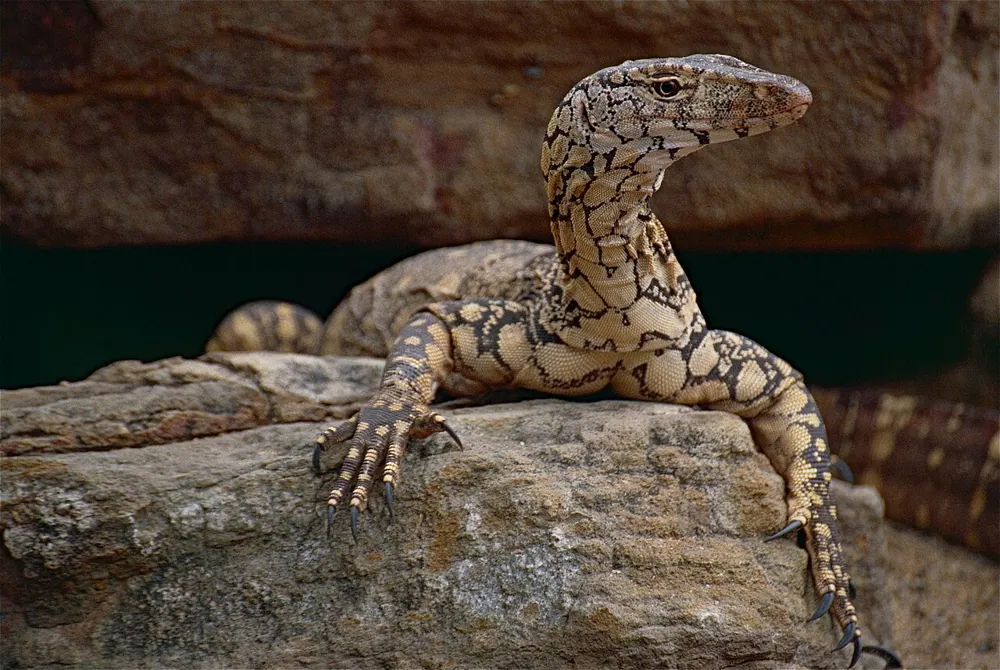
ỊtaThe perentie is one of the largest lizards alive, and the largest in Australia. It lives in the dry deserts of the west, centre and north of the country, where it is rarely seen. It is a powerful hunter that eats a wide range of animals, and it is important in many Aboriginal cultures.1



 Otú ị ga-esi mata ya
- Head and neck are creamy-white with a net-like (reticulated) pattern of black lines and flecks.1
- Body is yellow or cream, with brown rosette markings on the back.1
- Limbs are dark with white spots.1
- Very lean for a large monitor, so much less bulky than a rock monitor of similar length.1
A na-agwakọkarị ya na: Rock monitors can reach a similar length, but they are much bulkier. Perenties are very lean for their size.1
Ike nsị
Nsị na-esi n'eze nsị ya ma ọ bụ eze ya apụta mgbe ọ na-ata.
Gịnị ka nsị ọ na-agba na-eme?
Researchers at the University of Melbourne found in 2005 that monitors may be somewhat venomous, which means they inject mild venom with a bite. A perentie bite can cause swelling within minutes, localised disruption of blood clotting (the blood's ability to clot is affected in the area), and shooting pain up to the elbow that can last several hours.1
Kedu otú o si dị egwu nye mmadụ?
Ihe ize ndụ nye mmadụ: Na-afụ ụfụỌ nwere ike ịfụ ụfụ nke ukwuu, mana ọ naghị adịkarị njọ.The bite can do much damage, not only from the teeth but also from the oral secretions.1
Gịnị ka ọ na-eme mgbe ụjọ tụrụ ya?
If threatened, a perentie will usually freeze flat on the ground or run away. If cornered, it stands its ground, inflates its throat, hisses, strikes with its tail, and may lunge with its mouth open.1
 Ọ bụrụ na ọ tara
- Saa ọnya ahụ, mee ka onye ahụ dị jụụ, chọọkwa enyemaka ọgwụ.
Na-ebu ụzọ kpọọ nọmba mberede gị mgbe niile (112, 000, 911). Nke a bụ ndụmọdụ enyemaka mbụ n'ozuzu, ọ bụghị ndụmọdụ ọgwụ. Isi ihe enyemaka mbụ
 Nọrọ na nchekwa
- Emetụla anụ ọhịa aka, ejidela ya, emekwala ya ihe ọjọọ, ọbụna obere, ọbụna ma ọ dị ka ọ na-ehi ụra ma ọ bụ nwụọ anwụ.
- Nye ya ohere. Ọ bụrụ na ị zutere otu, dị jụụ, laghachi azụ nwayọ, hapụ ya ka ọ gaa ụzọ ya.
- Ọ bụrụ na otu tara gị: dị jụụ, emegharịla ahụ, kpọọ nọmba mberede gị (112, 000, 911) ma ọ bụ gaa ụlọ ọgwụ ngwa ngwa. Cheta ka o si dị, foto na-enye aka.
Ọ naghị achụ gị. Ọ na-eji nsị ya ejide nri ma ọ bụ chebe onwe ya, ọ ga-akakwa mma n'anya ya ịzo onwe ya. Ihe ndị ọzọ gbasara ịnọ na nchekwa
Ọ hà aṅaa?
Kedu otú o si dị ogologo?
Kedu otú o si dị arọ?

 dị ogologo dị ka nkịta 2.5 site n'imi ruo n'ọdụ
 dị ogologo dị ka unere 14 a tọgbọrọ n'ahịrị
 nwere ike ịgba ọsọ mita 100 n'ime sekọnd 20 (mmadụ kacha ọsọ chọrọ 9,6)
Kedu otú Perentie si hà ma e jiri ya tụnyere GỊ?
Naanị mgbakọ na mwepụ n'ime browser gị. Ọ dịghị ihe echekwara ma ọ bụ ezigara ebe ọ bụla.
Kedu otú o si agba ọsọ?

Eziokwu
Perenties eat other monitor lizards, including a 2 m perentie that was seen killing and eating a 1.5 m one.1
They often stand on their back legs and tail to get a better view, a behaviour called "tripoding".1
Perenties are among the largest living lizards, after the Komodo dragon, Asian water monitor and crocodile monitor.1
Perenties can dig a burrow for shelter in only minutes.1
The species was first named the "gigantic water lizard", even though it lives in dry desert country.1
The perentie has long been important to desert Aboriginal peoples, who ate it as food and used its fat for medicinal and ceremonial purposes.1
Onye na-ekpughe akụkọ ụgha
Akụkọ ụgha: Monitor lizard bites were thought to cause problems only because of infection from bacteria in the animal's mouth.
Eziokwu: Researchers showed that the immediate effects of monitor bites, including swelling and pain, are caused by mild envenomation.1
Ebe eziokwu ndị a si
- Perentie (Wikipedia (CC BY-SA 4.0))
- Varanus giganteus (iNaturalist): aha na nhazi ọkwa.
- Venom Wiki: ọkwa ihe ize ndụ, nha nkịtị na nchepụta ọsọ bụ nke anyị. Lee otú anyị si achọpụta ha: Otú anyị si atụ ihe ize ndụ.
Eziokwu ọ bụla dị na peeji a nwere nọmba na-egosi ebe o si. Ọ bụrụ na anyị mehiere ihe, ndo, anyị bụ ndị hụrụ anụmanụ n'anya, ọ bụghị akwụkwọ akụkọ sayensị. Gwa anyị na [email protected], anyị ga-edozi ya.
 Akpị agụụ na-agụ! Venom Wiki bụ ọrụ otu onye: n'efu, na-enweghị mgbasa ozi na ndị na-esochi gị. Obere onyinye na-enyere aka idebe ya n'ịntanetị.Nye akpị nri
 Lace monitor
 Spiny-tailed monitor
 Yellow-spotted monitor
 Mitchell's water monitor
 Komodo dragon
 Gila monster
 Coastal taipan
 Common death adder
 Eastern brown snake
 Taipan nke ime obodo
 Sydney funnel-web spider
 Agwọ agụ
_(10244734736).jpg)