
 Afrịka
 Eshia
Eshia Yurop
Yurop Ndịda Amerika
 Ọstrelia na Oshenia
 Antaktika
 Oké Osimiri Pasifik
 Oké Osimiri Atlantik
 Oké Osimiri India
 Oké Osimiri Arktik
 Osimiri Mediterenian
 Osimiri Uhie
 Osimiri Karibịan
 Osimiri Coral
 Osimiri Ndịda China
 Osimiri Filipin
 Osimiri Andaman
 Osimiri Ugwu (North Sea)
 Osimiri Timor na Arafura
 Ọwara Bengal
 Ọwara California
Red-bellied newt
 Nsị n'akpụkpọ ahụ ya
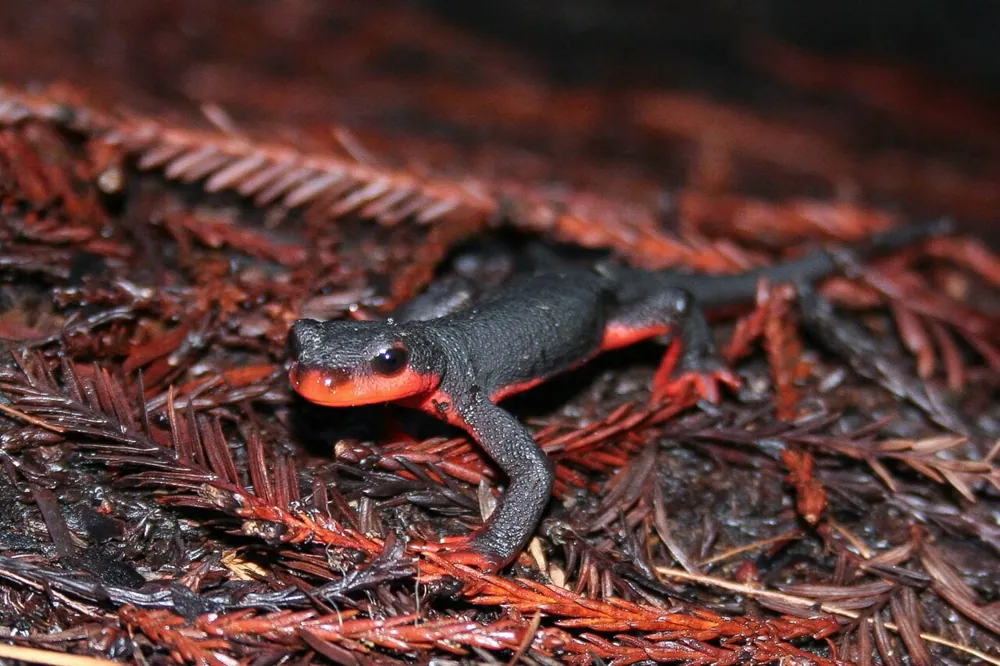
The red-bellied newt is a small amphibian with a brownish-black back and a bright red belly. It lives in coastal woodlands in northern California, mostly on land. Its skin is poisonous, so it is important to leave it alone.1
 Otú ị ga-esi mata ya
- Brownish-black upper body with grainy skin1
- Tomato-red underbelly1
- Length of about 7 to 9 cm from nose to vent, and 14 to 19 cm including the tail1
- Males often have a dark, broad patch across the vent; females do not1
- Breeding males have smooth skin and a flattened tail1
A na-agwakọkarị ya na: Other coastal newts are similar in shape. The red-bellied newt can be told apart by its red belly and by the lack of yellow in its eyes.1
Ike nsị
Akpụkpọ ahụ ya nwere nsị. Ọ dị egwu imetụ ya aka, iracha ya ma ọ bụ iri ya.
Gịnị ka nsị dị n'ahụ ya na-eme?
The red-bellied newt is poisonous rather than venomous, so it does not bite or sting. Its skin, eggs and embryos contain tetrodotoxin, a neurotoxin, which is a poison that attacks the nerves. There is enough of it to potentially kill an adult human.1
Kedu otú o si dị egwu nye mmadụ?
Ihe ize ndụ nye mmadụ: Ọ dị njọỌ bụrụ na mmadụ metụ ya aka ma ọ bụ rie ya, gaa n'ebe dọkịta. Ọnwụ anaghị adịkarị ma ọlị.The newt's skin is poisonous to touch and to eat. Its toxin is strong enough to potentially kill an adult human. It is also nearly inedible, and few animals eat it.1
Gịnị ka ọ na-eme mgbe ụjọ tụrụ ya?
When disturbed, it pulls its head and tail back to show its bright-red underside, which warns predators that it is poisonous.1
 Ọ bụrụ na mmadụ metụrụ ya aka ma ọ bụ rie ya
- Ọ bụrụ na mmadụ metụrụ otu aka: saa aka nke ọma, emetụkwala anya ma ọ bụ ọnụ aka. Ọ bụrụ na nwatakịrị ma ọ bụ anụ ụlọ rachara otu ma ọ bụ rie ya: kpọọ ụlọ ọrụ ndụmọdụ nsị (poison centre) ma ọ bụ nọmba mberede gị.
Na-ebu ụzọ kpọọ nọmba mberede gị mgbe niile (112, 000, 911). Nke a bụ ndụmọdụ enyemaka mbụ n'ozuzu, ọ bụghị ndụmọdụ ọgwụ. Isi ihe enyemaka mbụ
 Nọrọ na nchekwa
- Emetụla anụ ọhịa aka, ejidela ya, emekwala ya ihe ọjọọ, ọbụna obere, ọbụna ma ọ dị ka ọ na-ehi ụra ma ọ bụ nwụọ anwụ.
- Nye ya ohere. Ọ bụrụ na ị zutere otu, dị jụụ, laghachi azụ nwayọ, hapụ ya ka ọ gaa ụzọ ya.
- Ọ bụrụ na i metụrụ ya aka ma ọ bụ rie ya: ehichala anya gị ma ọ bụ ọnụ gị, saa aka gị, chọọkwa enyemaka ọgwụ.
Ọ naghị achụ gị. Nsị ya dị naanị ka ihe ọ bụla ghara iri ya. Ihe ndị ọzọ gbasara ịnọ na nchekwa
Ọ hà aṅaa?
Kedu otú o si dị ogologo?
 dị ogologo dị ka blọk egwuregwu 6 n'ahịrị
Kedu otú Red-bellied newt si hà ma e jiri ya tụnyere GỊ?
Naanị mgbakọ na mwepụ n'ime browser gị. Ọ dịghị ihe echekwara ma ọ bụ ezigara ebe ọ bụla.
Kedu otú o si agba ọsọ?


Eziokwu
Like other newts, they can regrow several body parts, including their limbs, eyes, hearts, intestines, jaws and damaged spinal cords.1
They can find their way back to the same spot in a stream over several miles of rugged terrain, probably by using their sense of smell.1
Red-bellied newts can live for 20 to 30 years.1
Adults leave the water and live underground until they are ready to breed, which usually happens after four to six years.1
Females do not breed every year, unlike the males.1
Maka ndị ọkachamara nsị
- Aha sayensị
- Taricha rivularis
- Otu
- Awọ nsị, awọ ala na newt
- Ezinụlọ
- Salamandridae2
- Usoro
- Caudata
- Kọntinent dị iche iche
- Ugwu Amerika
- Ụmụ ọhụrụ
- Newts start life as aquatic larvae, similar to tadpoles, with external gills. Females lay their eggs in about 12 clusters, with six to 16 eggs in each cluster.1
- Ogologo ndụ
- ihe dị ka afọ 301
- Ihe ize ndụ nye mmadụ
- 3 / 5: Ọ dị njọ3
Ebe eziokwu ndị a si
- Red-bellied newt (Wikipedia (CC BY-SA 4.0))
- Taricha rivularis (iNaturalist): aha na nhazi ọkwa.
- Venom Wiki: ọkwa ihe ize ndụ, nha nkịtị na nchepụta ọsọ bụ nke anyị. Lee otú anyị si achọpụta ha: Otú anyị si atụ ihe ize ndụ.
Eziokwu ọ bụla dị na peeji a nwere nọmba na-egosi ebe o si. Ọ bụrụ na anyị mehiere ihe, ndo, anyị bụ ndị hụrụ anụmanụ n'anya, ọ bụghị akwụkwọ akụkọ sayensị. Gwa anyị na [email protected], anyị ga-edozi ya.
 Akpị agụụ na-agụ! Venom Wiki bụ ọrụ otu onye: n'efu, na-enweghị mgbasa ozi na ndị na-esochi gị. Obere onyinye na-enyere aka idebe ya n'ịntanetị.Nye akpị nri
Ndị ọzọ si n'otu ahụ: Awọ nsị, awọ ala na newt
 Cane toadAwọ nsị, awọ ala na newtỌ chọrọ dọkịtaEmetụla ya aka
 Strawberry poison-dart frogAwọ nsị, awọ ala na newtNaanị na-afụ ụfụEmetụla ya aka
 California newtAwọ nsị, awọ ala na newtNwere ike igbu mmadụEmetụla ya aka
 Rough-skinned newtAwọ nsị, awọ ala na newtNwere ike igbu mmadụEmetụla ya aka
 Colorado River toadAwọ nsị, awọ ala na newtỌ chọrọ dọkịtaEmetụla ya aka
 Panamanian golden frogAwọ nsị, awọ ala na newtỌ chọrọ dọkịtaEmetụla ya aka
 Terciopelo
 Eastern coral snake
 Eastern diamondback rattlesnake
 Eyelash viper
 Timber rattlesnake
 Western diamondback rattlesnake
.jpg)