
 Afrịka
 Eshia
Eshia Yurop
Yurop Ndịda Amerika
 Ọstrelia na Oshenia
 Antaktika
 Oké Osimiri Pasifik
 Oké Osimiri Atlantik
 Oké Osimiri India
 Oké Osimiri Arktik
 Osimiri Mediterenian
 Osimiri Uhie
 Osimiri Karibịan
 Osimiri Coral
 Osimiri Ndịda China
 Osimiri Filipin
 Osimiri Andaman
 Osimiri Ugwu (North Sea)
 Osimiri Timor na Arafura
 Ọwara Bengal
 Ọwara California
Short-tail stingray
 Ịgba
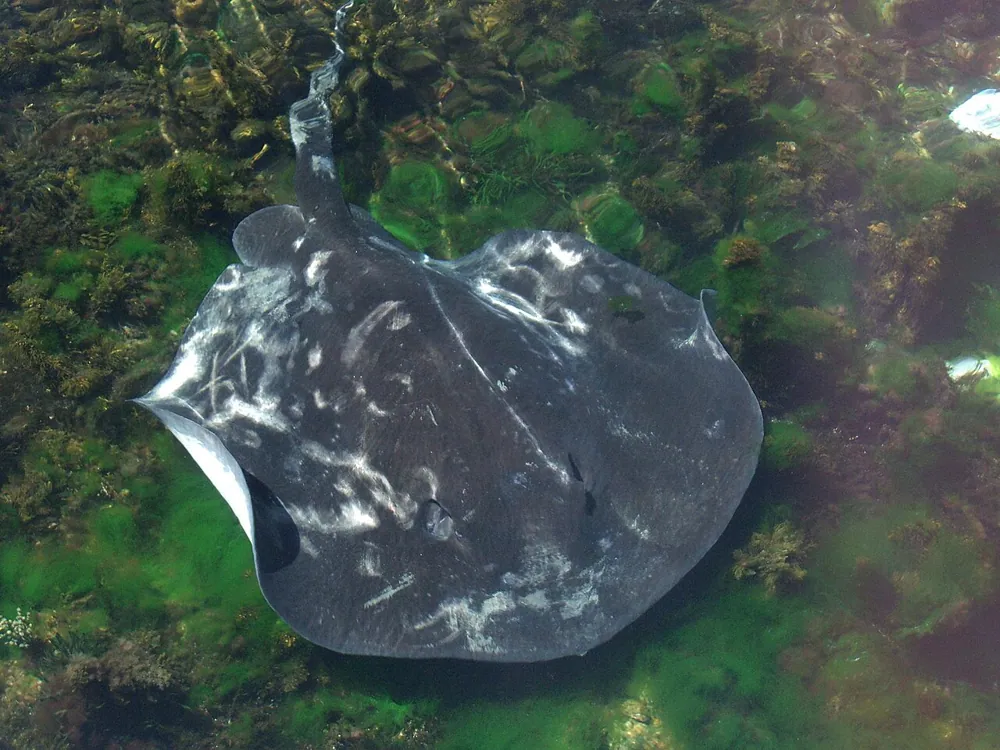
ỊgbaThe short-tail stingray is one of the largest stingrays in the world. It lives in temperate seas off southern Africa, southern Australia and New Zealand, mostly on or near the sea floor. It is not aggressive, but its long venomous sting can cause a serious wound if the ray is startled.1



 Otú ị ga-esi mata ya
- Diamond-shaped, heavy disc that is smooth, with no scales (dermal denticles) on the disc even in adults1
- Plain grey-brown back, darkening towards the tail and above the eyes, with a line of white pores on either side of the head1
- Whitish underside, darkening towards the edges of the fins1
- Tail usually shorter than the disc, thick at the base, with one or two serrated stinging spines about halfway along it1
- Adults have a row of large, spear-like thorns in front of the sting1
A na-agwakọkarị ya na: The pitted stingray (Dasyatis matsubarai) of the northwestern Pacific looks similar but is smaller. Records of this species from northern Australia and Thailand are thought to be other rays that were misidentified.1
Ike nsị
Nsị na-esi na ndụdụ ya apụta.
Gịnị ka nsị ọ na-agba na-eme?
Its sting is venomous. The mucous sheath covering the sting contains a toxin that causes necrosis, which means the death of body tissue. The most dangerous injuries involve damage to a vital organ, heavy blood loss, or secondary infection (sepsis) or tetanus.1
Kedu otú o si dị egwu nye mmadụ?
Ihe ize ndụ nye mmadụ: Ọ dị egwu nke ukwuuỌ nwere ike igbu onye na-enwetaghị ọgwụgwọ.The short-tail stingray is not aggressive, but if startled or harassed it can inflict a serious and even fatal wound. Its sting can be over 30 cm long and can penetrate most footwear, including kevlar bootees. It is responsible for most stingray injuries off New Zealand, including the death of Australian naturalist Steve Irwin, who was pierced in the chest by its barbed tail.1
Gịnị ka ọ na-eme mgbe ụjọ tụrụ ya?
When threatened, it raises its tail over its back like a scorpion, and a startled ray can leap through the water and strike with its tail.1
 Ọ bụrụ na ọ gbaa
- Tinye ọnya ahụ n'ime mmiri ọkụ, nke ọkụ dị ka onye ahụ nwere ike ịnagide n'ere ya ọkụ (jiri aka gị nwalee ya), ruo nkeji 30 ruo 90. Chọọ enyemaka ọgwụ, karịsịa maka azụ nkume (stonefish) na stingray.
Na-ebu ụzọ kpọọ nọmba mberede gị mgbe niile (112, 000, 911). Nke a bụ ndụmọdụ enyemaka mbụ n'ozuzu, ọ bụghị ndụmọdụ ọgwụ. Isi ihe enyemaka mbụ
 Nọrọ na nchekwa
- Emetụla anụ ọhịa aka, ejidela ya, emekwala ya ihe ọjọọ, ọbụna obere, ọbụna ma ọ dị ka ọ na-ehi ụra ma ọ bụ nwụọ anwụ.
- Nye ya ohere. Ọ bụrụ na ị zutere otu, dị jụụ, laghachi azụ nwayọ, hapụ ya ka ọ gaa ụzọ ya.
- Ọ bụrụ na otu gbaa gị: dị jụụ, emegharịla ahụ, kpọọ nọmba mberede gị (112, 000, 911) ma ọ bụ gaa ụlọ ọgwụ ngwa ngwa. Cheta ka o si dị, foto na-enye aka.
Ọ naghị achụ gị. Ọ na-eji nsị ya ejide nri ma ọ bụ chebe onwe ya, ọ ga-akakwa mma n'anya ya ịzo onwe ya. Ihe ndị ọzọ gbasara ịnọ na nchekwa
Ebee n'ụwa?
Ọ hà aṅaa?
Kedu otú o si dị ogologo?
Kedu otú o si dị arọ?
 dị ogologo dị ka nkịta 4 site n'imi ruo n'ọdụ
 dị ogologo dị ka unere 24 a tọgbọrọ n'ahịrị
 nwere ike igwu mmiri ogologo nnukwu ọdọ igwu mmiri (50 m) n'ime sekọnd 6
Kedu otú Short-tail stingray si hà ma e jiri ya tụnyere GỊ?
Naanị mgbakọ na mwepụ n'ime browser gị. Ọ dịghị ihe echekwara ma ọ bụ ezigara ebe ọ bụla.
Kedu otú o si agba ọsọ?


Eziokwu
It can flap its pectoral fins with enough force to make a loud audible 'bang' in the water, although it is usually slow-moving.1
It is one of the largest stingrays in the world, and reliable observers off New Zealand have reported individuals almost 3 m across.1
Captive experiments suggest it can detect magnetic fields, which may help it navigate.1
Every summer, large groups gather under the rocky archways of the Poor Knights Islands off New Zealand, where both mating and birthing have been seen.1
Captive females have been observed mating with up to three different males in succession.1
Maka ndị ọkachamara nsị
- Aha sayensị
- Bathytoshia brevicaudata
- Otu
- Azụ na-agba nsị
- Ezinụlọ
- Dasyatidae2
- Usoro
- Myliobatiformes
- Kọntinent dị iche iche
- Oké Osimiri India, Oké Osimiri Pasifik, Osimiri Coral, Oké osimiri niile
- Ụmụ ọhụrụ
- It gives birth to live young. Females usually have litters of 6 to 10 pups in summer, and newborns measure 32 to 36 cm across.1
- Otú ọ na-eme n'ọhịa
- Least Concern (IUCN)1
- Ihe ize ndụ nye mmadụ
- 4 / 5: Ọ dị egwu nke ukwuu3
Ebe eziokwu ndị a si
- Short-tail stingray (Wikipedia (CC BY-SA 4.0))
- Bathytoshia brevicaudata (iNaturalist): aha na nhazi ọkwa.
- Venom Wiki: ọkwa ihe ize ndụ, nha nkịtị na nchepụta ọsọ bụ nke anyị. Lee otú anyị si achọpụta ha: Otú anyị si atụ ihe ize ndụ.
Eziokwu ọ bụla dị na peeji a nwere nọmba na-egosi ebe o si. Ọ bụrụ na anyị mehiere ihe, ndo, anyị bụ ndị hụrụ anụmanụ n'anya, ọ bụghị akwụkwọ akụkọ sayensị. Gwa anyị na [email protected], anyị ga-edozi ya.
 Akpị agụụ na-agụ! Venom Wiki bụ ọrụ otu onye: n'efu, na-enweghị mgbasa ozi na ndị na-esochi gị. Obere onyinye na-enyere aka idebe ya n'ịntanetị.Nye akpị nri
Ndị ọzọ si n'otu ahụ: Azụ na-agba nsị
 Reef stonefishAzụ na-agba nsịNwere ike igbu mmadụEmetụla ya aka
 Red lionfishAzụ na-agba nsịỌ chọrọ dọkịtaEmetụla ya aka
 Estuarine stonefishAzụ na-agba nsịNwere ike igbu mmadụEmetụla ya aka
 Striped eel catfishAzụ na-agba nsịNwere ike igbu mmadụEmetụla ya aka
 Bluespotted ribbontail rayAzụ na-agba nsịỌ chọrọ dọkịta
 Common stingrayAzụ na-agba nsịỌ chọrọ dọkịta
Ọ na-ebikwa na: Oké Osimiri India
 Australian box jellyfishJelifish na anụ osimiri na-agba agbaNa-egbu egbuEmetụla ya aka
 Geography coneEjula cone na octopusNa-egbu egbu
 Greater blue-ringed octopusEjula cone na octopusNa-egbu egbu
 Southern blue-ringed octopusEjula cone na octopusNa-egbu egbu
 Hawksbill sea turtleAnụmanụ ndị ọzọ nwere nsị n'ahụNwere ike igbu mmadụ
 Irukandji jellyfishJelifish na anụ osimiri na-agba agbaNwere ike igbu mmadụEmetụla ya aka