
 Afrịka
 Eshia
Eshia Yurop
Yurop Ndịda Amerika
 Ọstrelia na Oshenia
 Antaktika
 Oké Osimiri Pasifik
 Oké Osimiri Atlantik
 Oké Osimiri India
 Oké Osimiri Arktik
 Osimiri Mediterenian
 Osimiri Uhie
 Osimiri Karibịan
 Osimiri Coral
 Osimiri Ndịda China
 Osimiri Filipin
 Osimiri Andaman
 Osimiri Ugwu (North Sea)
 Osimiri Timor na Arafura
 Ọwara Bengal
 Ọwara California
Southern hognose snake
 Ịta
ỊtaThe southern hognose snake is a stout, harmless snake with a sharply upturned nose. It lives on the coastal plain of the southeastern United States, where it hunts toads and other small animals.1



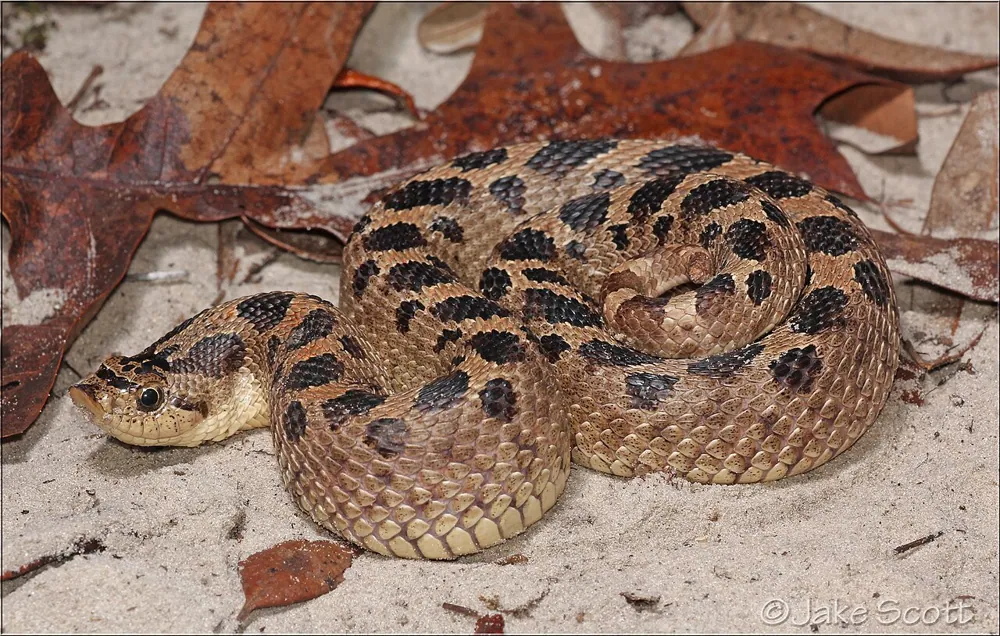
 Otú ị ga-esi mata ya
- A stout body with a wide neck and a sharply upturned snout1
- A light brown, yellowish, grey or reddish base colour with a distinct row of dark blotches along the back1
- Smaller dark blotches alternate with the main blotches along the sides1
- About 25 rows of keeled (ridged) scales around the middle of the body1
- Young snakes have a belly that is clearly darker than the underside of the tail. As they age, the underside usually turns pale white1
Ike nsị
Nsị na-esi n'eze nsị ya ma ọ bụ eze ya apụta mgbe ọ na-ata.
Kedu otú o si dị egwu nye mmadụ?
Ihe ize ndụ nye mmadụ: ObereDị ka ịgba aṅụ ma ọ bụ nke na-erughị ya. Ọ fọrọ nke nta ka ọ ghara ịdị njọ nye mmadụ.It is described as harmless to people.1
 Ọ bụrụ na ọ tara
- Saa ebe ọ tara, mee ka onye ahụ dị jụụ, chọọkwa enyemaka ọgwụ. Ụfọdụ ụdị (dịka boomslang) nwere ike igbu mmadụ ọtụtụ awa ka e mesịrị.
Na-ebu ụzọ kpọọ nọmba mberede gị mgbe niile (112, 000, 911). Nke a bụ ndụmọdụ enyemaka mbụ n'ozuzu, ọ bụghị ndụmọdụ ọgwụ. Isi ihe enyemaka mbụ
 Nọrọ na nchekwa
- Emetụla anụ ọhịa aka, ejidela ya, emekwala ya ihe ọjọọ, ọbụna obere, ọbụna ma ọ dị ka ọ na-ehi ụra ma ọ bụ nwụọ anwụ.
- Nye ya ohere. Ọ bụrụ na ị zutere otu, dị jụụ, laghachi azụ nwayọ, hapụ ya ka ọ gaa ụzọ ya.
- Ọ bụrụ na otu tara gị: dị jụụ, emegharịla ahụ, kpọọ nọmba mberede gị (112, 000, 911) ma ọ bụ gaa ụlọ ọgwụ ngwa ngwa. Cheta ka o si dị, foto na-enye aka.
Ọ naghị achụ gị. Ọ na-eji nsị ya ejide nri ma ọ bụ chebe onwe ya, ọ ga-akakwa mma n'anya ya ịzo onwe ya. Ihe ndị ọzọ gbasara ịnọ na nchekwa
Ọ hà aṅaa?
Kedu otú o si dị ogologo?
 dị ogologo dị ka unere 3 a tọgbọrọ n'ahịrị
 nwere ike ịgba ọsọ mita 100 n'ime sekọnd 78 (mmadụ kacha ọsọ chọrọ 9,6)
Kedu otú Southern hognose snake si hà ma e jiri ya tụnyere GỊ?
Naanị mgbakọ na mwepụ n'ime browser gị. Ọ dịghị ihe echekwara ma ọ bụ ezigara ebe ọ bụla.
Kedu otú o si agba ọsọ?


Eziokwu
Toads make up most of its diet, which sets it apart from many snakes that mainly eat other animals.1
Hatchlings are already 15 to 18 cm long, which is a large size for a newborn snake.1
Its upturned snout is an adaptation that gives the species its common name.1
The Alabama Department of Conservation and Natural Resources lists it as possibly extirpated (locally extinct) in that state.1
It is classified as Vulnerable on the IUCN Red List, meaning it faces a high risk of extinction in the wild.1
Maka ndị ọkachamara nsị
- Aha sayensị
- Heterodon simus
- Otu
- Agwọ nwere eze nsị n'azụ ọnụ
- Ezinụlọ
- Colubridae2
- Usoro
- Squamata
- Kọntinent dị iche iche
- Ugwu Amerika
- Ụmụ ọhụrụ
- It lays eggs. Clutches contain 6 to 14 thin-shelled, leathery, whitish eggs, which hatch after 55 to 60 days.1
- Otú ọ na-eme n'ọhịa
- Vulnerable (IUCN Red List, assessed 2007)1
- Ihe ize ndụ nye mmadụ
- 1 / 5: Obere3
Ebe eziokwu ndị a si
- Southern hognose snake (Wikipedia (CC BY-SA 4.0))
- Heterodon simus (iNaturalist): aha na nhazi ọkwa.
- Venom Wiki: ọkwa ihe ize ndụ, nha nkịtị na nchepụta ọsọ bụ nke anyị. Lee otú anyị si achọpụta ha: Otú anyị si atụ ihe ize ndụ.
Eziokwu ọ bụla dị na peeji a nwere nọmba na-egosi ebe o si. Ọ bụrụ na anyị mehiere ihe, ndo, anyị bụ ndị hụrụ anụmanụ n'anya, ọ bụghị akwụkwọ akụkọ sayensị. Gwa anyị na [email protected], anyị ga-edozi ya.
 Akpị agụụ na-agụ! Venom Wiki bụ ọrụ otu onye: n'efu, na-enweghị mgbasa ozi na ndị na-esochi gị. Obere onyinye na-enyere aka idebe ya n'ịntanetị.Nye akpị nri
Ndị ọzọ si n'otu ahụ: Agwọ nwere eze nsị n'azụ ọnụ
 Western hognose snakeAgwọ nwere eze nsị n'azụ ọnụAdịghị njọ
 Brown vine snakeAgwọ nwere eze nsị n'azụ ọnụAdịghị njọ
 Eastern hognose snakeAgwọ nwere eze nsị n'azụ ọnụAdịghị njọ
 Green vine snakeAgwọ nwere eze nsị n'azụ ọnụAdịghị njọ
 Desert night snakeAgwọ nwere eze nsị n'azụ ọnụAdịghị njọ
 Night snakeAgwọ nwere eze nsị n'azụ ọnụAdịghị njọ
 Terciopelo
 Eastern coral snake
 Eastern diamondback rattlesnake
 Eyelash viper
 Timber rattlesnake
 Western diamondback rattlesnake