
 Afrịka
 Eshia
Eshia Yurop
Yurop Ndịda Amerika
 Ọstrelia na Oshenia
 Antaktika
 Oké Osimiri Pasifik
 Oké Osimiri Atlantik
 Oké Osimiri India
 Oké Osimiri Arktik
 Osimiri Mediterenian
 Osimiri Uhie
 Osimiri Karibịan
 Osimiri Coral
 Osimiri Ndịda China
 Osimiri Filipin
 Osimiri Andaman
 Osimiri Ugwu (North Sea)
 Osimiri Timor na Arafura
 Ọwara Bengal
 Ọwara California
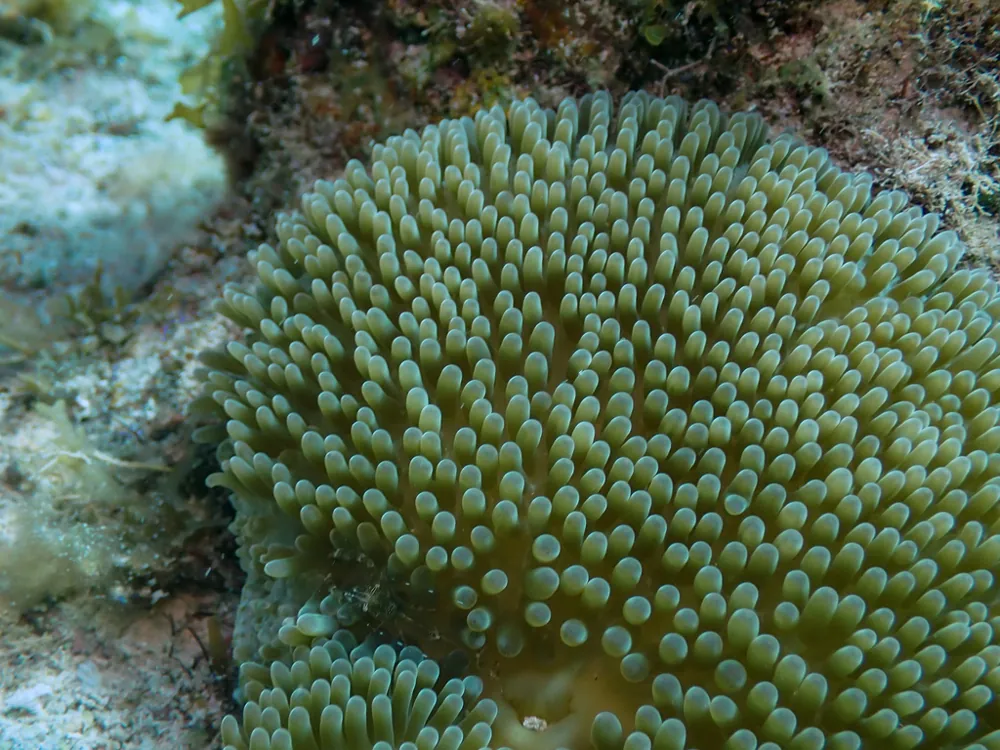
Sun anemone
 Tentacles na-agba agba
The sun anemone is a large sea anemone that looks like a golden, green or yellow carpet on the sea floor. It lives in shallow tropical waters, mostly in the Caribbean and Western Atlantic, and it stays fixed in one place. Scientists study its toxins for possible medical treatments.1
 Otú ị ga-esi mata ya
Ike nsị
Ọtụtụ puku obere sel na-agba agba na-agbapụ mgbe ihe metụrụ ha aka.
Gịnị ka nsị ọ na-agba na-eme?
Its stinging cells, called nematocysts, release toxins. These include pore-forming toxins (sticholysins), which damage cell membranes, and polypeptide neurotoxins, which attack the nerves. The toxins are used to catch prey and to defend against predators.1
Kedu otú o si dị egwu nye mmadụ?
Ihe ize ndụ nye mmadụ: Na-afụ ụfụỌ nwere ike ịfụ ụfụ nke ukwuu, mana ọ naghị adịkarị njọ.Gịnị ka ọ na-eme mgbe ụjọ tụrụ ya?
Its stinging cells release toxins to defend against predators.1
 Ọ bụrụ na ọ gbaa
- Pụta na mmiri, wepụkwa tentacles ya niile (jiri uwe aka ma ọ bụ akwa).
- Maka box jellyfish nke ebe okpomọkụ: wụsa vinega n'ebe ọ gbara ọ dịkarịa ala sekọnd 30, kpọọ maka enyemaka, dịkwa njikere ime CPR. Maka bluebottles na ọtụtụ ndị ọzọ: jiri mmiri osimiri saa ya, wee jiri mmiri ọkụ maka mgbu ahụ.
Na-ebu ụzọ kpọọ nọmba mberede gị mgbe niile (112, 000, 911). Nke a bụ ndụmọdụ enyemaka mbụ n'ozuzu, ọ bụghị ndụmọdụ ọgwụ. Isi ihe enyemaka mbụ
 Nọrọ na nchekwa
- Emetụla anụ ọhịa aka, ejidela ya, emekwala ya ihe ọjọọ, ọbụna obere, ọbụna ma ọ dị ka ọ na-ehi ụra ma ọ bụ nwụọ anwụ.
- Nye ya ohere. Ọ bụrụ na ị zutere otu, dị jụụ, laghachi azụ nwayọ, hapụ ya ka ọ gaa ụzọ ya.
- Ọ bụrụ na otu gbaa gị: dị jụụ, emegharịla ahụ, kpọọ nọmba mberede gị (112, 000, 911) ma ọ bụ gaa ụlọ ọgwụ ngwa ngwa. Cheta ka o si dị, foto na-enye aka.
Ọ naghị achụ gị. Ọ na-eji nsị ya ejide nri ma ọ bụ chebe onwe ya, ọ ga-akakwa mma n'anya ya ịzo onwe ya. Ihe ndị ọzọ gbasara ịnọ na nchekwa
Ebee n'ụwa?
Ọ hà aṅaa?
Kedu otú o si dị ogologo?
 dị ogologo dị ka blọk egwuregwu 6 n'ahịrị
 nwayọ karịa ejula ubi
Kedu otú Sun anemone si hà ma e jiri ya tụnyere GỊ?
Naanị mgbakọ na mwepụ n'ime browser gị. Ọ dịghị ihe echekwara ma ọ bụ ezigara ebe ọ bụla.
Kedu otú o si agba ọsọ?

Eziokwu
Its toxins are being studied for possible treatments of autoimmune diseases such as type 1 diabetes, lupus and multiple sclerosis.1
A blue-legged hermit crab lives on its surface, protected from its toxins by removable coverings on its body.1
Anemone shrimp, including the sun anemone shrimp, also live with it.1
Ebe eziokwu ndị a si
- Stichodactyla helianthus (Wikipedia (CC BY-SA 4.0))
- Stichodactyla helianthus (iNaturalist): aha na nhazi ọkwa.
- Venom Wiki: ọkwa ihe ize ndụ, nha nkịtị na nchepụta ọsọ bụ nke anyị. Lee otú anyị si achọpụta ha: Otú anyị si atụ ihe ize ndụ.
Eziokwu ọ bụla dị na peeji a nwere nọmba na-egosi ebe o si. Ọ bụrụ na anyị mehiere ihe, ndo, anyị bụ ndị hụrụ anụmanụ n'anya, ọ bụghị akwụkwọ akụkọ sayensị. Gwa anyị na [email protected], anyị ga-edozi ya.
 Akpị agụụ na-agụ! Venom Wiki bụ ọrụ otu onye: n'efu, na-enweghị mgbasa ozi na ndị na-esochi gị. Obere onyinye na-enyere aka idebe ya n'ịntanetị.Nye akpị nri
Ndị ọzọ si n'otu ahụ: Jelifish na anụ osimiri na-agba agba
 Australian box jellyfishJelifish na anụ osimiri na-agba agbaNa-egbu egbuEmetụla ya aka
 Irukandji jellyfishJelifish na anụ osimiri na-agba agbaNwere ike igbu mmadụEmetụla ya aka
 Portuguese man o' warJelifish na anụ osimiri na-agba agbaỌ chọrọ dọkịtaEmetụla ya aka
 Lion's mane jellyfishJelifish na anụ osimiri na-agba agbaNaanị na-afụ ụfụEmetụla ya aka
 Moon jellyfishJelifish na anụ osimiri na-agba agbaAdịghị njọ
 Common kingslayerJelifish na anụ osimiri na-agba agbaNwere ike igbu mmadụEmetụla ya aka
Ọ na-ebikwa na: Osimiri Coral
 Geography coneEjula cone na octopusNa-egbu egbu
 Greater blue-ringed octopusEjula cone na octopusNa-egbu egbu
 Hawksbill sea turtleAnụmanụ ndị ọzọ nwere nsị n'ahụNwere ike igbu mmadụ
 Reef stonefishAzụ na-agba nsịNwere ike igbu mmadụEmetụla ya aka
 Crown-of-thorns starfishUrchin, kpakpando osimiri na ikpuruỌ chọrọ dọkịtaEmetụla ya aka
 Red lionfishAzụ na-agba nsịỌ chọrọ dọkịtaEmetụla ya aka