
 Afrịka
 Eshia
Eshia Yurop
Yurop Ndịda Amerika
 Ọstrelia na Oshenia
 Antaktika
 Oké Osimiri Pasifik
 Oké Osimiri Atlantik
 Oké Osimiri India
 Oké Osimiri Arktik
 Osimiri Mediterenian
 Osimiri Uhie
 Osimiri Karibịan
 Osimiri Coral
 Osimiri Ndịda China
 Osimiri Filipin
 Osimiri Andaman
 Osimiri Ugwu (North Sea)
 Osimiri Timor na Arafura
 Ọwara Bengal
 Ọwara California
Thistledown velvet ant
 Ịgba
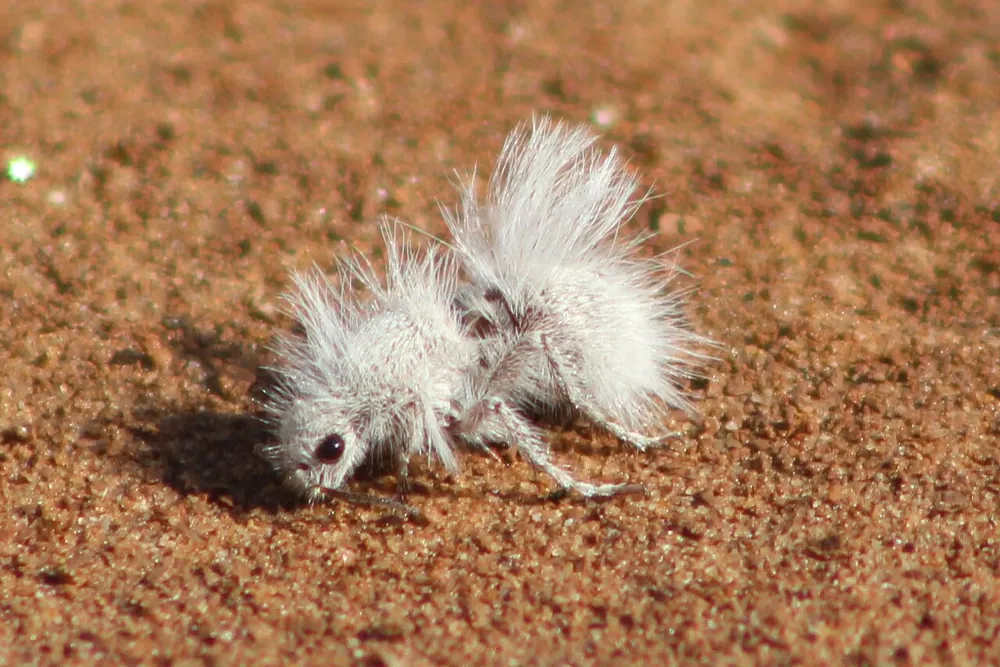
ỊgbaThe thistledown velvet ant is a mid-sized member of the Dasymutilla genus, a group known as velvet ants. Its females have no wings and live in hot deserts in the south-western United States and northern Mexico. Females can deliver a very painful sting, so it is best to leave them alone.1
 Otú ị ga-esi mata ya
- Only the females are wingless.1
- It is mid-sized for a velvet ant, larger than some of the smallest species but smaller than some of the largest.1
- Females are camouflaged. They look like the fruit of the Creosotebush rather than having the bright warning colours seen in many other velvet ants.1
A na-agwakọkarị ya na: Unlike the orange Dasymutilla species found in the same habitat, this species does not use bright orange or warning colours. Its camouflage helps it blend into the desert plants around it.1
Ike nsị
Nsị na-esi na ndụdụ ya apụta.
Kedu otú o si dị egwu nye mmadụ?
Ihe ize ndụ nye mmadụ: Na-afụ ụfụỌ nwere ike ịfụ ụfụ nke ukwuu, mana ọ naghị adịkarị njọ.Females can deliver a very painful sting when threatened. Its sting is more powerful than those of most smaller velvet ants, but weaker than those of most larger ones.1
Gịnị ka ọ na-eme mgbe ụjọ tụrụ ya?
Females use their sting to defend themselves when threatened.1
 Ọ bụrụ na ọ gbaa
- Kọpụta ndụdụ aṅụ ahụ hapụrụ, mee ka ebe ahụ jụọ oyi.
- Ọ bụrụ na o siri onye ahụ ike iku ume, ihu ya ma ọ bụ akpịrị ya na-aza, ma ọ bụ na ọ dị ya ka ọ ga-ada mbà, ọ bụ mberede allergy: kpọọ nọmba mberede gị, jirikwa adrenaline pen ya (adrenaline auto-injector) ma ọ bụrụ na o nwere otu.
Na-ebu ụzọ kpọọ nọmba mberede gị mgbe niile (112, 000, 911). Nke a bụ ndụmọdụ enyemaka mbụ n'ozuzu, ọ bụghị ndụmọdụ ọgwụ. Isi ihe enyemaka mbụ
 Nọrọ na nchekwa
- Emetụla anụ ọhịa aka, ejidela ya, emekwala ya ihe ọjọọ, ọbụna obere, ọbụna ma ọ dị ka ọ na-ehi ụra ma ọ bụ nwụọ anwụ.
- Nye ya ohere. Ọ bụrụ na ị zutere otu, dị jụụ, laghachi azụ nwayọ, hapụ ya ka ọ gaa ụzọ ya.
- Ọ bụrụ na otu gbaa gị: dị jụụ, emegharịla ahụ, kpọọ nọmba mberede gị (112, 000, 911) ma ọ bụ gaa ụlọ ọgwụ ngwa ngwa. Cheta ka o si dị, foto na-enye aka.
Ọ naghị achụ gị. Ọ na-eji nsị ya ejide nri ma ọ bụ chebe onwe ya, ọ ga-akakwa mma n'anya ya ịzo onwe ya. Ihe ndị ọzọ gbasara ịnọ na nchekwa
Ọ hà aṅaa?
Kedu otú o si dị ogologo?
 dị mkpụmkpụ karịa obere mkpịsị aka gị
Kedu otú Thistledown velvet ant si hà ma e jiri ya tụnyere GỊ?
Naanị mgbakọ na mwepụ n'ime browser gị. Ọ dịghị ihe echekwara ma ọ bụ ezigara ebe ọ bụla.
Kedu otú o si agba ọsọ?


Eziokwu
Its females are camouflaged to look like Creosotebush fruit, instead of using the bright warning colours common to other velvet ants.1
Its colouring seems to be mainly an adaptation to hot desert conditions, not a defence against predators.1
Its internal and external body temperatures are lower than those of orange Dasymutilla species living in the same habitat.1
Its sting is stronger than those of most smaller velvet ants, but weaker than those of most larger ones.1
Like other velvet ants, only the wingless females have the sting used for defence.1
Ebe eziokwu ndị a si
- Dasymutilla gloriosa (Wikipedia (CC BY-SA 4.0))
- Dasymutilla gloriosa (iNaturalist): aha na nhazi ọkwa.
- Venom Wiki: ọkwa ihe ize ndụ, nha nkịtị na nchepụta ọsọ bụ nke anyị. Lee otú anyị si achọpụta ha: Otú anyị si atụ ihe ize ndụ.
Eziokwu ọ bụla dị na peeji a nwere nọmba na-egosi ebe o si. Ọ bụrụ na anyị mehiere ihe, ndo, anyị bụ ndị hụrụ anụmanụ n'anya, ọ bụghị akwụkwọ akụkọ sayensị. Gwa anyị na [email protected], anyị ga-edozi ya.
 Akpị agụụ na-agụ! Venom Wiki bụ ọrụ otu onye: n'efu, na-enweghị mgbasa ozi na ndị na-esochi gị. Obere onyinye na-enyere aka idebe ya n'ịntanetị.Nye akpị nri
Ndị ọzọ si n'otu ahụ: Aṅụ, ebu na ebu ukwu
 Tarantula hawkAṅụ, ebu na ebu ukwuNaanị na-afụ ụfụ
 Executioner waspAṅụ, ebu na ebu ukwuỌ chọrọ dọkịta
 Warrior waspAṅụ, ebu na ebu ukwuỌ chọrọ dọkịta
 Bald-faced hornetAṅụ, ebu na ebu ukwuNaanị na-afụ ụfụ
 Cow killer velvet antAṅụ, ebu na ebu ukwuNaanị na-afụ ụfụ
 Eastern cicada killerAṅụ, ebu na ebu ukwuAdịghị njọ
 Terciopelo
 Eastern coral snake
 Eastern diamondback rattlesnake
 Eyelash viper
 Timber rattlesnake
 Western diamondback rattlesnake