
 Afrịka
 Eshia
Eshia Yurop
Yurop Ndịda Amerika
 Ọstrelia na Oshenia
 Antaktika
 Oké Osimiri Pasifik
 Oké Osimiri Atlantik
 Oké Osimiri India
 Oké Osimiri Arktik
 Osimiri Mediterenian
 Osimiri Uhie
 Osimiri Karibịan
 Osimiri Coral
 Osimiri Ndịda China
 Osimiri Filipin
 Osimiri Andaman
 Osimiri Ugwu (North Sea)
 Osimiri Timor na Arafura
 Ọwara Bengal
 Ọwara California
Wheel bug
 Ịta
ỊtaThe wheel bug is a large assassin bug with a wheel-shaped crest on its back. It is the only wheel bug found in the United States, and it hunts caterpillars and beetles. Gardeners value it because it helps keep pests down.1
 Otú ị ga-esi mata ya
- Adults are grey to brownish grey, and black shortly after moulting.1
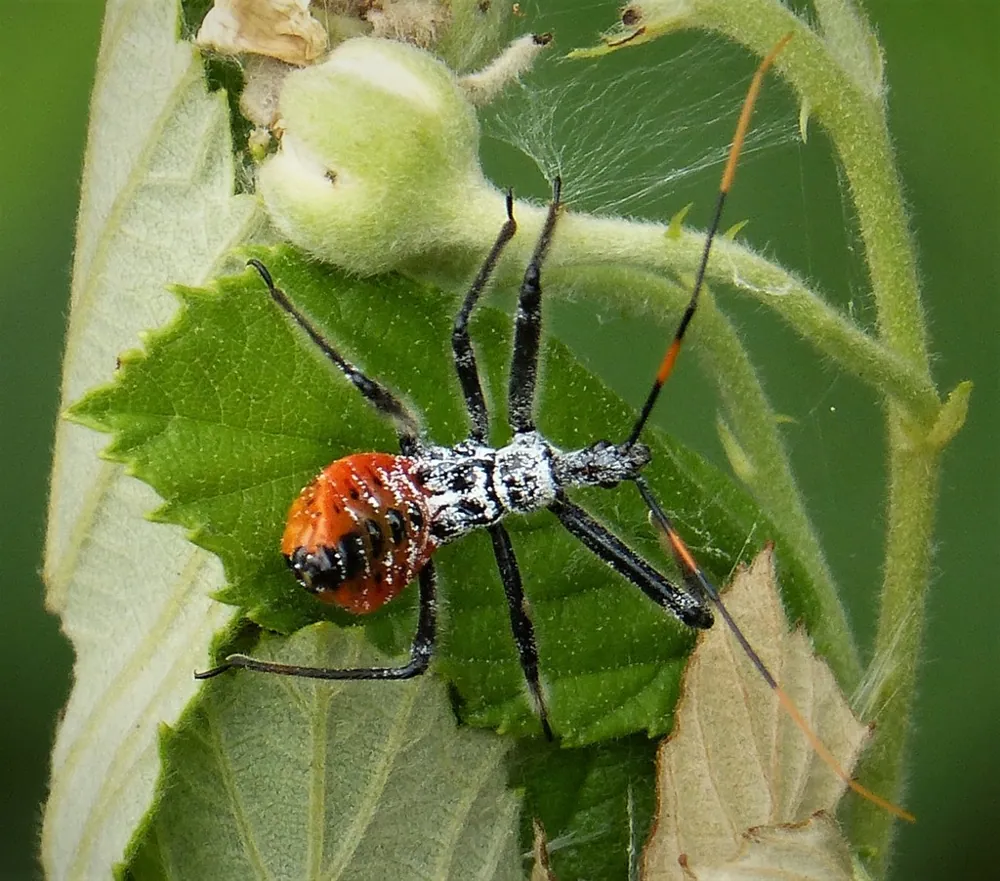
- Adults have a wheel-shaped or cog-shaped ridge on the back of the thorax. Young nymphs do not have this wheel yet.1
- Nymphs have a bright red or orange abdomen.1
- Adults can grow up to 38 mm long. Females are somewhat larger than males.1
- They move and fly slowly, and make a noisy buzzing sound in flight.1
Ike nsị
Nsị na-esi n'eze nsị ya ma ọ bụ eze ya apụta mgbe ọ na-ata.
Gịnị ka nsị ọ na-agba na-eme?
The bug injects enzymes into its prey that paralyse it and dissolve its insides. Its bite is not considered highly venomous. In people, the bite causes a wound that is very painful and lingering, with the area becoming hot and irritated, and numbness that can last for days.1
Kedu otú o si dị egwu nye mmadụ?
Ihe ize ndụ nye mmadụ: Na-afụ ụfụỌ nwere ike ịfụ ụfụ nke ukwuu, mana ọ naghị adịkarị njọ.The bite is not considered highly venomous, so it is not serious in the short term. Discomfort may last for two weeks, and in some cases up to six months. Longer-lasting problems are often linked to allergic reactions or repeated infections of the wound.1
Gịnị ka ọ na-eme mgbe ụjọ tụrụ ya?
When threatened, it relies on camouflage, its bite, or unpleasant odours from two scent glands in its abdomen.1
 Ọ bụrụ na ọ tara
- Maka ajị ikpuru na-agba agba: jiri teepu na-arapara arapara wepụ ha, wee saa akpụkpọ ahụ. Ehichala ya.
- Maka ịta: saa ya, mee ka ọ jụọ oyi. Chọọ enyemaka ọgwụ ma ọ bụrụ na ahụ adịghị onye ahụ mma ma ọ bụ na ọbara na-agba ya ngwa ngwa.
Na-ebu ụzọ kpọọ nọmba mberede gị mgbe niile (112, 000, 911). Nke a bụ ndụmọdụ enyemaka mbụ n'ozuzu, ọ bụghị ndụmọdụ ọgwụ. Isi ihe enyemaka mbụ
 Nọrọ na nchekwa
- Emetụla anụ ọhịa aka, ejidela ya, emekwala ya ihe ọjọọ, ọbụna obere, ọbụna ma ọ dị ka ọ na-ehi ụra ma ọ bụ nwụọ anwụ.
- Nye ya ohere. Ọ bụrụ na ị zutere otu, dị jụụ, laghachi azụ nwayọ, hapụ ya ka ọ gaa ụzọ ya.
- Ọ bụrụ na otu tara gị: dị jụụ, emegharịla ahụ, kpọọ nọmba mberede gị (112, 000, 911) ma ọ bụ gaa ụlọ ọgwụ ngwa ngwa. Cheta ka o si dị, foto na-enye aka.
Ọ naghị achụ gị. Ọ na-eji nsị ya ejide nri ma ọ bụ chebe onwe ya, ọ ga-akakwa mma n'anya ya ịzo onwe ya. Ihe ndị ọzọ gbasara ịnọ na nchekwa
Ọ hà aṅaa?
Kedu otú o si dị ogologo?
 ọ dị ogologo ihe dị ka pepa klip
Kedu otú Wheel bug si hà ma e jiri ya tụnyere GỊ?
Naanị mgbakọ na mwepụ n'ime browser gị. Ọ dịghị ihe echekwara ma ọ bụ ezigara ebe ọ bụla.
Kedu otú o si agba ọsọ?


Eziokwu
It is cannibalistic. Nymphs may prey on each other, and a female may feed on the male after mating.1
It can make a sound by rubbing the tip of its beak in a groove under its thorax. The purpose is unknown, but it may be a way of communicating.1
Nymphs are predators as soon as they hatch, but the wheel only appears after the final moult into adulthood.1
It can prey on useful insects such as lady beetles and honey bees, as well as pests.1
It is one of the largest true bugs in North America.1
In a laboratory test, parasitic wasps attacked 10 of 12 egg clusters, stopping many eggs from hatching normally.1
Maka ndị ọkachamara nsị
- Aha sayensị
- Arilus cristatus
- Otu
- Ikpuru ajị na ụmụ ahụhụ
- Ezinụlọ
- Reduviidae2
- Usoro
- Hemiptera
- Kọntinent dị iche iche
- Ugwu Amerika
- Ụmụ ọhụrụ
- After mating in autumn, a female lays 40 to 200 small, brown, cylindrical eggs in a glued cluster on trees, bushes, twigs and other objects. The eggs hatch the following spring.1
- Ihe ize ndụ nye mmadụ
- 2 / 5: Na-afụ ụfụ3
Ebe eziokwu ndị a si
- Arilus cristatus (Wikipedia (CC BY-SA 4.0))
- Arilus cristatus (iNaturalist): aha na nhazi ọkwa.
- Venom Wiki: ọkwa ihe ize ndụ, nha nkịtị na nchepụta ọsọ bụ nke anyị. Lee otú anyị si achọpụta ha: Otú anyị si atụ ihe ize ndụ.
Eziokwu ọ bụla dị na peeji a nwere nọmba na-egosi ebe o si. Ọ bụrụ na anyị mehiere ihe, ndo, anyị bụ ndị hụrụ anụmanụ n'anya, ọ bụghị akwụkwọ akụkọ sayensị. Gwa anyị na [email protected], anyị ga-edozi ya.
 Akpị agụụ na-agụ! Venom Wiki bụ ọrụ otu onye: n'efu, na-enweghị mgbasa ozi na ndị na-esochi gị. Obere onyinye na-enyere aka idebe ya n'ịntanetị.Nye akpị nri
Ndị ọzọ si n'otu ahụ: Ikpuru ajị na ụmụ ahụhụ
 Giant water bugIkpuru ajị na ụmụ ahụhụNaanị na-afụ ụfụ
 Puss caterpillarIkpuru ajị na ụmụ ahụhụNaanị na-afụ ụfụEmetụla ya aka
 Saddleback caterpillarIkpuru ajị na ụmụ ahụhụNaanị na-afụ ụfụEmetụla ya aka
 Giant vinegaroonIkpuru ajị na ụmụ ahụhụAdịghị njọ
 Rhodnius kissing bugIkpuru ajị na ụmụ ahụhụỌ chọrọ dọkịta
 Black-waved flannel mothIkpuru ajị na ụmụ ahụhụNaanị na-afụ ụfụEmetụla ya aka
 Terciopelo
 Eastern coral snake
 Eastern diamondback rattlesnake
 Eyelash viper
 Timber rattlesnake
 Western diamondback rattlesnake