
 Africa
 Asia
Asia Europa
 Sud America
 Australia e Oceania
 Antartide
 Oceano Pacifico
 Oceano Atlantico
 Oceano Indiano
 Oceano Artico
 Mar Mediterraneo
 Mar Rosso
 Mar dei Caraibi
 Mar dei Coralli
 Mar Cinese Meridionale
 Mar delle Filippine
 Mare delle Andamane
 Mare del Nord
 Mar di Timor e Mar degli Arafura
 Golfo del Bengala
 Golfo di California
Eastern massasauga
 Morsi
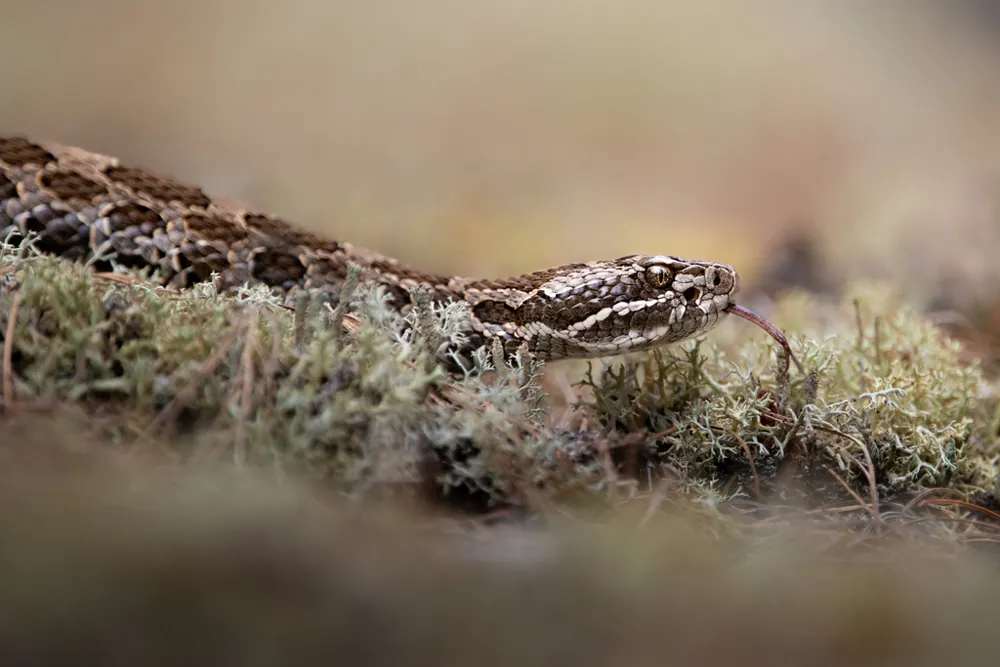
MorsiThe eastern massasauga is a small rattlesnake that lives in eastern North America, mainly around the Great Lakes. It is the only venomous snake in Ontario, Canada. It is shy and keeps away from people, but it is a protected species because its numbers have fallen sharply.1



 Come riconoscerlo
- Ground colour is grey or tan.1
- A row of large, rounded brown or black blotches runs down the centre of the back.1
- Three smaller rows of alternating spots run down each side.1
- Solid black individuals also occur.1
- Like all rattlesnakes, it has heat-sensing pits on each side of its head, between the eye and the nostril.1
Potere del veleno
Il veleno esce dalle zanne o dai denti quando morde.
Cosa fa il suo veleno?
Its venom is cytotoxic, which means it destroys tissue. It also contains digestive enzymes that disrupt blood flow and stop blood from clotting. In its prey, these effects cause severe internal bleeding.1
Quanto è pericoloso per le persone?
Pericolo per le persone: GraveUn morso richiede un medico. Le morti sono molto rare.The snake is shy and avoids humans when it can. Most bites in Ontario happened after people handled it or accidentally stepped on it. Only two deaths from its bites have been recorded in Ontario, and in both cases the victims did not receive proper treatment.1
Cosa fa quando ha paura?
It is shy and tends to withdraw from people rather than confront them.1
 Se morde
- Tieni la persona ferma e calma, tieni l'arto morso all'altezza del cuore, togli anelli e cose strette e portala subito in ospedale.
Chiama sempre prima il numero di emergenza (112, 000, 911). Queste sono indicazioni generali di primo soccorso, non consigli medici. Primo soccorso di base
 Stai al sicuro
- Non toccare, catturare o stuzzicare mai un animale selvatico, anche se è piccolo e anche se sembra addormentato o morto.
- Lasciagli spazio. Se ne incontri uno, resta calmo, indietreggia piano e lascialo andare per la sua strada.
- Se uno ti morde: resta calmo, stai fermo, chiama il numero di emergenza (112, 000, 911) o vai subito in ospedale. Ricorda com'era, una foto aiuta.
Non ce l'ha con te. Usa il veleno per procurarsi il cibo o per difendersi, e preferisce di gran lunga nascondersi. Altro su come stare al sicuro
Dove nel mondo?
Quanto è grande?
Quanto è lungo?
 lungo come 4 banane in fila
 potrebbe percorrere 100 metri in 110 secondi (l'uomo più veloce ci mette 9,6)
Quanto è grande Eastern massasauga rispetto a TE?
Solo calcoli nel tuo browser. Niente viene salvato o inviato da nessuna parte.
Quanto è veloce?


Informazioni
It is a pit viper, a family that includes all rattlesnakes, and it is the only venomous snake in Ontario.1
Mothers and newborns stay together for a few days, until the young shed their skin for the first time.1
Females often do not breed every year, usually having a two-year breeding cycle.1
Its populations have declined so much that it has disappeared from many of its former areas, and now survives mainly in small, isolated groups.1
Per gli esperti di veleni
- Nome scientifico
- Sistrurus catenatus
- Gruppo
- Serpenti a sonagli
- Famiglia
- Viperidae2
- Ordine
- Squamata
- Continenti
- Nord America
- Cuccioli
- It gives birth to live young (it is ovoviviparous), usually in August or September. Litters of 5 to 14 have been reported in Illinois and 6 to 19 in Wisconsin, and the newborns are 18.8 to 24.4 cm long from snout to vent.1
- Come se la passa in natura
- Threatened in Canada under federal and Ontario law; listed as endangered in several US states; IUCN Red List: least concern (2007, with a note that the assessment needs updating)1
- Pericolo per le persone
- 3 / 5: Grave3
Da dove vengono le informazioni
- Eastern massasauga (Wikipedia (CC BY-SA 4.0))
- Sistrurus catenatus (iNaturalist): nomi e classificazione.
- Venom Wiki: il livello di pericolo, la taglia tipica e la stima della velocità sono nostri. Guarda come li calcoliamo: Come valutiamo il pericolo.
Ogni informazione in questa pagina ha un numero che rimanda alla sua fonte. Se abbiamo sbagliato qualcosa, scusa, siamo appassionati di animali, non una rivista scientifica. Scrivici a [email protected] e lo correggeremo.
 Lo scorpione ha fame! Venom Wiki è un progetto di una sola persona: gratis, senza pubblicità e senza tracker. Una piccola mancia aiuta a tenerlo online.Dai da mangiare allo scorpione
Altri dello stesso gruppo: Serpenti a sonagli
 Eastern diamondback rattlesnakeSerpenti a sonagliPuò uccidere
 Timber rattlesnakeSerpenti a sonagliPuò uccidere
 Western diamondback rattlesnakeSerpenti a sonagliPuò uccidere
 SidewinderSerpenti a sonagliServe un medico
 Mojave rattlesnakeSerpenti a sonagliPuò uccidere
 Aruba rattlesnakeSerpenti a sonagliServe un medico
 Terciopelo
 Eastern coral snake
 Eyelash viper
 Arizona bark scorpion
 Brown recluse
 Cane toad