
 Africa
 Asia
Asia Europa
 Sud America
 Australia e Oceania
 Antartide
 Oceano Pacifico
 Oceano Atlantico
 Oceano Indiano
 Oceano Artico
 Mar Mediterraneo
 Mar Rosso
 Mar dei Caraibi
 Mar dei Coralli
 Mar Cinese Meridionale
 Mar delle Filippine
 Mare delle Andamane
 Mare del Nord
 Mar di Timor e Mar degli Arafura
 Golfo del Bengala
 Golfo di California
Pygmy rattlesnake
 Morsi
MorsiThe pygmy rattlesnake is a small, venomous snake that lives in the southeastern United States. It is the smallest rattlesnake found on the North American continent. Its venom is strongly tissue-damaging, but the snake makes so little that a bite is unlikely to be fatal to an adult.1



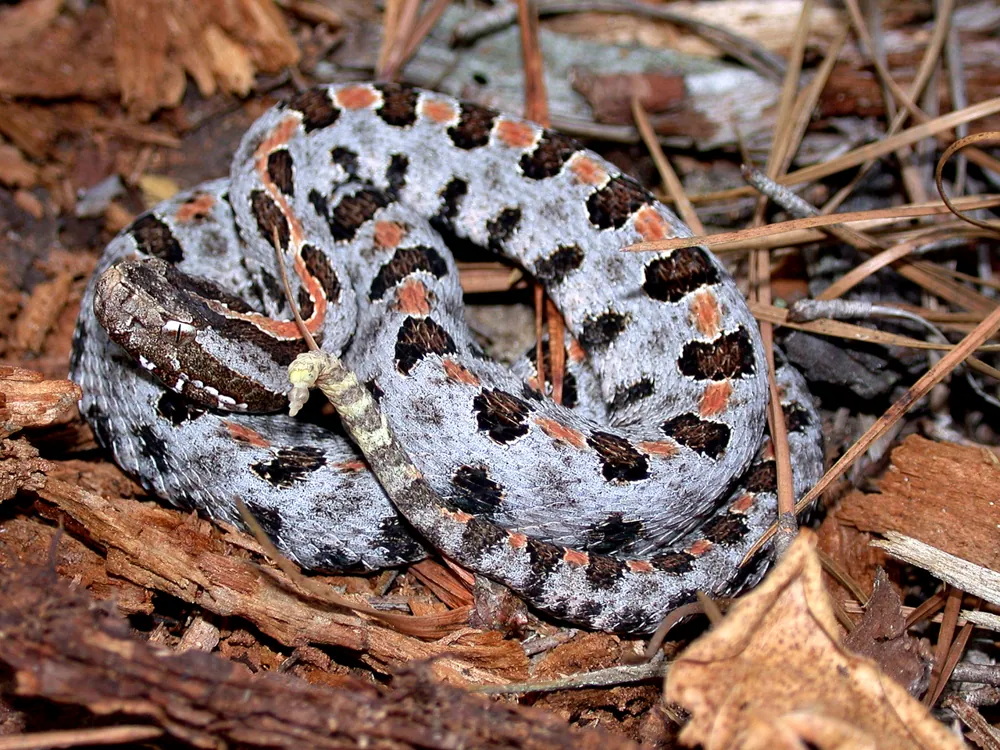
 Come riconoscerlo
- Small but bulky in width, usually 40 to 60 cm long including the tail1
- Dorsal pattern of oval or roughly circular spots with somewhat regular edges1
- Flank spots are mostly round and not much taller than they are wide1
- Usually 23 rows of dorsal scales at midbody1
- Young snakes may be paler or more vividly marked, and have a yellow tail tip. The rattle is tiny and gives only a faint buzz that is heard from a few feet away1
Potere del veleno
Il veleno esce dalle zanne o dai denti quando morde.
Cosa fa il suo veleno?
Its venom is cytotoxic, which means it damages cells, and it is strongly haemorrhagic, which means it causes bleeding. The venom is tissue-toxic but contains no neurotoxins, which attack the nerves. The snake produces only a small amount of venom and contains substantial amounts of serotonin and related compounds.1
Quanto è pericoloso per le persone?
Pericolo per le persone: DolorosoPuò fare davvero male, ma non è quasi mai grave.The snake produces too little venom to be likely to deliver a fatal bite to a human adult.1
Cosa fa quando ha paura?
Some individuals are very aggressive and strike furiously, while others are lethargic and do not rattle at all, and many are reluctant to bite.1
 Se morde
- Tieni la persona ferma e calma, tieni l'arto morso all'altezza del cuore, togli anelli e cose strette e portala subito in ospedale.
Chiama sempre prima il numero di emergenza (112, 000, 911). Queste sono indicazioni generali di primo soccorso, non consigli medici. Primo soccorso di base
 Stai al sicuro
- Non toccare, catturare o stuzzicare mai un animale selvatico, anche se è piccolo e anche se sembra addormentato o morto.
- Lasciagli spazio. Se ne incontri uno, resta calmo, indietreggia piano e lascialo andare per la sua strada.
- Se uno ti morde: resta calmo, stai fermo, chiama il numero di emergenza (112, 000, 911) o vai subito in ospedale. Ricorda com'era, una foto aiuta.
Non ce l'ha con te. Usa il veleno per procurarsi il cibo o per difendersi, e preferisce di gran lunga nascondersi. Altro su come stare al sicuro
Dove nel mondo?
Quanto è grande?
Quanto è lungo?
 lungo come 4 banane in fila
 potrebbe percorrere 100 metri in 110 secondi (l'uomo più veloce ci mette 9,6)
Quanto è grande Pygmy rattlesnake rispetto a TE?
Solo calcoli nel tuo browser. Niente viene salvato o inviato da nessuna parte.
Quanto è veloce?


Informazioni
Its venom was the basis for the drug eptifibatide, which is used to prevent clotting during a heart attack.1
It is the smallest rattlesnake found on the North American continent.1
Its rattle is unusually small, which may show the early stages of how rattles evolved.1
Snake fungal disease has risen sharply in pygmy rattlesnakes over the past decade and is a major cause of death, though some snakes have recovered in the field.1
Females may give birth to live young even while infected with snake fungal disease.1
Sfatiamo i miti
Mito: Its bite is deadly to people.
Verità: The snake makes so little venom that a bite is unlikely to be fatal to an adult human.1
Per gli esperti di veleni
- Nome scientifico
- Sistrurus miliarius
- Gruppo
- Serpenti a sonagli
- Famiglia
- Viperidae2
- Ordine
- Squamata
- Continenti
- Nord America
- Cuccioli
- It gives birth to live young, usually 3 to 13 per litter, between July and September.1
- Come se la passa in natura
- Least concern (IUCN Red List)1
- Pericolo per le persone
- 2 / 5: Doloroso3
Da dove vengono le informazioni
- Sistrurus miliarius (Wikipedia (CC BY-SA 4.0))
- Sistrurus miliarius (iNaturalist): nomi e classificazione.
- Venom Wiki: il livello di pericolo, la taglia tipica e la stima della velocità sono nostri. Guarda come li calcoliamo: Come valutiamo il pericolo.
Ogni informazione in questa pagina ha un numero che rimanda alla sua fonte. Se abbiamo sbagliato qualcosa, scusa, siamo appassionati di animali, non una rivista scientifica. Scrivici a [email protected] e lo correggeremo.
 Lo scorpione ha fame! Venom Wiki è un progetto di una sola persona: gratis, senza pubblicità e senza tracker. Una piccola mancia aiuta a tenerlo online.Dai da mangiare allo scorpione
Altri dello stesso gruppo: Serpenti a sonagli
 Eastern diamondback rattlesnakeSerpenti a sonagliPuò uccidere
 Timber rattlesnakeSerpenti a sonagliPuò uccidere
 Western diamondback rattlesnakeSerpenti a sonagliPuò uccidere
 SidewinderSerpenti a sonagliServe un medico
 Mojave rattlesnakeSerpenti a sonagliPuò uccidere
 Aruba rattlesnakeSerpenti a sonagliServe un medico
 Terciopelo
 Eastern coral snake
 Eyelash viper
 Arizona bark scorpion
 Brown recluse
 Cane toad