
 Africa
 Asia
Asia Europa
 Sud America
 Australia e Oceania
 Antartide
 Oceano Pacifico
 Oceano Atlantico
 Oceano Indiano
 Oceano Artico
 Mar Mediterraneo
 Mar Rosso
 Mar dei Caraibi
 Mar dei Coralli
 Mar Cinese Meridionale
 Mar delle Filippine
 Mare delle Andamane
 Mare del Nord
 Mar di Timor e Mar degli Arafura
 Golfo del Bengala
 Golfo di California
Yellow-faced whip snake
 Morsi
MorsiThe yellow-faced whip snake is a thin, fast snake with large eyes that lives across most of Australia. It is venomous, but its venom is mainly used on lizards and frogs, and it is not considered dangerous to people. It is one of the most widespread snakes found only in Australia.1



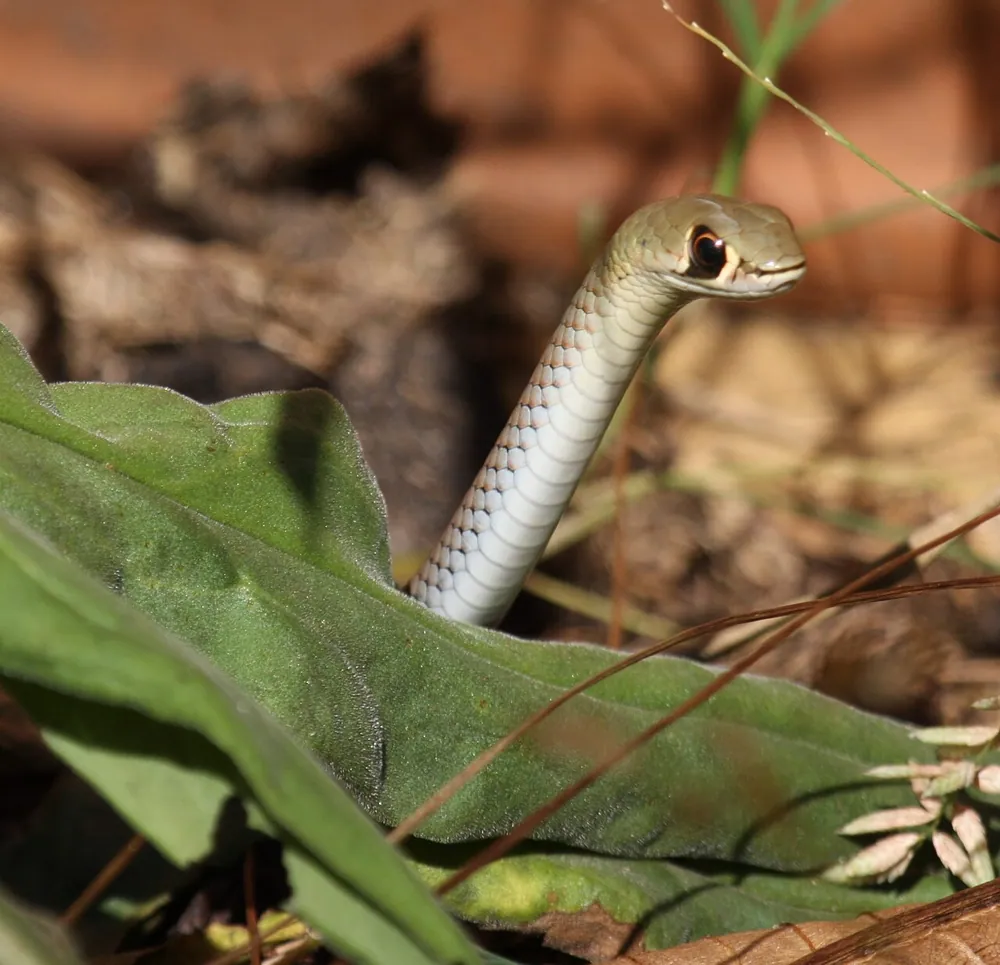
 Come riconoscerlo
- Has a narrow, yellowish head with a pale ring around each eye1
- A dark marking curves along the upper lip1
- Colour ranges from olive green to grey and brown, often with a red flush along the upper third of the back1
- Has large, prominent eyes, the largest of any Australian snake1
- Young snakes have a white-edged dark line across the snout1
Spesso confuso con: It is often confused with the eastern brown snake (Pseudonaja textilis) because the two look similar. Identifying it accurately requires a clear view of the head and counting the dorsal scales at mid-body, which number 15 rows.1
Potere del veleno
Il veleno esce dalle zanne o dai denti quando morde.
Cosa fa il suo veleno?
The venom is toxic and deadly to other reptiles and amphibians, and it slows and eventually kills the prey. The venom is not considered dangerous to humans. Some bites cause systemic symptoms such as paralysis and bleeding, along with localised pain and swelling that can range from moderate to severe.1
Quanto è pericoloso per le persone?
Pericolo per le persone: DolorosoPuò fare davvero male, ma non è quasi mai grave.The venom is not considered dangerous to humans, but a bite will be painful. Some bites cause systemic symptoms such as paralysis and bleeding, so medical attention is needed.1
Cosa fa quando ha paura?
It is fast-moving and nervous, and it flees quickly when disturbed.1
 Se morde
- Medical treatment should be sought after any snake bite.1
- Bendaggio compressivo e immobilizzazione: avvolgi una benda elastica ben salda sopra il morso e poi su tutto l'arto, immobilizzalo con una stecca e tieni la persona completamente ferma finché non arrivano i soccorsi.
- Non lavare il morso: in ospedale possono analizzare il veleno rimasto sulla pelle per scegliere il siero antiveleno giusto.
Chiama sempre prima il numero di emergenza (112, 000, 911). Queste sono indicazioni generali di primo soccorso, non consigli medici. Primo soccorso di base
 Stai al sicuro
- Non toccare, catturare o stuzzicare mai un animale selvatico, anche se è piccolo e anche se sembra addormentato o morto.
- Lasciagli spazio. Se ne incontri uno, resta calmo, indietreggia piano e lascialo andare per la sua strada.
- Se uno ti morde: resta calmo, stai fermo, chiama il numero di emergenza (112, 000, 911) o vai subito in ospedale. Ricorda com'era, una foto aiuta.
Non ce l'ha con te. Usa il veleno per procurarsi il cibo o per difendersi, e preferisce di gran lunga nascondersi. Altro su come stare al sicuro
Dove nel mondo?
Quanto è grande?
Quanto è lungo?
 lungo come 2 gatti di casa dal naso alla coda
 lungo come 6 banane in fila
 potrebbe percorrere 100 metri in 55 secondi (l'uomo più veloce ci mette 9,6)
Quanto è grande Yellow-faced whip snake rispetto a TE?
Solo calcoli nel tuo browser. Niente viene salvato o inviato da nessuna parte.
Quanto è veloce?


Informazioni
It has the largest eyes of any Australian snake, which helps it hunt successfully during the day.1
Snakes often gather in communities, and some communal nests contain 500 to 600 eggs.1
Young snakes often constrict their prey, but adults rarely do so and usually use venom instead.1
Although it is mainly active by day, it also forages at night for nocturnal prey such as geckos and frogs.1
In winter it slows down through brumation and moves mainly to find sun and water.1
Sfatiamo i miti
Mito: The yellow-faced whip snake is a dangerous snake to people because it is venomous.
Verità: Its venom is deadly to lizards, frogs and other reptiles, but it is not considered dangerous to humans. Its bites are still painful and medical care should be sought.1
Per gli esperti di veleni
- Nome scientifico
- Demansia psammophis
- Gruppo
- Serpenti australiani
- Famiglia
- Elapidae2
- Ordine
- Squamata
- Continenti
- Australia e Oceania
- Cuccioli
- It lays eggs in clutches of 5 to 6 or 15 to 20, and some communal nests hold 500 to 600 eggs. Hatchlings measure about 17 cm snout to vent.1
- Come se la passa in natura
- Least concern (IUCN Red List); near-threatened in Victoria1
- Pericolo per le persone
- 2 / 5: Doloroso3
Da dove vengono le informazioni
- Yellow-faced whipsnake (Wikipedia (CC BY-SA 4.0))
- Demansia psammophis (iNaturalist): nomi e classificazione.
- Venom Wiki: il livello di pericolo, la taglia tipica e la stima della velocità sono nostri. Guarda come li calcoliamo: Come valutiamo il pericolo.
Ogni informazione in questa pagina ha un numero che rimanda alla sua fonte. Se abbiamo sbagliato qualcosa, scusa, siamo appassionati di animali, non una rivista scientifica. Scrivici a [email protected] e lo correggeremo.
 Lo scorpione ha fame! Venom Wiki è un progetto di una sola persona: gratis, senza pubblicità e senza tracker. Una piccola mancia aiuta a tenerlo online.Dai da mangiare allo scorpione
Altri dello stesso gruppo: Serpenti australiani
 Taipan costiero
 Vipera della morte comune
 Serpente bruno orientale
 Taipan dell'interno
 Serpente tigre
 Collett's snake
Vive anche in: Australia e Oceania
 Ragno dei cunicoli di SydneyTarantole e ragni dei cunicoliMortale
 Redback spiderRagniServe un medico
 Brown tree snakeSerpenti con le zanne posterioriFa solo male
 Hooded pitohuiAltri animali tossiciFa solo maleNon toccare
 PlatypusMammiferi velenosiFa solo male
 Northern tree-dwelling funnel-web spiderTarantole e ragni dei cunicoliMortale