
 アフリカ
アフリカ アジア
アジア ヨーロッパ
ヨーロッパ 南アメリカ
南アメリカ オーストラリアとオセアニア
 南極大陸
南極大陸 太平洋
太平洋 大西洋
大西洋 インド洋
インド洋 北極海
北極海 地中海
地中海 紅海
紅海 カリブ海
カリブ海 サンゴ海
サンゴ海 南シナ海
南シナ海 フィリピン海
 アンダマン海
 北海
北海 ティモール海とアラフラ海
 ベンガル湾
ベンガル湾 カリフォルニア湾
Eastern massasauga
 かむ
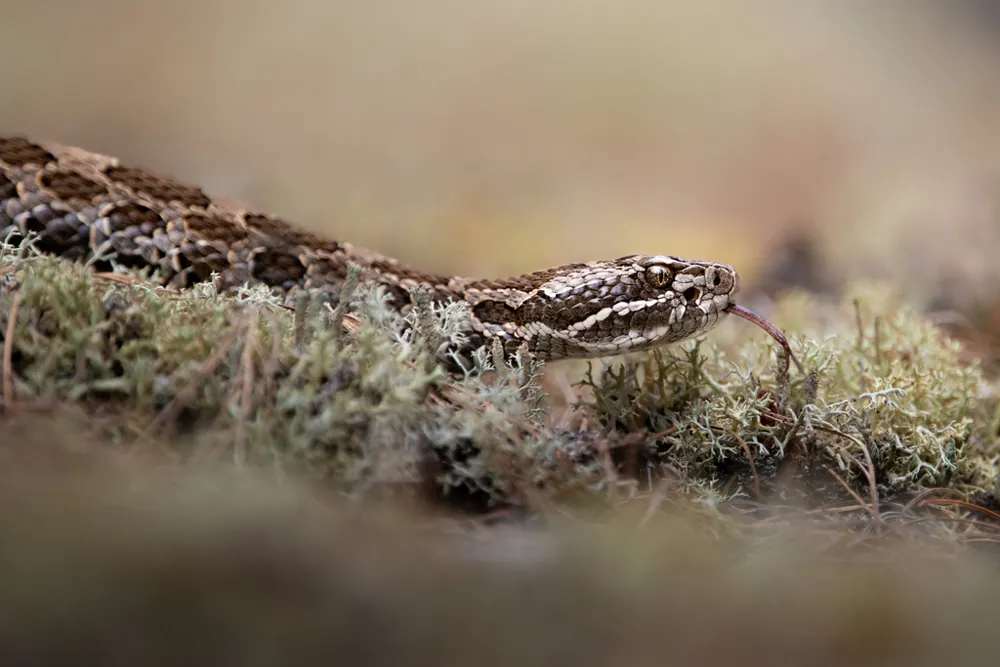
かむThe eastern massasauga is a small rattlesnake that lives in eastern North America, mainly around the Great Lakes. It is the only venomous snake in Ontario, Canada. It is shy and keeps away from people, but it is a protected species because its numbers have fallen sharply.1



 見分け方
見分け方
- Ground colour is grey or tan.1
- A row of large, rounded brown or black blotches runs down the centre of the back.1
- Three smaller rows of alternating spots run down each side.1
- Solid black individuals also occur.1
- Like all rattlesnakes, it has heat-sensing pits on each side of its head, between the eye and the nostril.1
毒パワー
かむときに、毒が牙や歯から出るよ。
その毒(かむ・刺す毒)はどうなるの?
Its venom is cytotoxic, which means it destroys tissue. It also contains digestive enzymes that disrupt blood flow and stop blood from clotting. In its prey, these effects cause severe internal bleeding.1
人にとってどれくらい危険?
人への危険: 深刻かまれたらお医者さんへ。死ぬことはとてもまれだよ。The snake is shy and avoids humans when it can. Most bites in Ontario happened after people handled it or accidentally stepped on it. Only two deaths from its bites have been recorded in Ontario, and in both cases the victims did not receive proper treatment.1
こわいとき、どうするの?
It is shy and tends to withdraw from people rather than confront them.1
 かまれたら
かまれたら
- その人をじっとさせて落ちつかせ、かまれた手足を心臓と同じ高さにして、指輪やきついものをはずし、急いで病院へ。
まず必ず救急番号(112、000、911)に電話しよう。これは一般的な応急手当の案内で、医療のアドバイスではないよ。 応急手当の基本
 安全に過ごそう
- 野生の動物には、小さくても、ねているように見えても、死んでいるように見えても、ぜったいにさわったり、つかまえたり、からかったりしないこと。
- 近づかないで。出会ったら落ちついて、ゆっくりあとずさりして、そのまま行かせてあげよう。
- かまれたら:落ちついて、じっとして、救急番号(112、000、911)に電話するか、急いで病院へ行こう。見た目をおぼえておいてね。写真があると役に立つよ。
きみをねらっているわけじゃないよ。毒はエサをとったり身を守ったりするために使うだけで、本当はかくれていたいんだ。 安全に過ごすためにもっと知ろう
どれくらい大きい?
どれくらい長い?
 バナナ4本をたてにならべた長さ
 100 mを110秒で走れる(いちばん速い人間は9.6秒)
Eastern massasaugaは、きみとくらべてどれくらい大きい?
ブラウザで計算しているだけ。何も保存されないし、どこにも送られないよ。
どれくらい速い?


データ
It is a pit viper, a family that includes all rattlesnakes, and it is the only venomous snake in Ontario.1
Mothers and newborns stay together for a few days, until the young shed their skin for the first time.1
Females often do not breed every year, usually having a two-year breeding cycle.1
Its populations have declined so much that it has disappeared from many of its former areas, and now survives mainly in small, isolated groups.1
毒のエキスパート向け
- 学名
- Sistrurus catenatus
- グループ
- ガラガラヘビ
- 家族
- Viperidae2
- ならびかえ
- Squamata
- 大陸
- 北アメリカ
- 赤ちゃん
- It gives birth to live young (it is ovoviviparous), usually in August or September. Litters of 5 to 14 have been reported in Illinois and 6 to 19 in Wisconsin, and the newborns are 18.8 to 24.4 cm long from snout to vent.1
- 野生でのようす
- Threatened in Canada under federal and Ontario law; listed as endangered in several US states; IUCN Red List: least concern (2007, with a note that the assessment needs updating)1
- 人への危険
- 3 / 5: 深刻3
事実の出典
- Eastern massasauga (Wikipedia (CC BY-SA 4.0))
- Sistrurus catenatus (iNaturalist): 名前と分類。
- Venom Wiki: 危険レベル、ふつうの大きさ、スピードの予想は、わたしたち独自のものだよ。どうやって決めているかはこちら: 危険度のつけ方.
このページのどの事実にも、出典をしめす番号がついているよ。まちがいがあったらごめんね、わたしたちは動物好きで、科学雑誌じゃないんだ。[email protected]に教えてくれたら直すよ。
 サソリはおなかがペコペコ! Venom Wikiはひとりでつくっているプロジェクト:無料で、広告もトラッカーもなし。少しのチップがサイトを続ける助けになるよ。サソリにエサをあげる
 Eastern diamondback rattlesnake
 Timber rattlesnake
 Western diamondback rattlesnake
 Sidewinder
 Mojave rattlesnake
 Aruba rattlesnake
 テルシオペロ
 Eastern coral snake
 Eyelash viper
 Arizona bark scorpion
 Brown recluse
 Cane toad