
 アフリカ
アフリカ アジア
アジア ヨーロッパ
ヨーロッパ 南アメリカ
南アメリカ オーストラリアとオセアニア
 南極大陸
南極大陸 太平洋
太平洋 大西洋
大西洋 インド洋
インド洋 北極海
北極海 地中海
地中海 紅海
紅海 カリブ海
カリブ海 サンゴ海
サンゴ海 南シナ海
南シナ海 フィリピン海
 アンダマン海
 北海
北海 ティモール海とアラフラ海
 ベンガル湾
ベンガル湾 カリフォルニア湾
Iberian ribbed newt
 毒のとげ
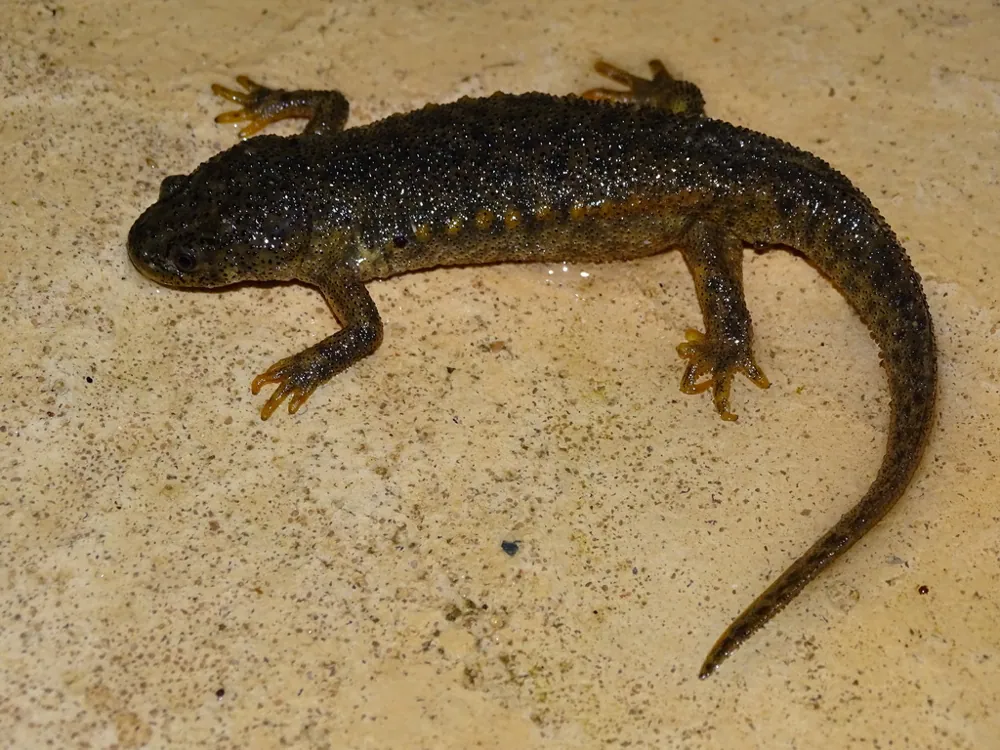
毒のとげThe Iberian ribbed newt is a salamander that lives in ponds and wells in Spain, Portugal and northern Morocco. It is the largest European newt species. When threatened, it can push its sharp ribs out through its skin, which gives it a way to defend itself against predators.1



 見分け方
見分け方
- Dark grey on its back and lighter grey on its belly, with small rust-coloured spots1
- Usually 8 to 10 orange, wart-like bumps (tubercles) running down each side of the body1
- Flat, spade-shaped head and a long tail, about half of its body length1
- Males are more slender and usually smaller than females1
- Larvae have bushy external gills and paler colours than adults1
よくまちがえられるのは: It is sometimes confused with the Iberian newt (Lissotriton boscai), a different species with a similar common name.1
毒パワー
するどいとげに毒があるよ。ふんだりつかんだりすると痛い。
その毒(かむ・刺す毒)はどうなるの?
When threatened, the newt releases a milky, thick poison from glands on its neck, back, sides and tail as its ribs push out. The poison coats the ribs, which can pierce the skin of a predator's mouth and inject toxins.1
人にとってどれくらい危険?
人への危険: 軽いハチに刺されたくらいか、それ以下。人にはほぼ無害。The rib defence is completely harmless to humans. The ribs cause only little harm to the newt itself, and its skin quickly heals without infection.1
こわいとき、どうするの?
It tries to run away from predators first. If it cannot escape, it pushes its sharp ribs through its sides and releases poison.1
 とげが刺さったら
- だれかがさわったら:手をよく洗って、目や口にさわらないこと。子どもやペットがなめたり食べたりしたら:中毒センターか救急番号に電話しよう。
まず必ず救急番号(112、000、911)に電話しよう。これは一般的な応急手当の案内で、医療のアドバイスではないよ。 応急手当の基本
 安全に過ごそう
- 野生の動物には、小さくても、ねているように見えても、死んでいるように見えても、ぜったいにさわったり、つかまえたり、からかったりしないこと。
- 近づかないで。出会ったら落ちついて、ゆっくりあとずさりして、そのまま行かせてあげよう。
- とげが刺さったら:落ちついて、じっとして、救急番号(112、000、911)に電話するか、急いで病院へ行こう。見た目をおぼえておいてね。写真があると役に立つよ。
きみをねらっているわけじゃないよ。毒はエサをとったり身を守ったりするために使うだけで、本当はかくれていたいんだ。 安全に過ごすためにもっと知ろう
どれくらい大きい?
どれくらい長い?
 おもちゃのブロック9こを1列にならべた長さ
Iberian ribbed newtは、きみとくらべてどれくらい大きい?
ブラウザで計算しているだけ。何も保存されないし、どこにも送られないよ。
どれくらい速い?


データ
Its ribs can push through its skin to act as a defence, a primitive and rudimentary form of envenomation.1
It is a model animal for regeneration research. It can regrow lost limbs, injured heart tissue, brain cells, eye lenses and parts of its spinal cord.1
This newt has been sent into space on at least six missions, starting in 1985.1
In genetic males and females, temperature can override sex chromosomes. Some ZW larvae reared at 32 °C (90 °F) become functional males.1
Its immune system, rib-coated collagen and antimicrobial peptides let the pierced skin heal quickly without infection.1
Females can keep live sperm in their cloaca for up to five months.1
うそ・ほんとう
うそ: The newt's ribs and poison are dangerous to people.
ほんとう: The ribs and poison are a defence against predators. The rib defence is completely harmless to humans.1
毒のエキスパート向け
- 学名
- Pleurodeles waltl
- グループ
- ヤドクガエル、ヒキガエル、イモリ
- 家族
- Salamandridae2
- ならびかえ
- Caudata
- 大陸
- ヨーロッパ, アフリカ
- 赤ちゃん
- The young are born in water as larvae, breathing through gills. They lose their gills as their limbs grow and can then live on land as well as in water.1
- 野生でのようす
- Least Concern (IUCN, assessed October 2020)1
- 人への危険
- 1 / 5: 軽い3
事実の出典
- Iberian ribbed newt (Wikipedia (CC BY-SA 4.0))
- Pleurodeles waltl (iNaturalist): 名前と分類。
- Venom Wiki: 危険レベル、ふつうの大きさ、スピードの予想は、わたしたち独自のものだよ。どうやって決めているかはこちら: 危険度のつけ方.
このページのどの事実にも、出典をしめす番号がついているよ。まちがいがあったらごめんね、わたしたちは動物好きで、科学雑誌じゃないんだ。[email protected]に教えてくれたら直すよ。
 サソリはおなかがペコペコ! Venom Wikiはひとりでつくっているプロジェクト:無料で、広告もトラッカーもなし。少しのチップがサイトを続ける助けになるよ。サソリにエサをあげる
 Fire salamander
 Common toad
 European fire-bellied toad
 Golden mantella
 Natterjack toad
 Tomato frog
 Common European adder
 Spanish fly
 Common wasp
 European hornet
 Western honey bee
 Blunt-nosed viper