
 Afirika
 Asiya
Asiya Bulaaya
 Amerika ey'Obukiikaddyo
 Awusitureeliya ne Oseyaniya
 Antakitika
 Oseyani ya Pasifiki
 Oseyani ya Atlantiki
 Oseyani y'e Buyindi
 Oseyani ya Arakitiki
 Ennyanja ya Mediterenia
 Ennyanja Emmyufu
 Ennyanja ya Karibiyani
 Ennyanja ya Korali
 Ennyanja ya China ey'Obukiikaddyo
 Ennyanja ya Bufilipino
 Ennyanja ya Andaman
 Ennyanja ey'Obukiikakkono (North Sea)
 Ennyanja ya Timor ne Arafura
 Ekikono kya Bengal
 Ekikono kya Kalifoniya
Brazilian brown spider
 Kiruma
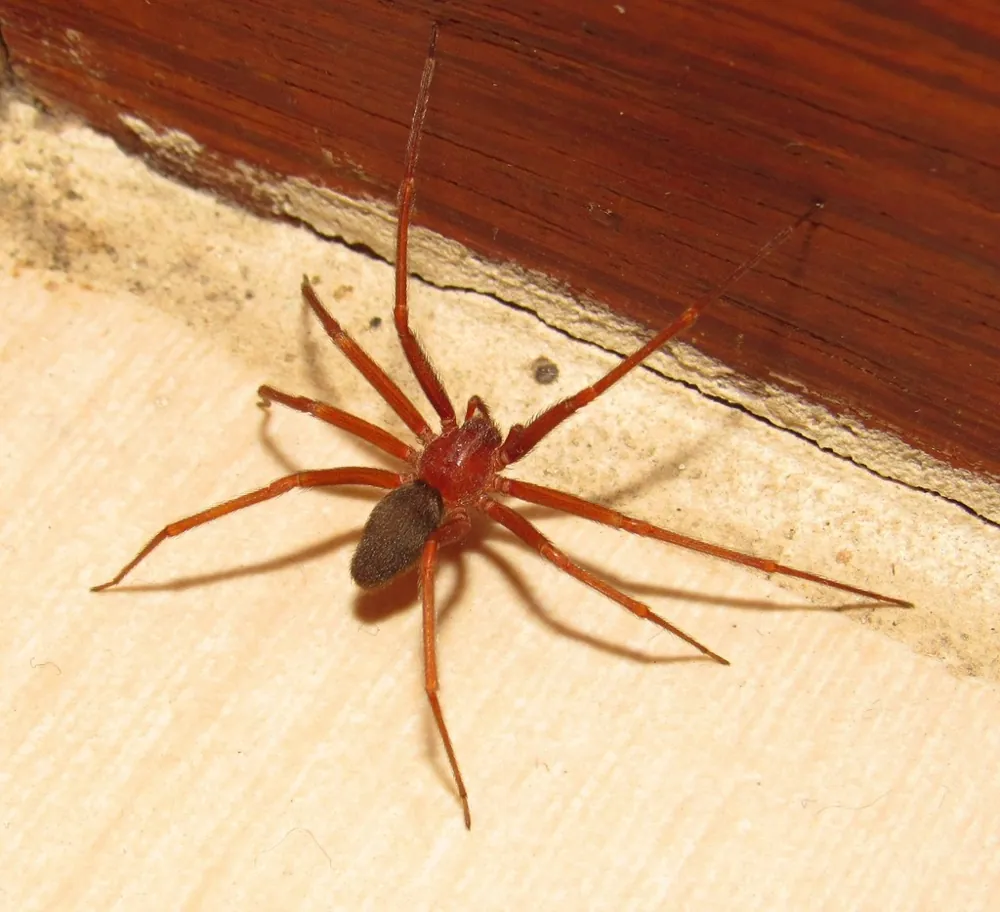
The Brazilian brown recluse spider is a small spider that is highly venomous. It lives in parts of Brazil and Argentina, and it is one of the species linked to deaths from spider bites in South America. Its bite can seem mild at first, so it matters to know what it looks like.1


 Engeri y'okukitegeera
- Carapace (the front body shield) is dull yellow to orange-brown, with a dark, U-shaped marking on the head area that contrasts with the yellowish thorax.1
- Legs are orange-brown to reddish-brown.1
- Abdomen is grey or blackened, and darker on top than underneath.1
- Small spider: the female is about 8.5 mm long, and the male is smaller.1
- Active at night and very shy, usually found in dark places.1
Amaanyi g'obusagwa
Obusagwa buyita mu mannyo gaakyo amawanvu (fangs) oba mu mannyo amalala nga kiruma.
Obusagwa bwakyo bukola ki?
Its venom contains a high concentration of the enzyme sphingomyelinase D, which causes both local and whole-body effects. Symptoms usually take hours to appear. The bite starts with severe pain, redness, swelling and blisters, and in more severe cases the skin tissue can die. Whole-body effects can include damage to red blood cells, heart problems, low blood pressure, kidney failure and severe bleeding.1
Kirina akabi kenkana wa eri abantu?
Akabi eri abantu: Kya maanyiOkulumwa kwetaaga omusawo. Okufa kubaawo kitono nnyo.It is one of the main species linked to deaths from spider bites in South America. Whole-body effects occur frequently after its bite. Because symptoms are delayed, a victim may think the bite was mild.1
Kikola ki nga kitidde?
It is a very shy spider that keeps to dark places, so it is rarely seen.1
 Bwe kiruma
- Naaza ekifo ekirumiddwa era okiteekeko ayisi olw'obulumi. Funa obuyambi bw'abasawo singa obulumi bungi, busaasaana oba omuntu awulira bubi.
Bulijjo sooka kuba ennamba y'ebigwa bitalaze (112, 000, 911). Buno bulagirizi bwa bujjanjabi obusooka obwa bulijjo, si kuwabula kwa musawo. Obujjanjabi obusooka obw'omusingi
 Weekuume
- Tokwatako, tokwata wadde okusoomooza ensolo ey'omu nsiko, ne bw'eba ntono, era ne bw'eba erabika nga yeebase oba nga efudde.
- Gireke n'ebbanga. Bw'osisinkana emu, beera mukkakkamu, dda emabega mpola era gireke egende mu kkubo lyayo.
- Bw'emu ekuluma: beera mukkakkamu, totambula, kuba ennamba y'ebigwa bitalaze (112, 000, 911) oba tuuka mu ddwaliro mangu. Jjukira bwe yali efaanana, ekifaananyi kiyamba.
Tekikunoonya. Kikozesa obusagwa bwakyo okukwata emmere oba okwekuuma, era kyandisinze kwekweka. Ebirala ku kwekuuma
Wa mu nsi?
Kinene kyenkana wa?
Kiwanvu kyenkana wa?
 kitono nnyo nti kisobola okutuula ku lwala lwo
Brazilian brown spider kinene kyenkana wa bw'ogeraageranya ne GGWE?
Kubala bwokka mu browser yo. Tewali kitterekebwa wadde okusindikibwa wonna.
Kidduka kyenkana wa?


Ebituufu
The minimum dose that causes skin tissue death is 2.4 μg per kg of body weight.1
An average bite injects about 40 μg of venom proteins.1
It produces about 5.6 mg of venom, and the male produces less, around 2.43 mg.1
Males have much longer legs than females, although the female has the larger body.1
Its webs are irregular and built under fallen tree trunks and debris, usually in dark places.1
Ku bakugu mu busagwa
- Erinnya erya ssaayansi
- Loxosceles intermedia
- Ekibinja
- Nnabbubi
- Amaka
- Sicariidae2
- Ensengeka
- Araneae
- Ssemazinga
- Amerika ey'Obukiikaddyo
- Abaana abawere
- The female breeds in the hottest months of the year, laying about 20 eggs in a bag-shaped web, and the young take 46 days to hatch.1
- Akabi eri abantu
- 3 / 5: Kya maanyi3
Ebituufu we biva
- Loxosceles intermedia (Wikipedia (CC BY-SA 4.0))
- Loxosceles intermedia (iNaturalist): amannya n'ensengeka y'ebika.
- Venom Wiki: omutendera gw'akabi, obunene obwa bulijjo n'okuteebereza kw'embiro bibyaffe. Laba engeri gye tubibalamu: Engeri gye tupimamu akabi.
Buli kituufu ku lupapula luno kirina ennamba eraga we kyava. Bwe tuba tukoze ensobi, tusonyiwe, tuli bayagazi ba nsolo, so si magazini ya ssaayansi. Tubuulire ku [email protected] tujja kugitereeza.
 Enjaba erumwa enjala! Venom Wiki pulojekiti ya muntu omu: ya bwereere, tewali birango era tewali bikulondoola. Akasiimo akatono kayamba okugikuuma ku yintaneti.Liisa enjaba
Ebirala okuva mu kibinja kye kimu: Nnabbubi
 Brazilian wandering spider
 Amazon wandering spider
 Chilean recluse
 Golden silk orb-weaver
 Keyserling's wandering spider
 Argentine black widow
Era kibeera mu: Amerika ey'Obukiikaddyo
 Golden poison frogEbikere eby'obutwa, ebikere ebinene (toads) ne newtsKittaTokwatako
 TerciopeloPit vipers (emisota egiwulira ebbugumu)Kitta
 Eyelash viperPit vipers (emisota egiwulira ebbugumu)Kisobola okutta
 Golden lanceheadPit vipers (emisota egiwulira ebbugumu)Kisobola okutta
 South American bushmasterPit vipers (emisota egiwulira ebbugumu)Kisobola okutta
 Cane toadEbikere eby'obutwa, ebikere ebinene (toads) ne newtsKyetaaga omusawoTokwatako