
 Afirika
 Asiya
Asiya Bulaaya
 Amerika ey'Obukiikaddyo
 Awusitureeliya ne Oseyaniya
 Antakitika
 Oseyani ya Pasifiki
 Oseyani ya Atlantiki
 Oseyani y'e Buyindi
 Oseyani ya Arakitiki
 Ennyanja ya Mediterenia
 Ennyanja Emmyufu
 Ennyanja ya Karibiyani
 Ennyanja ya Korali
 Ennyanja ya China ey'Obukiikaddyo
 Ennyanja ya Bufilipino
 Ennyanja ya Andaman
 Ennyanja ey'Obukiikakkono (North Sea)
 Ennyanja ya Timor ne Arafura
 Ekikono kya Bengal
 Ekikono kya Kalifoniya
Cantil
 Kiruma
The cantil is a highly venomous pit viper, a type of snake that senses heat with pits on its face. It lives in Mexico and Central America, reaching south as far as Honduras. Its bite can be very dangerous, which is why it is so well known in the region.1



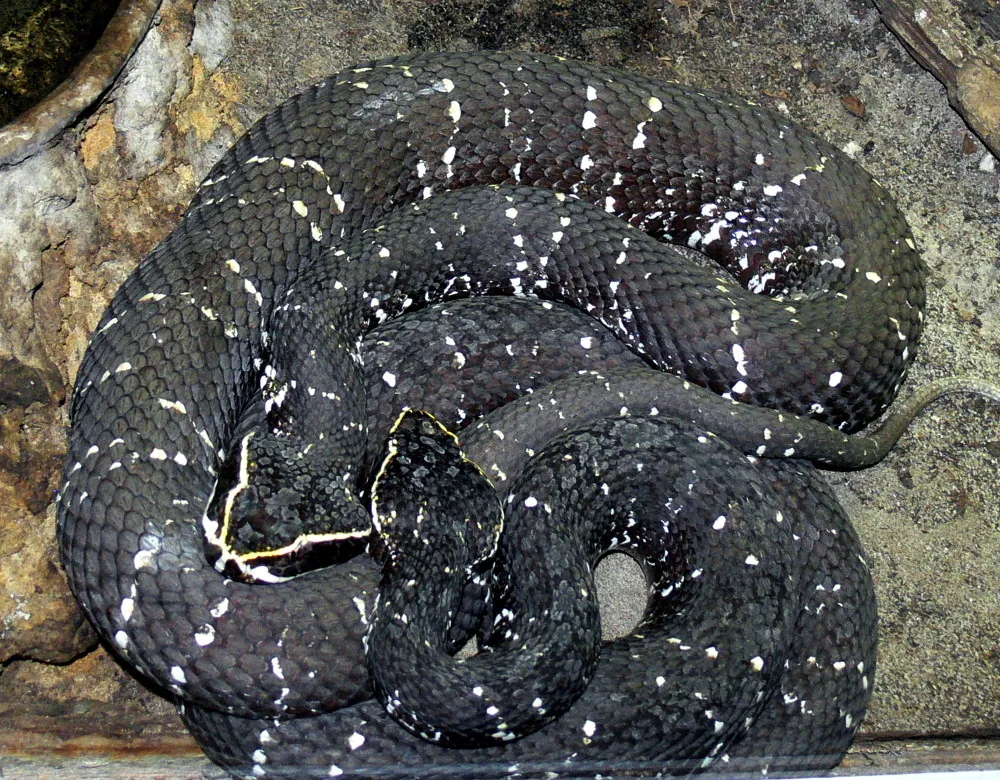
 Engeri y'okukitegeera
- Heavy-bodied, with a broad, triangular head and small eyes with vertical pupils.1
- Usually brown or black, with darker brown or black banding, sometimes with white or cream accents.1
- Yellow and/or white lines on the head, including a broader line on the upper lip.1
- Juveniles are almost always distinctly banded, with bright green or yellow tail tips.1
- Adults are often more faded, with their pattern and colour darkening as they age.1
Kitera okutabulwa ne: It shares its general body structure with the copperhead and is in the same genus as the cottonmouth, so it is closely related to both.1
Amaanyi g'obusagwa
Obusagwa buyita mu mannyo gaakyo amawanvu (fangs) oba mu mannyo amalala nga kiruma.
Obusagwa bwakyo bukola ki?
Bites can cause local pain, swelling and discolouration, but bites from adults can cause massive swelling and necrosis, which is the death of body tissue. Symptoms reported in Honduras include severe pain, bleeding from the fang punctures, nosebleeds, bleeding gums, blood in the urine, shock and kidney failure. Some bites were fatal within only a few hours.1
Kirina akabi kenkana wa eri abantu?
Akabi eri abantu: Kya kabi nnyoKisobola okutta omuntu atafunye bujjanjabi.The cantil is feared throughout its range, and in Sonora, Mexico, it is feared more than any other reptile. In Nicaragua, it is considered the country's most dangerous snake. One researcher suggested that amputation may be needed in about one in six cases because of necrosis. It is generally shy, and its reputation for aggression is probably not well deserved.1
 Amawulire amalungi: abasawo balina eddagala (antivenom) oba obujjanjabi ku kino.1
Kikola ki nga kitidde?
It first relies on camouflage. If that fails, it coils tightly, raises the end of its tail and vibrates it to make a loud whipping sound, and may strike or gape, but only when it has no other choice.1
 Bwe kiruma
- A polyvalent antivenom, made by the Instituto Clodomiro Picado in Costa Rica, is used to treat bites from this species.1
- Omuntu muleke ateetambula era ateefu, ekitundu ekirumiddwa kibeere ku buwanvu bw'omutima, ggyamu empeta n'ebintu ebinyweza, era omutwale mu ddwaliro mangu.
Bulijjo sooka kuba ennamba y'ebigwa bitalaze (112, 000, 911). Buno bulagirizi bwa bujjanjabi obusooka obwa bulijjo, si kuwabula kwa musawo. Obujjanjabi obusooka obw'omusingi
 Weekuume
- Tokwatako, tokwata wadde okusoomooza ensolo ey'omu nsiko, ne bw'eba ntono, era ne bw'eba erabika nga yeebase oba nga efudde.
- Gireke n'ebbanga. Bw'osisinkana emu, beera mukkakkamu, dda emabega mpola era gireke egende mu kkubo lyayo.
- Bw'emu ekuluma: beera mukkakkamu, totambula, kuba ennamba y'ebigwa bitalaze (112, 000, 911) oba tuuka mu ddwaliro mangu. Jjukira bwe yali efaanana, ekifaananyi kiyamba.
Tekikunoonya. Kikozesa obusagwa bwakyo okukwata emmere oba okwekuuma, era kyandisinze kwekweka. Ebirala ku kwekuuma
Wa mu nsi?
Kinene kyenkana wa?
Kiwanvu kyenkana wa?
 kiwanvu nga kkapa ez'awaka 1,5 okuva ku nnyindo okutuuka ku mukira
 kiwanvu nga ndiizi 4 eziteekeddwa mu lunyiriri
 kyandisobodde okudduka mita 100 mu sikonda 100 (omuntu asinga embiro yeetaaga 9,6)
Cantil kinene kyenkana wa bw'ogeraageranya ne GGWE?
Kubala bwokka mu browser yo. Tewali kitterekebwa wadde okusindikibwa wonna.
Kidduka kyenkana wa?


Ebituufu
Omumenyi w'enfumo
Enfumo: The cantil has a reputation for having a nasty disposition and being extremely aggressive.
Amazima: This reputation is probably not well deserved. The cantil is generally shy and relies on camouflage first, and it only displays or strikes when it has no other choice.1
Ku bakugu mu busagwa
- Erinnya erya ssaayansi
- Agkistrodon bilineatus
- Ekibinja
- Pit vipers (emisota egiwulira ebbugumu)
- Amaka
- Viperidae2
- Ensengeka
- Squamata
- Ssemazinga
- Amerika ey'Obukiikakkono
- Abaana abawere
- Cantils are ovoviviparous, meaning they give birth to live young rather than laying eggs. They breed in spring and give birth to 5 to 20 young at a time.1
- Kiri kitya mu nsiko
- Near Threatened (IUCN Red List). Its population trend is down, and its primary ecological concern is habitat loss.1
- Akabi eri abantu
- 4 / 5: Kya kabi nnyo3
Ebituufu we biva
- Agkistrodon bilineatus (Wikipedia (CC BY-SA 4.0))
- Agkistrodon bilineatus (iNaturalist): amannya n'ensengeka y'ebika.
- Venom Wiki: omutendera gw'akabi, obunene obwa bulijjo n'okuteebereza kw'embiro bibyaffe. Laba engeri gye tubibalamu: Engeri gye tupimamu akabi.
Buli kituufu ku lupapula luno kirina ennamba eraga we kyava. Bwe tuba tukoze ensobi, tusonyiwe, tuli bayagazi ba nsolo, so si magazini ya ssaayansi. Tubuulire ku [email protected] tujja kugitereeza.
 Enjaba erumwa enjala! Venom Wiki pulojekiti ya muntu omu: ya bwereere, tewali birango era tewali bikulondoola. Akasiimo akatono kayamba okugikuuma ku yintaneti.Liisa enjaba
Ebirala okuva mu kibinja kye kimu: Pit vipers (emisota egiwulira ebbugumu)
 TerciopeloPit vipers (emisota egiwulira ebbugumu)Kitta
 Eyelash viperPit vipers (emisota egiwulira ebbugumu)Kisobola okutta
 CottonmouthPit vipers (emisota egiwulira ebbugumu)Kyetaaga omusawo
 Eastern copperheadPit vipers (emisota egiwulira ebbugumu)Kyetaaga omusawo
 Central American bushmasterPit vipers (emisota egiwulira ebbugumu)Kisobola okutta
 Martinique lanceheadPit vipers (emisota egiwulira ebbugumu)Kisobola okutta
Era kibeera mu: Amerika ey'Obukiikakkono
 Eastern coral snakeEmisota gya korali (coral snakes)Kisobola okutta
 Eastern diamondback rattlesnakeRattlesnakeKisobola okutta
 Timber rattlesnakeRattlesnakeKisobola okutta
 Western diamondback rattlesnakeRattlesnakeKisobola okutta
 Arizona bark scorpionEnjabaKyetaaga omusawo
 Brown recluseNnabbubiKyetaaga omusawo