
 Afirika
 Asiya
Asiya Bulaaya
 Amerika ey'Obukiikaddyo
 Awusitureeliya ne Oseyaniya
 Antakitika
 Oseyani ya Pasifiki
 Oseyani ya Atlantiki
 Oseyani y'e Buyindi
 Oseyani ya Arakitiki
 Ennyanja ya Mediterenia
 Ennyanja Emmyufu
 Ennyanja ya Karibiyani
 Ennyanja ya Korali
 Ennyanja ya China ey'Obukiikaddyo
 Ennyanja ya Bufilipino
 Ennyanja ya Andaman
 Ennyanja ey'Obukiikakkono (North Sea)
 Ennyanja ya Timor ne Arafura
 Ekikono kya Bengal
 Ekikono kya Kalifoniya
Common wasp
 Kibojja
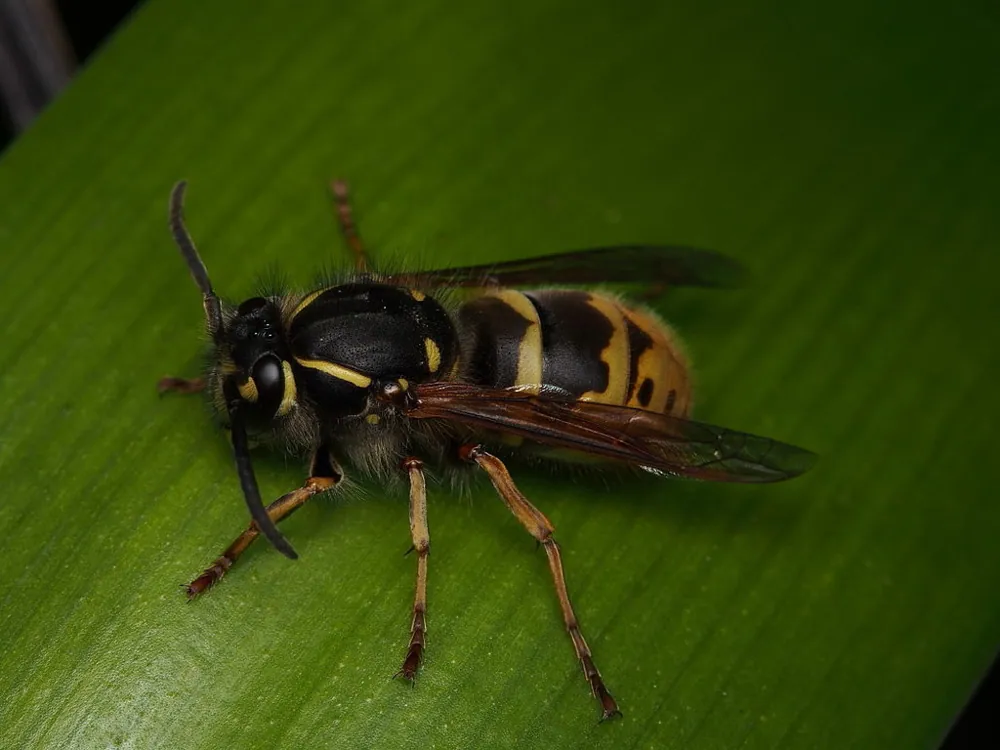
The common wasp is a yellow and black wasp that lives in colonies. It is found in parts of Europe, Asia, Australia, New Zealand and South America, and it often comes into gardens, orchards and buildings. It matters because it can sting people and damage fruit crops.1
 Engeri y'okukitegeera
- Black and yellow warning colours, with yellow bands on the thorax and black dots and rings on the abdomen.1
- Seen from the front, the face has a single black mark on the clypeus, shaped like an anchor or a dagger.1
- Workers measure about 12–17 mm from head to tip of abdomen, while queens are about 20 mm long.1
- Its paper nest is brittle and tan coloured, with open cells and a column attaching it to the surface.1
Kitera okutabulwa ne: The common wasp looks very similar to Vespula germanica, the German wasp. Seen head on, the German wasp has three black dots on its face, while the common wasp has only one black mark. Males of the two species are almost impossible to tell apart by eye and need the shape of their genitalia to identify them.1
Amaanyi g'obusagwa
Obusagwa buyita mu ggwa lyakyo eribojja.
Kirina akabi kenkana wa eri abantu?
Akabi eri abantu: Kya bulumiKisobola okuluma ddala, naye kumpi tekiba kya kabi kinene.The common wasp frequently damages fruit crops and can endanger humans.1
 Bwe kibojja
- Kalakata oggyemu eriggwa ly'enjuki era onyogoze ekifo.
- Omuntu bw'aba nga tassa bulungi, ng'azimbye mu maaso oba mu mumiro, oba ng'awulira ng'agenda kuzirika, buno bubenje bwa alergy obw'amangu: kuba ennamba y'ebigwa bitalaze era kozesa empiso ye eya adrenaline (adrenaline pen) bw'aba nga agirina.
Bulijjo sooka kuba ennamba y'ebigwa bitalaze (112, 000, 911). Buno bulagirizi bwa bujjanjabi obusooka obwa bulijjo, si kuwabula kwa musawo. Obujjanjabi obusooka obw'omusingi
 Weekuume
- Tokwatako, tokwata wadde okusoomooza ensolo ey'omu nsiko, ne bw'eba ntono, era ne bw'eba erabika nga yeebase oba nga efudde.
- Gireke n'ebbanga. Bw'osisinkana emu, beera mukkakkamu, dda emabega mpola era gireke egende mu kkubo lyayo.
- Bw'emu ekubojja: beera mukkakkamu, totambula, kuba ennamba y'ebigwa bitalaze (112, 000, 911) oba tuuka mu ddwaliro mangu. Jjukira bwe yali efaanana, ekifaananyi kiyamba.
Tekikunoonya. Kikozesa obusagwa bwakyo okukwata emmere oba okwekuuma, era kyandisinze kwekweka. Ebirala ku kwekuuma
Wa mu nsi?
Kinene kyenkana wa?
Kiwanvu kyenkana wa?
 kiwanvu nga pepa kiripu
 kyandisobodde okubuuka okusala ekisaawe ky'omupiira kyonna mu sikonda 16
Common wasp kinene kyenkana wa bw'ogeraageranya ne GGWE?
Kubala bwokka mu browser yo. Tewali kitterekebwa wadde okusindikibwa wonna.
Kidduka kyenkana wa?


Ebituufu
The nest has a chemical that repels ants, which is spread around the base of the nest column to stop ants attacking it.1
Workers use their wings as fans to cool the nest when it gets too hot, as its best temperature is around 32 °C.1
A new queen searches for a nest site and performs a dance-like wing movement that helps her find the spot again after she has left.1
The wasps mark the path from their nest to their food with pheromone trails, which are specific to the species rather than to each colony.1
The queen dies in autumn, and once she is gone the colony breaks down and the workers die of cold or starvation.1
Omumenyi w'enfumo
Enfumo: Common wasps found in North America are the same species as the common wasp of Europe.
Amazima: Until 2010 they were thought to be the same, but the North American ones are a different species, Vespula alascensis.1
Ku bakugu mu busagwa
Ebituufu we biva
- Vespula vulgaris (Wikipedia (CC BY-SA 4.0))
- Vespula vulgaris (iNaturalist): amannya n'ensengeka y'ebika.
- Venom Wiki: omutendera gw'akabi, obunene obwa bulijjo n'okuteebereza kw'embiro bibyaffe. Laba engeri gye tubibalamu: Engeri gye tupimamu akabi.
Buli kituufu ku lupapula luno kirina ennamba eraga we kyava. Bwe tuba tukoze ensobi, tusonyiwe, tuli bayagazi ba nsolo, so si magazini ya ssaayansi. Tubuulire ku [email protected] tujja kugitereeza.
 Enjaba erumwa enjala! Venom Wiki pulojekiti ya muntu omu: ya bwereere, tewali birango era tewali bikulondoola. Akasiimo akatono kayamba okugikuuma ku yintaneti.Liisa enjaba
Ebirala okuva mu kibinja kye kimu: Enjuki, ennumba n'ennumba ennene
 Asian giant hornetEnjuki, ennumba n'ennumba enneneKisobola okutta
 European hornetEnjuki, ennumba n'ennumba enneneKiruma bwokka
 Western honey beeEnjuki, ennumba n'ennumba enneneKiruma bwokka
 Giant honey beeEnjuki, ennumba n'ennumba enneneKyetaaga omusawo
 Asian hornetEnjuki, ennumba n'ennumba enneneKiruma bwokka
 European paper waspEnjuki, ennumba n'ennumba enneneKiruma bwokka
Era kibeera mu: Bulaaya
 Common European adderVipers n'essalambwaKyetaaga omusawo
 Spanish flyEnsolo endala ez'obutwaKyetaaga omusawoTokwatako
 Fire salamanderEbikere eby'obutwa, ebikere ebinene (toads) ne newtsKiruma bwokkaTokwatako
 Blunt-nosed viperVipers n'essalambwaKisobola okutta
 Nose-horned viperVipers n'essalambwaKisobola okutta
 Ottoman viperVipers n'essalambwaKisobola okutta