
 Afirika
 Asiya
Asiya Bulaaya
 Amerika ey'Obukiikaddyo
 Awusitureeliya ne Oseyaniya
 Antakitika
 Oseyani ya Pasifiki
 Oseyani ya Atlantiki
 Oseyani y'e Buyindi
 Oseyani ya Arakitiki
 Ennyanja ya Mediterenia
 Ennyanja Emmyufu
 Ennyanja ya Karibiyani
 Ennyanja ya Korali
 Ennyanja ya China ey'Obukiikaddyo
 Ennyanja ya Bufilipino
 Ennyanja ya Andaman
 Ennyanja ey'Obukiikakkono (North Sea)
 Ennyanja ya Timor ne Arafura
 Ekikono kya Bengal
 Ekikono kya Kalifoniya
Tiger rattlesnake
 Kiruma
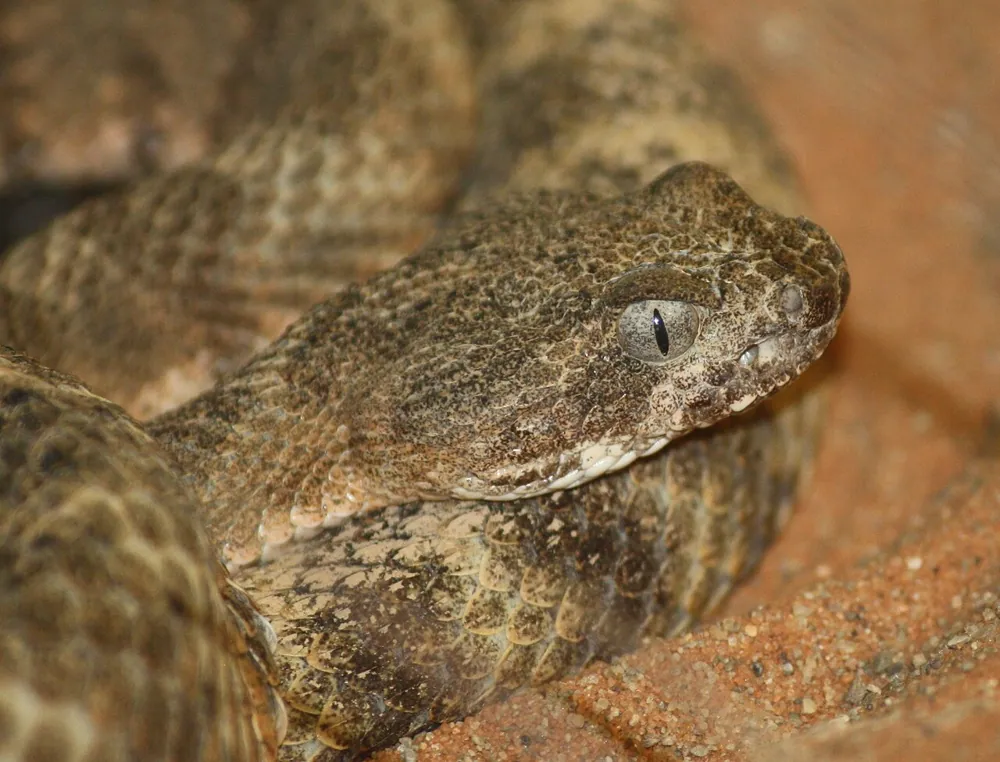
The tiger rattlesnake is a small rattlesnake with a very venomous bite. It lives in the deserts and rocky hills of the southwestern United States and northwestern Mexico. Its venom is among the most toxic of any rattlesnake, so it is important to recognise it and give the right first aid after a bite.1



 Engeri y'okukitegeera
- It has a small, spade-shaped head. It is the smallest head of any rattlesnake, and it is about 1/25 of its total body length.1
- It has 35 to 52 narrow gray, olive or brown crossbands along the back. These are the only crossbands on the front part of a rattlesnake's body, and they can look like vertical stripes from the side.1
- The ground colour is gray, lavender, blue-gray, pink or buff, and it often turns pink, pale orange or cream on the sides.1
- A dark cheek strip is the most distinct mark on the head.1
- It has a large rattle.1
Amaanyi g'obusagwa
Obusagwa buyita mu mannyo gaakyo amawanvu (fangs) oba mu mannyo amalala nga kiruma.
Obusagwa bwakyo bukola ki?
Its venom contains a myotoxin, which damages muscle tissue and can cause muscle necrosis (death of muscle cells). It also contains a neurotoxin, which attacks the nerves and is similar to Mojave toxin. In recorded human bites, there was little local pain or swelling, and no significant whole-body (systemic) symptoms.1
Kirina akabi kenkana wa eri abantu?
Akabi eri abantu: Kya maanyiOkulumwa kwetaaga omusawo. Okufa kubaawo kitono nnyo.Human bites by this snake are infrequent, and few cases have been recorded. Its venom is very toxic, but its low venom yield and short fangs probably prevent severe envenoming in adults. The clinical picture could be much more serious for children or for people of slight build.1
 Amawulire amalungi: abasawo balina eddagala (antivenom) oba obujjanjabi ku kino.1
Kikola ki nga kitidde?
If disturbed, it rapidly shakes its rattle and may strike in defence, and it has an irascible (easily angered) temperament.1
 Bwe kiruma
- Early use of antivenom is important if significant envenoming is suspected. Get medical help straight away after any bite, even if the bite seems mild.1
- Omuntu muleke ateetambula era ateefu, ekitundu ekirumiddwa kibeere ku buwanvu bw'omutima, ggyamu empeta n'ebintu ebinyweza, era omutwale mu ddwaliro mangu.
Bulijjo sooka kuba ennamba y'ebigwa bitalaze (112, 000, 911). Buno bulagirizi bwa bujjanjabi obusooka obwa bulijjo, si kuwabula kwa musawo. Obujjanjabi obusooka obw'omusingi
 Weekuume
- Tokwatako, tokwata wadde okusoomooza ensolo ey'omu nsiko, ne bw'eba ntono, era ne bw'eba erabika nga yeebase oba nga efudde.
- Gireke n'ebbanga. Bw'osisinkana emu, beera mukkakkamu, dda emabega mpola era gireke egende mu kkubo lyayo.
- Bw'emu ekuluma: beera mukkakkamu, totambula, kuba ennamba y'ebigwa bitalaze (112, 000, 911) oba tuuka mu ddwaliro mangu. Jjukira bwe yali efaanana, ekifaananyi kiyamba.
Tekikunoonya. Kikozesa obusagwa bwakyo okukwata emmere oba okwekuuma, era kyandisinze kwekweka. Ebirala ku kwekuuma
Wa mu nsi?
Kinene kyenkana wa?
Kiwanvu kyenkana wa?
Kizitowa kyenkana wa?
 kiwanvu nga kkapa ez'awaka 2 okuva ku nnyindo okutuuka ku mukira
 kiwanvu nga ndiizi 5 eziteekeddwa mu lunyiriri
 kyandisobodde okudduka mita 100 mu sikonda 100 (omuntu asinga embiro yeetaaga 9,6)
Tiger rattlesnake kinene kyenkana wa bw'ogeraageranya ne GGWE?
Kubala bwokka mu browser yo. Tewali kitterekebwa wadde okusindikibwa wonna.
Kidduka kyenkana wa?


Ebituufu
Its venom yield is small, but its toxicity is considered second highest of all rattlesnake venoms, after the Mojave rattlesnake.1
It has the smallest head of any rattlesnake, which helps it reach into small crevices to pull out prey that has crawled into them.1
Although it is a ground-dweller, it swims readily and has been found in bushes about 60 cm above the ground.1
Rattlesnake venom is used in biomedical research into neurological diseases.1
It is nocturnal during the hot summer, but becomes active during the day and at dusk in the autumn.1
Omumenyi w'enfumo
Enfumo: Its small head and short fangs mean its bite is harmless.
Amazima: Its venom is very toxic. Its small size and low venom yield probably prevent severe harm in adults, but children and slightly built people could be seriously affected.1
Ku bakugu mu busagwa
- Erinnya erya ssaayansi
- Crotalus tigris
- Ekibinja
- Rattlesnake
- Amaka
- Viperidae2
- Ensengeka
- Squamata
- Ssemazinga
- Amerika ey'Obukiikakkono
- Abaana abawere
- It gives birth to live young, with an average litter of five. The young develop inside eggs in a thin sac in the mother's body, and they are well developed at birth.1
- Kiri kitya mu nsiko
- Least Concern1
- Akabi eri abantu
- 3 / 5: Kya maanyi3
Ebituufu we biva
- Tiger rattlesnake (Wikipedia (CC BY-SA 4.0))
- Crotalus tigris (iNaturalist): amannya n'ensengeka y'ebika.
- Venom Wiki: omutendera gw'akabi, obunene obwa bulijjo n'okuteebereza kw'embiro bibyaffe. Laba engeri gye tubibalamu: Engeri gye tupimamu akabi.
Buli kituufu ku lupapula luno kirina ennamba eraga we kyava. Bwe tuba tukoze ensobi, tusonyiwe, tuli bayagazi ba nsolo, so si magazini ya ssaayansi. Tubuulire ku [email protected] tujja kugitereeza.
 Enjaba erumwa enjala! Venom Wiki pulojekiti ya muntu omu: ya bwereere, tewali birango era tewali bikulondoola. Akasiimo akatono kayamba okugikuuma ku yintaneti.Liisa enjaba
Ebirala okuva mu kibinja kye kimu: Rattlesnake
 Eastern diamondback rattlesnake
 Timber rattlesnake
 Western diamondback rattlesnake
 Sidewinder
 Mojave rattlesnake
 Aruba rattlesnake
Era kibeera mu: Amerika ey'Obukiikakkono
 TerciopeloPit vipers (emisota egiwulira ebbugumu)Kitta
 Eastern coral snakeEmisota gya korali (coral snakes)Kisobola okutta
 Eyelash viperPit vipers (emisota egiwulira ebbugumu)Kisobola okutta
 Arizona bark scorpionEnjabaKyetaaga omusawo
 Brown recluseNnabbubiKyetaaga omusawo
 Cane toadEbikere eby'obutwa, ebikere ebinene (toads) ne newtsKyetaaga omusawoTokwatako