
 Afirika
 Asiya
Asiya Bulaaya
 Amerika ey'Obukiikaddyo
 Awusitureeliya ne Oseyaniya
 Antakitika
 Oseyani ya Pasifiki
 Oseyani ya Atlantiki
 Oseyani y'e Buyindi
 Oseyani ya Arakitiki
 Ennyanja ya Mediterenia
 Ennyanja Emmyufu
 Ennyanja ya Karibiyani
 Ennyanja ya Korali
 Ennyanja ya China ey'Obukiikaddyo
 Ennyanja ya Bufilipino
 Ennyanja ya Andaman
 Ennyanja ey'Obukiikakkono (North Sea)
 Ennyanja ya Timor ne Arafura
 Ekikono kya Bengal
 Ekikono kya Kalifoniya
Urutu
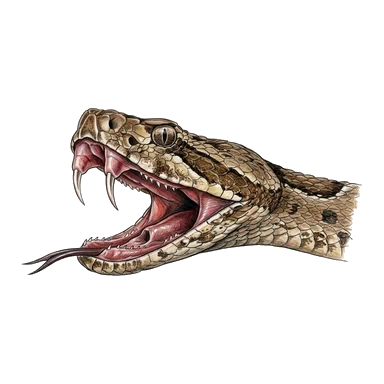 Kiruma
The urutu is a large, stout pit viper from South America. It is highly venomous and is an important cause of snakebites in the areas where it lives. Its body has a striking pattern of dark crescent-shaped markings.1
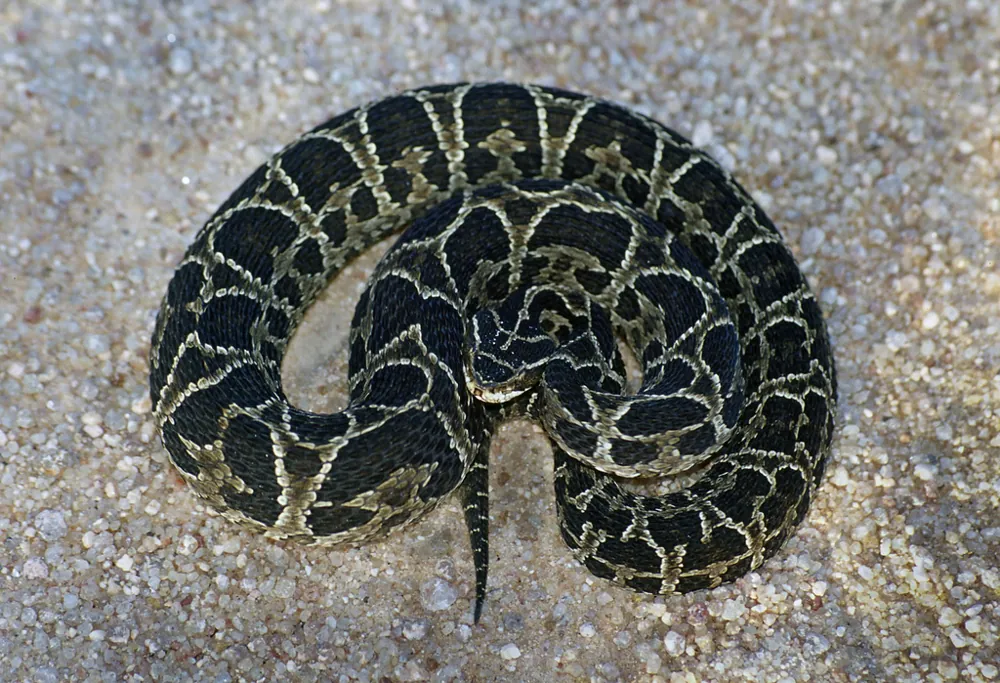
 Engeri y'okukitegeera
- Large and stout, most adults are 80 to 120 cm long.1
- The top of the head is usually chocolate brown to almost black, with tan to white markings.1
- The body has 22 to 28 dark brown to black markings, each bordered in cream or white. Some look like a cross, and some look like a headphone shape.1
- The pattern on the tail forms a zigzag.1
- A dark brown to black stripe runs along the underside from the neck to the tail tip.1
Amaanyi g'obusagwa
Obusagwa buyita mu mannyo gaakyo amawanvu (fangs) oba mu mannyo amalala nga kiruma.
Obusagwa bwakyo bukola ki?
The urutu is highly venomous. Its venom mainly contains phospholipase A2, snake venom metalloproteinases, snake venom serine proteases and C-type lectins. In one study of 32 patients, all had local pain and swelling, 97% had prolonged blood clotting, 41% had bleeding (usually from the gums), 32% had blistering and 9% had necrosis (death of tissue).1
Kirina akabi kenkana wa eri abantu?
Akabi eri abantu: Kya kabi nnyoKisobola okutta omuntu atafunye bujjanjabi.Bites are an important cause of snakebite in its range and often cause severe local tissue damage, but they are rarely fatal. In a survey of 6,601 snakebite cases in Central and South America, 384 were attributed to this species, and 8 of those (2%) were fatal. Some bites have caused gangrene that required amputation, and in 2004 a 44-year-old woman died of a brain bleed after being bitten at home.1
 Amawulire amalungi: abasawo balina eddagala (antivenom) oba obujjanjabi ku kino.1
 Bwe kiruma
- In one Brazilian hospital study, all 32 bitten patients were treated with specific antivenin (antivenom), and none of them died.1
- Omuntu muleke ateetambula era ateefu, ekitundu ekirumiddwa kibeere ku buwanvu bw'omutima, ggyamu empeta n'ebintu ebinyweza, era omutwale mu ddwaliro mangu.
Bulijjo sooka kuba ennamba y'ebigwa bitalaze (112, 000, 911). Buno bulagirizi bwa bujjanjabi obusooka obwa bulijjo, si kuwabula kwa musawo. Obujjanjabi obusooka obw'omusingi
 Weekuume
- Tokwatako, tokwata wadde okusoomooza ensolo ey'omu nsiko, ne bw'eba ntono, era ne bw'eba erabika nga yeebase oba nga efudde.
- Gireke n'ebbanga. Bw'osisinkana emu, beera mukkakkamu, dda emabega mpola era gireke egende mu kkubo lyayo.
- Bw'emu ekuluma: beera mukkakkamu, totambula, kuba ennamba y'ebigwa bitalaze (112, 000, 911) oba tuuka mu ddwaliro mangu. Jjukira bwe yali efaanana, ekifaananyi kiyamba.
Tekikunoonya. Kikozesa obusagwa bwakyo okukwata emmere oba okwekuuma, era kyandisinze kwekweka. Ebirala ku kwekuuma
Wa mu nsi?
Kinene kyenkana wa?
Kiwanvu kyenkana wa?
 kiwanvu nga kkapa ez'awaka 3 okuva ku nnyindo okutuuka ku mukira
 kiwanvu nga ndiizi 9 eziteekeddwa mu lunyiriri
 kyandisobodde okudduka mita 100 mu sikonda 95 (omuntu asinga embiro yeetaaga 9,6)
Urutu kinene kyenkana wa bw'ogeraageranya ne GGWE?
Kubala bwokka mu browser yo. Tewali kitterekebwa wadde okusindikibwa wonna.
Kidduka kyenkana wa?


Ebituufu
Genome sequencing found 59 toxin genes from 16 toxin families.1
Its verified maximum length is 169 cm, although reports of over 2 m exist.1
Some unusual individuals have dark stripes running the full length of the body.1
In some specimens the pattern is so concentrated that the markings and the gaps between them are the same colour.1
Females are significantly longer and heavier than males.1
Omumenyi w'enfumo
Enfumo: The bite of this snake is almost always deadly.
Amazima: Bites are rarely fatal, although they often cause severe local tissue damage. In one survey, only 2% of cases attributed to this species were fatal.1
Ku bakugu mu busagwa
- Erinnya erya ssaayansi
- Bothrops alternatus
- Ekibinja
- Pit vipers (emisota egiwulira ebbugumu)
- Amaka
- Viperidae2
- Ensengeka
- Squamata
- Ssemazinga
- Amerika ey'Obukiikaddyo
- Abaana abawere
- It gives birth to live young, with captive females producing 3 to 12 young and some females producing up to 24. The newborns look like adults but are more brightly coloured, and they can strike venomously from birth.1
- Akabi eri abantu
- 4 / 5: Kya kabi nnyo3
Ebituufu we biva
- Bothrops alternatus (Wikipedia (CC BY-SA 4.0))
- Bothrops alternatus (iNaturalist): amannya n'ensengeka y'ebika.
- Venom Wiki: omutendera gw'akabi, obunene obwa bulijjo n'okuteebereza kw'embiro bibyaffe. Laba engeri gye tubibalamu: Engeri gye tupimamu akabi.
Buli kituufu ku lupapula luno kirina ennamba eraga we kyava. Bwe tuba tukoze ensobi, tusonyiwe, tuli bayagazi ba nsolo, so si magazini ya ssaayansi. Tubuulire ku [email protected] tujja kugitereeza.
 Enjaba erumwa enjala! Venom Wiki pulojekiti ya muntu omu: ya bwereere, tewali birango era tewali bikulondoola. Akasiimo akatono kayamba okugikuuma ku yintaneti.Liisa enjaba
Ebirala okuva mu kibinja kye kimu: Pit vipers (emisota egiwulira ebbugumu)
 TerciopeloPit vipers (emisota egiwulira ebbugumu)Kitta
 Eyelash viperPit vipers (emisota egiwulira ebbugumu)Kisobola okutta
 Golden lanceheadPit vipers (emisota egiwulira ebbugumu)Kisobola okutta
 South American bushmasterPit vipers (emisota egiwulira ebbugumu)Kisobola okutta
 Common lanceheadPit vipers (emisota egiwulira ebbugumu)Kitta
 JararacaPit vipers (emisota egiwulira ebbugumu)Kisobola okutta
Era kibeera mu: Amerika ey'Obukiikaddyo
 Golden poison frogEbikere eby'obutwa, ebikere ebinene (toads) ne newtsKittaTokwatako
 Brazilian wandering spiderNnabbubiKisobola okutta
 Cane toadEbikere eby'obutwa, ebikere ebinene (toads) ne newtsKyetaaga omusawoTokwatako
 Peruvian giant centipedeEbiwuka eby'amagulu amangi (centipedes)Kyetaaga omusawo
 Bullet antEnsanafuKiruma bwokka
 Common vampire batEbisolo ebiyonsa eby'obusagwaKiruma bwokka