
 Afrika
 Azia
Azia Erópa
Erópa Amerika ya Sude
 Australia & Océanie
 Antarctique
 Océan Pacifique
 Océan Atlantique
 Océan Indien
 Océan Arctique
 Mer Méditerranée
 Mer Rouge
 Mer des Caraïbes
 Mer de Corail
 Mer de Chine méridionale
 Mer des Philippines
 Mer d'Andaman
 Mer du Nord
 Mer de Timor & Mer d'Arafura
 Golfe du Bengale
 Golfe de Californie
Black imported fire ant
 Kotuba
The black imported fire ant is a species of ant that is often called BIFA for short. It is native to South America but has spread to North America, where it has been found in several southern and south-eastern US states. Its sting can cause a red, swollen reaction, so it is useful to know it when you see one.1
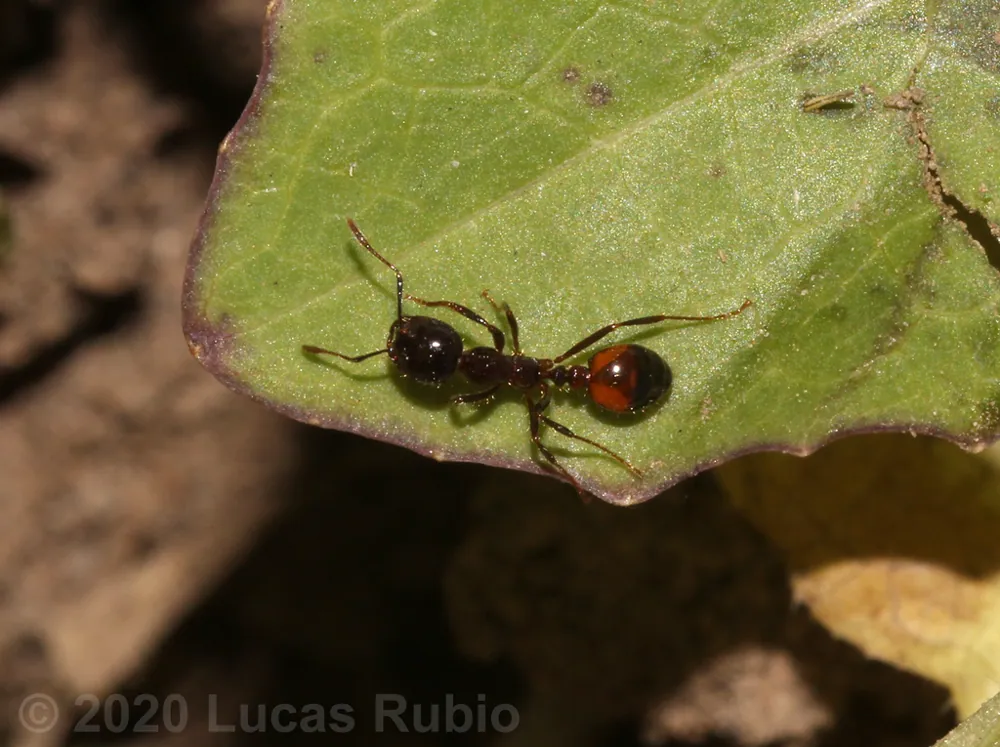
 Ndenge ya koyeba yango
- Black in colour, as its name says.1
- Its sting leaves a sterile pustule (a small blister with no germs in it), surrounded by a red swelling.1
Bakosanaka yango mbala mingi na: It was once thought to be a colour variety of the red imported fire ant (RIFA). It is now known to be a separate species with a different range and different living habits.1
Makasi ya venin
Venin ebimaka na nzela ya nsende ya kotuba.
Venin na yango esalaka nini?
Stings cause a sterile pustule surrounded by a raised, reddened swelling (wheal), with redness spreading beyond it (flare). The venom of this species may cause a more pronounced wheal and flare than the red imported fire ant.1
Likama na yango mpo na bato ezali boni?
Likama mpo na bato: Epesaka pasiEkoki kopesa pasi mingi, kasi pene na ntango nyonso ezalaka likambo monene te.How strong the reaction is depends on how many allergic (IgE) antibodies a person has already formed. People who have already built up these antibodies may react more strongly.1
 Soki etubi
- Sukola mpe pesa malili na bisika etubami.
- Soki moto azali na mpasi ya kopema, elongi to kingo evimbi, to ayoki lokola azali kobunga makanisi, ezali likama ya allergie: benga nimero ya urgence na yo.
Benga ntango nyonso nimero ya urgence liboso (112, 000, 911). Oyo ezali toli ya lisalisi ya liboso, ezali toli ya monganga te. Makambo ya moboko ya lisalisi ya liboso
 Zala na libateli
- Ata mokolo moko te, simba, kanga to silikisa nyama ya zamba te, ata ya moke, mpe ata soki emonani lokola elali to ekufi.
- Tika yango esika. Soki okutani na moko, zala kimia, zonga sima malembe mpe tika ekende nzela na yango.
- Soki moko etubi yo: zala kimia, ningana te, benga nimero ya urgence na yo (112, 000, 911) to kende na lopitalo noki. Kanisa ndenge ezalaki, foto esalisaka.
Ezali koluka yo te. Esalelaka venin na yango mpo na kokanga bilei to komibatela, mpe elingaka mingi kobombama. Makambo mosusu mpo na komibatela
Monene na yango boni?
Molai na yango boni?
 moke boye ete ekoki kofanda likolo ya ongle ya mosapi na yo
Black imported fire ant azali monene boni soki tokokanisi na YO?
Kaka ba calcul na navigateur na yo. Eloko moko te ebombamaka to etindamaka esika moko.
Mbangu na yango boni?


Makambo ya solo
Black imported fire ants appear to be more tolerant of cold than the red imported fire ant, and they are less dominant.1
Its body contains more water than the red imported fire ant, which may be linked to the different regions where the two species live.1
For a long time it was thought to be either a subspecies or a colour variation of the red imported fire ant, but it is now recognised as its own species.1
Solo to lokuta?
Lokuta: It is just a black colour form of the red imported fire ant.
Solo: It is now recognised as a separate species, with a different range and living habits.1
Esika makambo euti
- Black imported fire ant (Wikipedia (CC BY-SA 4.0))
- Solenopsis richteri (iNaturalist): bankombo mpe classification.
- Venom Wiki: niveau ya likama, monene ya momesano mpe kokanisa ya mbangu ezali ya biso moko. Tala ndenge tolukaka yango: Ndenge tomekaka likama.
Likambo nyonso na lokasa oyo ezali na nimero oyo elakisi source na yango. Soki tosali libunga, limbisa biso, tozali bato oyo balingaka banyama, zulunale ya siansi te. Yebisa biso na [email protected] mpe tokobongisa yango.
 Scorpion azali na nzala! Venom Wiki ezali mosala ya moto moko: ya ofele, pibilisite te mpe trackers te. Mwa mbongo moke ya kosalisa esalisaka mpo ete etikala na internet.Pesa scorpion bilei
Mosusu ya ebota moko: Nsonso
 Bullet ant
 Red imported fire ant
 Army ant
 Giant Amazonian ant
 Trap-jaw ant
 Dinosaur ant of Brazil
Ezalaka mpe na: Amerika ya Sude
 Golden poison frogBa grenouille ya poison, ba crapaud & ba tritonEkoki kobomaKosimba te
 TerciopeloBa vipère à fossettesEkoki koboma
 Brazilian wandering spiderBa tandambulaEkoki koboma
 Eyelash viperBa vipère à fossettesEkoki koboma
 Golden lanceheadBa vipère à fossettesEkoki koboma
 South American bushmasterBa vipère à fossettesEkoki koboma