
 Afrika
 Azia
Azia Erópa
Erópa Amerika ya Sude
 Australia & Océanie
 Antarctique
 Océan Pacifique
 Océan Atlantique
 Océan Indien
 Océan Arctique
 Mer Méditerranée
 Mer Rouge
 Mer des Caraïbes
 Mer de Corail
 Mer de Chine méridionale
 Mer des Philippines
 Mer d'Andaman
 Mer du Nord
 Mer de Timor & Mer d'Arafura
 Golfe du Bengale
 Golfe de Californie
Red imported fire ant
 Kotuba
The red imported fire ant is an ant that comes from South America. It has spread to Australia, New Zealand, parts of Asia, the Caribbean, Europe and the United States, where it is seen as a serious pest. Its sting burns, and in some people it causes a dangerous allergic reaction.1



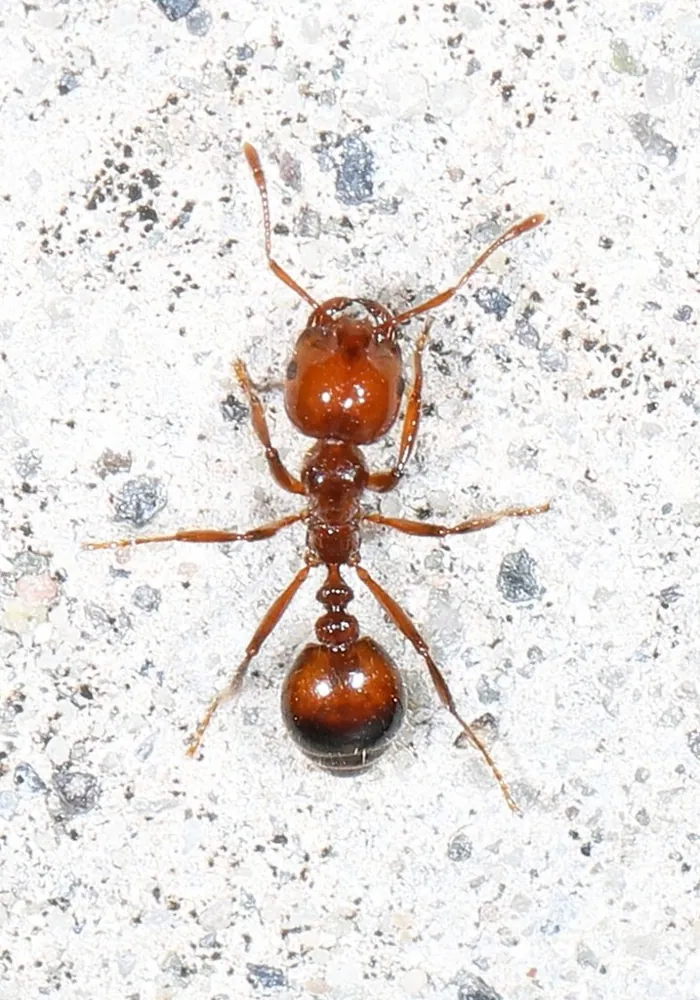
 Ndenge ya koyeba yango
Makasi ya venin
Venin ebimaka na nzela ya nsende ya kotuba.
Venin na yango esalaka nini?
About 95% of its venom is made of water-insoluble piperidine alkaloids called solenopsins, and the rest is a mixture of toxic proteins that can be especially strong in sensitive people. Most stings cause intense burning and swelling, followed by sterile pustules (small fluid-filled bumps) that can last several days. In some people, a severe allergic reaction called anaphylaxis can occur, with dizziness, chest pain, nausea, severe sweating, low blood pressure, shortness of breath and slurred speech.1
Likama na yango mpo na bato ezali boni?
Likama mpo na bato: Epesaka pasiEkoki kopesa pasi mingi, kasi pene na ntango nyonso ezalaka likambo monene te.More than 14 million people are stung by these ants each year in the United States, and many are expected to develop allergies to the venom. Between 0.6% and 6.0% of people may suffer anaphylaxis, which can be fatal if left untreated. More than 80 deaths have been recorded from attacks by this ant.1
 Nsango malamu: ba monganga bazali na nkisi (antivenin) to bosalisi mpo na yango.1
Esalaka nini ntango ebangi?
It uses its venom and chemical signals (pheromones) to defend itself and its nest.1
 Soki etubi
- People who only have pain and pustules need no medical attention. People who develop anaphylaxis need emergency treatment with adrenaline. Whole body extract immunotherapy is used to treat people who are allergic and is regarded as highly effective.1
- Sukola mpe pesa malili na bisika etubami.
- Soki moto azali na mpasi ya kopema, elongi to kingo evimbi, to ayoki lokola azali kobunga makanisi, ezali likama ya allergie: benga nimero ya urgence na yo.
Benga ntango nyonso nimero ya urgence liboso (112, 000, 911). Oyo ezali toli ya lisalisi ya liboso, ezali toli ya monganga te. Makambo ya moboko ya lisalisi ya liboso
 Zala na libateli
- Ata mokolo moko te, simba, kanga to silikisa nyama ya zamba te, ata ya moke, mpe ata soki emonani lokola elali to ekufi.
- Tika yango esika. Soki okutani na moko, zala kimia, zonga sima malembe mpe tika ekende nzela na yango.
- Soki moko etubi yo: zala kimia, ningana te, benga nimero ya urgence na yo (112, 000, 911) to kende na lopitalo noki. Kanisa ndenge ezalaki, foto esalisaka.
Ezali koluka yo te. Esalelaka venin na yango mpo na kokanga bilei to komibatela, mpe elingaka mingi kobombama. Makambo mosusu mpo na komibatela
Monene na yango boni?
Molai na yango boni?
 moke boye ete ekoki kofanda likolo ya ongle ya mosapi na yo
Red imported fire ant azali monene boni soki tokokanisi na YO?
Kaka ba calcul na navigateur na yo. Eloko moko te ebombamaka to etindamaka esika moko.
Mbangu na yango boni?


Makambo ya solo
When water levels rise, these ants build rafts to float on.1
A single mature colony can contain between 500,000 and 2,000,000 individuals.1
Over 1,800 scientific papers have been published using its name, and it is one of the most studied insects on the planet, rivalling the western honey bee.1
Workers dispose of scraps and dead ants on refuse piles outside the nest, a behaviour called necrophoric behaviour.1
Workers can live for several months, while queens can live for years.1
Solo to lokuta?
Lokuta: The name "fire ant" comes from fire or burning nests.
Solo: The name comes from the burning sensation caused by its sting.1
Mpo na ba expert ya venin
- Kombo ya siansi
- Solenopsis invicta
- Ebota
- Nsonso
- Libota
- Formicidae2
- Molongo
- Hymenoptera
- Bakontina
- Amerika ya Sude
- Bana
- Winged males and queens mate during a nuptial flight in the warm seasons. A colony can be started by a single queen or by a group of queens, which later compete for dominance once the first workers emerge.1
- Likama mpo na bato
- 2 / 5: Epesaka pasi3
Esika makambo euti
- Red imported fire ant (Wikipedia (CC BY-SA 4.0))
- Solenopsis invicta (iNaturalist): bankombo mpe classification.
- Venom Wiki: niveau ya likama, monene ya momesano mpe kokanisa ya mbangu ezali ya biso moko. Tala ndenge tolukaka yango: Ndenge tomekaka likama.
Likambo nyonso na lokasa oyo ezali na nimero oyo elakisi source na yango. Soki tosali libunga, limbisa biso, tozali bato oyo balingaka banyama, zulunale ya siansi te. Yebisa biso na [email protected] mpe tokobongisa yango.
 Scorpion azali na nzala! Venom Wiki ezali mosala ya moto moko: ya ofele, pibilisite te mpe trackers te. Mwa mbongo moke ya kosalisa esalisaka mpo ete etikala na internet.Pesa scorpion bilei
Mosusu ya ebota moko: Nsonso
 Bullet ant
 Army ant
 Giant Amazonian ant
 Trap-jaw ant
 Black imported fire ant
 Dinosaur ant of Brazil
Ezalaka mpe na: Amerika ya Sude
 Golden poison frogBa grenouille ya poison, ba crapaud & ba tritonEkoki kobomaKosimba te
 TerciopeloBa vipère à fossettesEkoki koboma
 Brazilian wandering spiderBa tandambulaEkoki koboma
 Eyelash viperBa vipère à fossettesEkoki koboma
 Golden lanceheadBa vipère à fossettesEkoki koboma
 South American bushmasterBa vipère à fossettesEkoki koboma