
 Āfrika
 Āzija
Āzija Eiropa
 Dienvidamerika
 Austrālija un Okeānija
 Antarktīda
 Klusais okeāns
 Atlantijas okeāns
 Indijas okeāns
 Ziemeļu Ledus okeāns
 Vidusjūra
 Sarkanā jūra
 Karību jūra
 Koraļļu jūra
 Dienvidķīnas jūra
 Filipīnu jūra
 Andamanu jūra
 Ziemeļjūra
 Timoras jūra un Arafuras jūra
 Bengālijas līcis
 Kalifornijas līcis
Golfodulcean poison frog
 Inde ādā
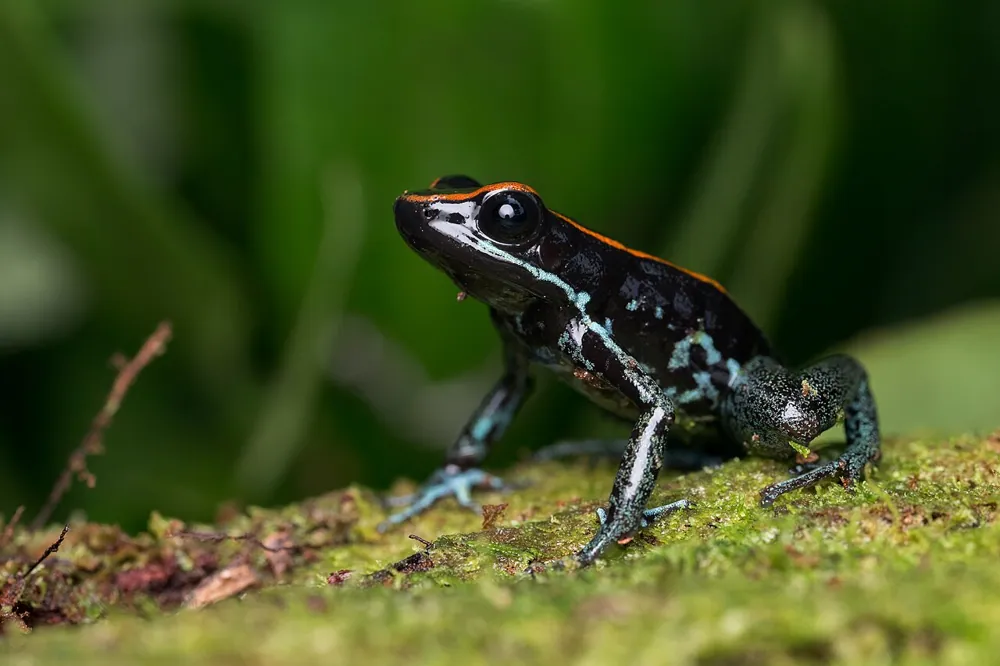
The Golfodulcean poison frog is a small, brightly marked frog that lives only in Costa Rica. Its skin contains a strong nerve poison, so it is one of the most toxic frogs in its genus, and it is a reminder that bright colours can be a warning. It lives in wet forests near streams.1

 Kā to atpazīt
- The body is black, but it can look glittery because of pigments in the skin.1
- Two stripes run down the back from just above the vent to the tip of the nose. They are usually fire orange, but can be golden, yellow or green.1
- The legs are mottled blue, and the sides often have a blue or green marble pattern.1
- It is a fairly large poison frog for its genus, with a smooth, sloping back. Its shoulder blades are usually hidden under the skin, so it can look a little plump.1
- Females are typically larger than males. Adults reach about 3.5 cm long.1
Bieži jauc ar: The related P. bicolor and P. terribilis have visible shoulder blades under the skin, which the Golfodulcean poison frog usually lacks, so it looks smoother and rounder.1
Toksīnu spēks
Tā āda ir toksiska. To ir bīstami aizskart, laizīt vai ēst.
Ko nodara tā toksīni?
Its skin contains batrachotoxin, a neurotoxic alkaloid poison, which attacks the nerves. A large enough dose causes severe pain, then tonic-clonic seizures (violent convulsions) and paralysis.1
Cik bīstams tas ir cilvēkiem?
Bīstamība cilvēkiem: SāpīgsTas var ļoti sāpēt, bet gandrīz nekad nav nopietni.It is highly toxic, though it is only the fourth most toxic species in the genus Phyllobates. The poison is in the skin, so the risk comes from handling the frog or getting the poison from its skin into the body.1
Ko tas dara, kad ir nobijies?
Its bright, multi-coloured body advertises its toxin as a warning to predators.1
 Ja kāds tam pieskārās vai to apēda
- Ja kāds tam pieskārās: rūpīgi nomazgā rokas un neaiztiec acis vai muti. Ja bērns vai mājdzīvnieks to nolaizīja vai apēda: zvani uz saindēšanās centru vai ārkārtas numuru.
Vienmēr vispirms zvani uz savu ārkārtas numuru (112, 000, 911). Tie ir vispārīgi pirmās palīdzības padomi, nevis medicīniska konsultācija. Pirmās palīdzības pamati
 Esi drošībā
- Nekad neaiztiec, neķer un neķircini savvaļas dzīvnieku, pat mazu, un pat ja tas izskatās aizmidzis vai miris.
- Dod tam vietu. Ja tādu satiec, saglabā mieru, lēnām atkāpies un ļauj tam iet savu ceļu.
- Ja tu tam pieskāries vai to apēdi: neberzē acis vai muti, nomazgā rokas un meklē medicīnisko palīdzību.
Tas nav nolēmis tevi medīt. Tā inde ir tikai tāpēc, lai neviens to neapēstu. Vairāk par drošību
Cik tas ir liels?
Cik tas ir garš?
 apmēram tikpat garš kā saspraude
 varētu noskriet 100 metrus 100 sekundēs (ātrākajam cilvēkam vajag 9,6)
Cik liels ir Golfodulcean poison frog salīdzinājumā ar TEVI?
Tikai matemātika tavā pārlūkā. Nekas netiek saglabāts vai kaut kur nosūtīts.
Cik tas ir ātrs?


Fakti
It is one of the few frogs whose poison is named batrachotoxin, a potent nerve toxin.1
Its climbing toe pads stick to leaves in a similar way to geckos, and it can climb out of an unsealed container.1
Male frogs carry their tadpoles on their backs, often for 1 to 2 days, to puddles, pools in palm leaves, or water-filled tree holes.1
Frogs in captivity have no toxin, which shows that their poison comes from what they eat.1
Its skin holds a large amount of poison, because it is comparatively large for a poison dart frog.1
The tadpoles become frogs after about 45 days, and the young frogs become sexually mature after ten months.1
Indes ekspertiem
- Zinātniskais nosaukums
- Phyllobates vittatus
- Grupa
- Indesvardes, krupji un tritoni
- Ģimene
- Dendrobatidae2
- Secība
- Anura
- Kontinenti
- Ziemeļamerika
- Mazuļi
- During the breeding season, the female lays 7 to 21 eggs per clutch on leaves, about every one or two weeks, and the male guards the eggs and carries the hatched tadpoles on his back to water.1
- Bīstamība cilvēkiem
- 2 / 5: Sāpīgs3
No kurienes nāk fakti
- Golfodulcean poison frog (Wikipedia (CC BY-SA 4.0))
- Phyllobates vittatus (iNaturalist): nosaukumi un klasifikācija.
- Venom Wiki: bīstamības līmenis, tipiskais izmērs un ātruma minējums ir mūsu pašu. Paskaties, kā mēs tos aprēķinām: Kā mēs vērtējam bīstamību.
Katram faktam šajā lapā ir numurs, kas norāda uz tā avotu. Ja mēs kaut ko esam sajaukuši, piedod, mēs esam dzīvnieku fani, nevis zinātnisks žurnāls. Uzraksti mums uz [email protected], un mēs to izlabosim.
 Skorpions ir izsalcis! Venom Wiki ir viena cilvēka projekts: bezmaksas, bez reklāmām un bez izsekotājiem. Neliels ziedojums palīdz to uzturēt tiešsaistē.Pabaro skorpionu
Vairāk no tās pašas grupas: Indesvardes, krupji un tritoni
 Cane toadIndesvardes, krupji un tritoniVajag ārstuNeaiztikt
 Strawberry poison-dart frogIndesvardes, krupji un tritoniTikai sāpNeaiztikt
 California newtIndesvardes, krupji un tritoniVar nogalinātNeaiztikt
 Rough-skinned newtIndesvardes, krupji un tritoniVar nogalinātNeaiztikt
 Colorado River toadIndesvardes, krupji un tritoniVajag ārstuNeaiztikt
 Panamanian golden frogIndesvardes, krupji un tritoniVajag ārstuNeaiztikt
 Terciopelo
 Eastern coral snake
 Eastern diamondback rattlesnake
 Eyelash viper
 Timber rattlesnake
 Western diamondback rattlesnake