
 Afrika
 Asia
Asia Eropah
 Amerika Selatan
 Australia & Oceania
 Antartika
 Lautan Pasifik
 Lautan Atlantik
 Lautan Hindi
 Lautan Artik
 Laut Mediterranean
 Laut Merah
 Laut Caribbean
 Laut Karang
 Laut China Selatan
 Laut Filipina
 Laut Andaman
 Laut Utara
 Laut Timor & Laut Arafura
 Teluk Benggala
 Teluk California
Black-legged poison frog
 Racun di kulitnya
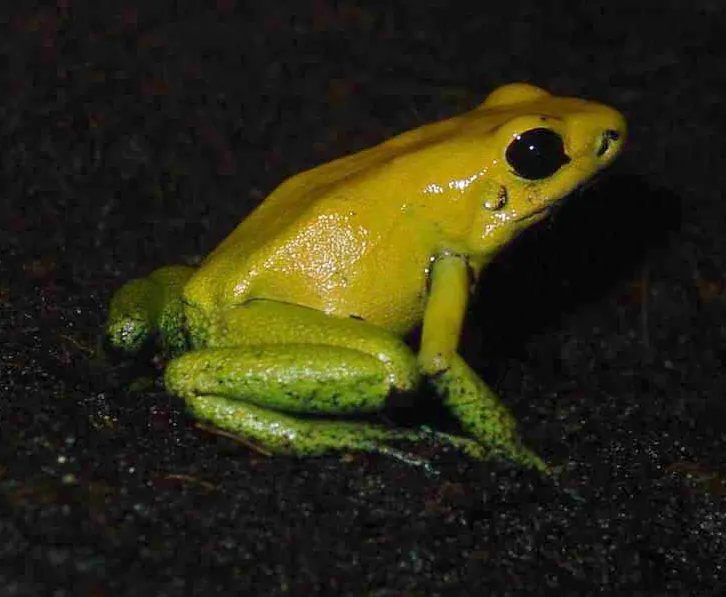
The black-legged poison frog is a small, brightly coloured frog from the rainforests of Colombia. It is one of the most toxic dart frogs in the world, and its skin can kill a person. It is also an endangered species, so it matters for conservation.1


 Cara mengenalinya
- The body is earthy orange to pure yellow.1
- The forelimbs and hindlegs are black or dark blue.1
- It is one of the largest poison dart frogs, but it is smaller and more slender than the golden poison frog.1
- Juveniles are brown or black and become more vibrant as they mature.1
- It is active in the daytime and moves across the forest floor in quick hops.1
Sering dikelirukan dengan: It is often mistaken for the golden poison frog (Phyllobates terribilis), which looks similar. The black-legged poison frog is smaller, more slender and less poisonous. Juvenile golden poison frogs can also look like it. It also resembles the 'netted' colour form of D. leucomelas.1
Kuasa racun
Kulitnya beracun. Ia berbahaya untuk disentuh, dijilat atau dimakan.
Apa kesan racunnya?
This frog is poisonous rather than venomous, because its toxin comes out through its skin. The toxin is batrachotoxin, a neurotoxin that attacks the nerves. It stops nerve signals from getting through, which causes paralysis, heart failure and breathing failure. There are no known treatments or antidotes for it.1
Berapa bahaya ia kepada manusia?
Bahaya kepada manusia: Sangat berbahayaIa boleh membunuh orang yang tidak mendapat rawatan.It is one of the few frogs confirmed to have killed humans. Between 2 and 200 micrograms of its toxin is enough to kill a person. Its toxin is weaker than that of the golden poison frog.1
Apa yang ia buat apabila takut?
Its bright colours warn predators that it is poisonous, and its skin releases toxins through pores.1
 Jika seseorang menyentuh atau memakannya
- Jika seseorang menyentuhnya: basuh tangan dengan bersih dan jangan sentuh mata atau mulut. Jika kanak-kanak atau haiwan peliharaan menjilat atau memakannya: hubungi pusat racun atau nombor kecemasan.
Sentiasa hubungi nombor kecemasan dahulu (112, 000, 911). Ini panduan pertolongan cemas umum, bukan nasihat perubatan. Asas pertolongan cemas
 Kekal selamat
- Jangan sesekali sentuh, tangkap atau usik haiwan liar, walaupun yang kecil, dan walaupun ia nampak tidur atau mati.
- Beri ia ruang. Jika kamu terjumpa, bertenang, undur perlahan-lahan dan biarkan ia pergi.
- Jika kamu menyentuh atau memakannya: jangan gosok mata atau mulut, basuh tangan dan dapatkan bantuan perubatan.
Ia bukan mahu memburu kamu. Racunnya ada hanya supaya tiada apa yang memakannya. Lagi tentang keselamatan
Di mana di dunia?
Berapa besar ia?
Berapa panjang ia?
 lebih pendek daripada jari kelingking kamu
 boleh melepasi 100 meter dalam 95 saat (manusia paling laju perlukan 9.6)
Berapa besar Black-legged poison frog berbanding KAMU?
Hanya matematik dalam pelayar kamu. Tiada apa yang disimpan atau dihantar ke mana-mana.
Berapa laju ia?


Fakta
Some Chocó people in Colombia use the poison from these frogs to tip hunting darts for blowguns.1
The male carries the tadpoles on his back. Some of the toxin rubs off onto them, so a predator that eats one would be poisoned.1
The frog cannot make its own toxin. It gets the chemicals it needs from its diet and its surroundings.1
Unlike most frogs, which are active at night, this frog is active during the daytime. Its bright colours are easier to see then, which helps warn predators.1
The male's high-pitched trill attracts females. Brighter males are more attractive, and their colour can help them win mates.1
Pemecah mitos
Mitos: That it is the most toxic dart frog in the world.
Hakikat: It is the second most toxic dart frog. The golden poison frog is more toxic.1
Untuk pakar bisa
- Nama saintifik
- Phyllobates bicolor
- Kumpulan
- Katak beracun, katak puru & newt
- Keluarga
- Dendrobatidae2
- Susunan
- Anura
- Benua-benua
- Amerika Selatan
- Anak
- The eggs are fertilised outside the body, and a parent protects them until they hatch. The male then carries the tadpoles on his back to water.1
- Keadaannya di alam liar
- Endangered1
- Bahaya kepada manusia
- 4 / 5: Sangat berbahaya3
Dari mana fakta datang
- Phyllobates bicolor (Wikipedia (CC BY-SA 4.0))
- Phyllobates bicolor (iNaturalist): nama dan pengelasan.
- Venom Wiki: tahap bahaya, saiz biasa dan anggaran kelajuan adalah penilaian kami sendiri. Lihat cara kami mengiranya: Cara kami menilai bahaya.
Setiap fakta di halaman ini ada nombor yang menunjuk kepada sumbernya. Jika kami tersilap, maaf, kami peminat haiwan, bukan jurnal sains. Beritahu kami di [email protected] dan kami akan betulkan.
 Kala jengking lapar! Venom Wiki ialah projek seorang lelaki: percuma, tanpa iklan dan tanpa penjejak. Sedikit sumbangan membantu memastikannya terus dalam talian.Beri kala jengking makan
Lagi dari kumpulan yang sama: Katak beracun, katak puru & newt
 Katak beracun emasKatak beracun, katak puru & newtMembawa mautJangan sentuh
 Cane toadKatak beracun, katak puru & newtPerlu jumpa doktorJangan sentuh
 Dyeing poison dart frogKatak beracun, katak puru & newtSakit sahajaJangan sentuh
 Bruno's casque-headed frogKatak beracun, katak puru & newtPerlu jumpa doktorJangan sentuh
 Harlequin poison frogKatak beracun, katak puru & newtPerlu jumpa doktorJangan sentuh
 Giant leaf frogKatak beracun, katak puru & newtSakit sahajaJangan sentuh
 Ular terciopelo
 Brazilian wandering spider
 Eyelash viper
 Golden lancehead
 South American bushmaster
 Peruvian giant centipede