
 Afrika
 Azië
Azië Europa
 Zuid-Amerika
 Australië & Oceanië
 Antarctica
 Grote Oceaan
 Atlantische Oceaan
 Indische Oceaan
 Noordelijke IJszee
 Middellandse Zee
 Rode Zee
 Caribische Zee
 Koraalzee
 Zuid-Chinese Zee
 Filipijnenzee
 Andamanse Zee
 Noordzee
 Timorzee & Arafurazee
 Golf van Bengalen
 Golf van Californië
Blue button
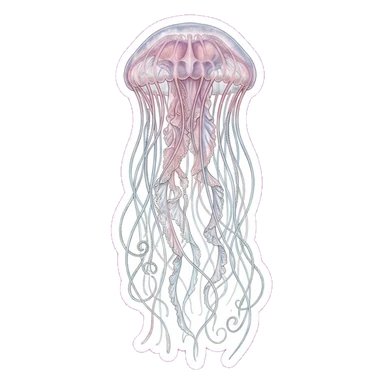 Netelende tentakels
The blue button is a small sea creature that floats on the surface of warm oceans. It looks like a jellyfish, but it is really a colony of tiny animals called polyps. Its sting is not powerful, but it can cause slight skin irritation.1
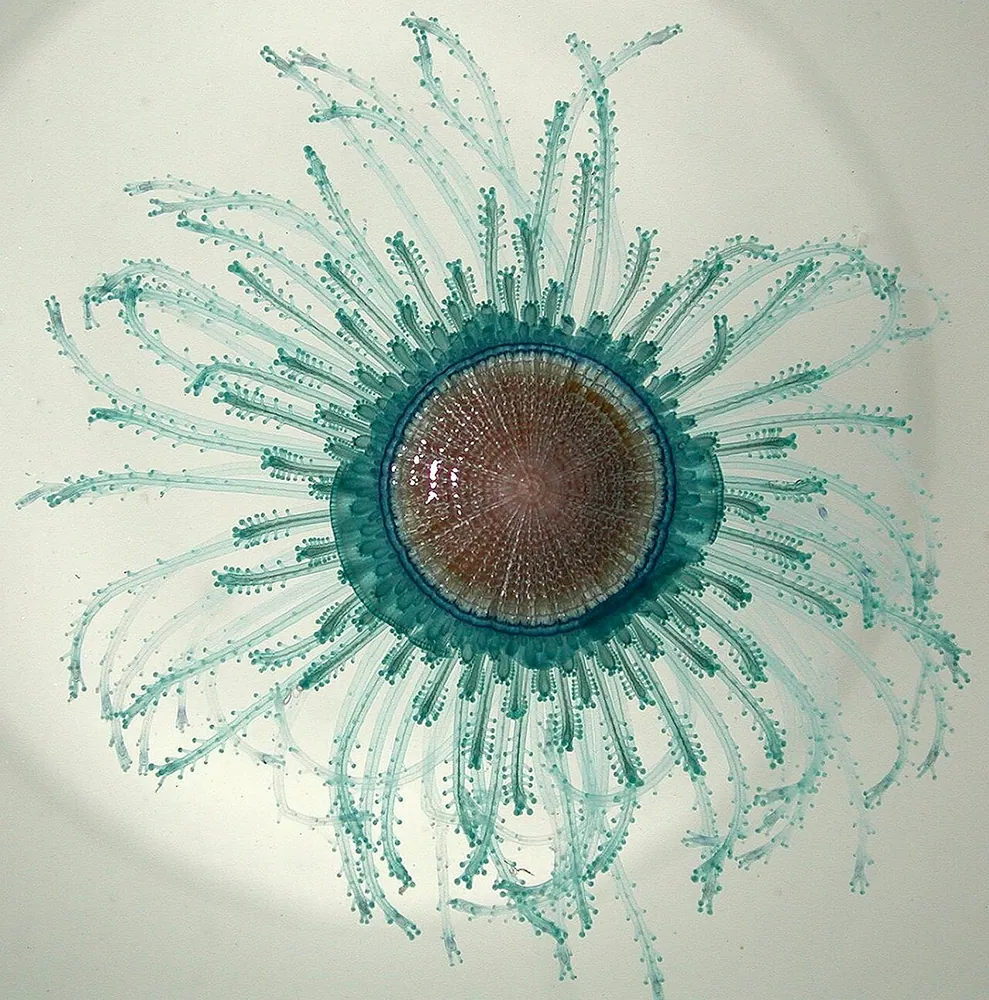
 Zo herken je het
- A round, almost flat, hard golden brown float about one inch (2.5 cm) wide1
- Bright blue turquoise to yellow polyps hanging from the float1
- Blue strands with knobs of stinging cells at the tips1
- Looks similar to a jellyfish, but each 'individual' is a colony of polyps1
Vaak verward met: It looks superficially like a jellyfish. It is related to Velella and to the Portuguese man o' war, which are also colonial animals that float on the surface.1
Gifkracht
Duizenden piepkleine netelcellen vuren af als iets ze aanraakt.
Wat doet zijn gif als het bijt of steekt?
It has stinging cells called nematocysts at the tips of its tentacle-like strands. The sting is not powerful and may cause slight irritation to human skin.1
Hoe gevaarlijk is het voor mensen?
Gevaar voor mensen: MildZoals een bijensteek of minder. Eigenlijk ongevaarlijk voor mensen.The sting is not powerful and may cause slight irritation. In recent years, the first recorded case of contact dermatitis (a skin rash caused by contact) from this species was reported in Japan.1
 Als het steekt
- Kom uit het water en haal alle tentakels eraf (met handschoenen of een doek).
- Bij tropische kubuskwallen: giet minstens 30 seconden azijn op de steken, bel om hulp en wees klaar om te reanimeren. Bij Portugese oorlogsschepen en de meeste andere: spoel met zeewater, daarna heet water tegen de pijn.
Bel altijd eerst je alarmnummer (112, 000, 911). Dit is algemene EHBO-informatie, geen medisch advies. EHBO-basis
 Blijf veilig
- Raak een wild dier nooit aan, vang het niet en pest het niet, ook geen kleintje, en ook niet als het lijkt te slapen of dood lijkt.
- Geef het de ruimte. Kom je er een tegen, blijf rustig, stap langzaam achteruit en laat het zijn eigen weg gaan.
- Als er een je steekt: blijf rustig, beweeg niet, bel je alarmnummer (112, 000, 911) of ga snel naar een ziekenhuis. Onthoud hoe het eruitzag, een foto helpt.
Het is niet op jou uit. Het gebruikt zijn gif om voedsel te vangen of zichzelf te beschermen, en verstopt zich veel liever. Meer over veilig blijven
Waar ter wereld?
Hoe groot is het?
Hoe lang is het?
 ongeveer zo lang als een paperclip
Hoe groot is Blue button vergeleken met JOU?
Alleen rekenwerk in je browser. Er wordt niets opgeslagen of verstuurd.
Hoe snel is het?


Feiten
Each apparent individual is actually a colony of hydrozoan polyps, not a single animal.1
Young Malabar trevally fish shelter under the floats and panic when removed from them.1
Young Malabar trevally fish appear to prefer a particular colony and will return to their own partner when separated and put back in the same tank.1
It is preyed on by sea slugs known as blue dragons and by violet sea-snails of the genus Janthina.1
The blue button has a single mouth under its float, which it uses for both eating and removing waste.1
Fabeltjes-checker
Fabel: A blue button is a single jellyfish-like animal.
Waarheid: Each blue button is a colony of hydrozoan polyps, which are related to anemones, corals and jellyfish.1
Waar de feiten vandaan komen
- Porpita porpita (Wikipedia (CC BY-SA 4.0))
- Porpita porpita (iNaturalist): namen en indeling.
- Venom Wiki: het gevarenniveau, de typische grootte en de geschatte snelheid zijn van onszelf. Zo berekenen we ze: Hoe we gevaar beoordelen.
Elk feit op deze pagina heeft een nummer dat naar de bron wijst. Hebben we iets fout? Sorry, we zijn dierenfans, geen wetenschappelijk tijdschrift. Laat het ons weten via [email protected] en we passen het aan.
 De schorpioen heeft honger! Venom Wiki is een eenmansproject: gratis, zonder reclame en zonder trackers. Een kleine fooi helpt om het online te houden.Voer de schorpioen
Meer uit dezelfde groep: Kwallen & netelende zeedieren
 Australian box jellyfishKwallen & netelende zeedierenDodelijkNiet aanraken
 Irukandji jellyfishKwallen & netelende zeedierenKan dodenNiet aanraken
 Portuguese man o' warKwallen & netelende zeedierenMoet naar de dokterNiet aanraken
 Lion's mane jellyfishKwallen & netelende zeedierenDoet alleen pijnNiet aanraken
 Moon jellyfishKwallen & netelende zeedierenOngevaarlijk
 Common kingslayerKwallen & netelende zeedierenKan dodenNiet aanraken
Leeft ook in: Grote Oceaan
 Geography coneKegelslakken & octopussenDodelijk
 Greater blue-ringed octopusKegelslakken & octopussenDodelijk
 Japanese pufferfishAndere passief giftige dierenDodelijk
 Southern blue-ringed octopusKegelslakken & octopussenDodelijk
 Hawksbill sea turtleAndere passief giftige dierenKan doden
 Reef stonefishGiftige vissenKan dodenNiet aanraken