
 Africa
 Asia
Asia Ulaya
Ulaya Amereka ya Kumwera
 Australia ndi Oceania
 Antarctica
 Nyanja ya Pacific
 Nyanja ya Atlantic
 Nyanja ya Indian
 Nyanja ya Arctic
 Nyanja ya Mediterranean
 Nyanja Yofiira
 Nyanja ya Caribbean
 Nyanja ya Coral
 Nyanja ya South China
 Nyanja ya Philippine
 Nyanja ya Andaman
 Nyanja ya Kumpoto (North Sea)
 Nyanja ya Timor ndi Arafura
 Nyanja ya Bengal
 Gulf ya California
Orange baboon tarantula
 Imaluma
The orange baboon tarantula is a large, nocturnal spider, so it is most active at night. It lives in parts of Africa, including Angola, central and southern Africa and the island of Zanzibar. Its bite is not known to be deadly, but it is very painful, so it should be left alone.1



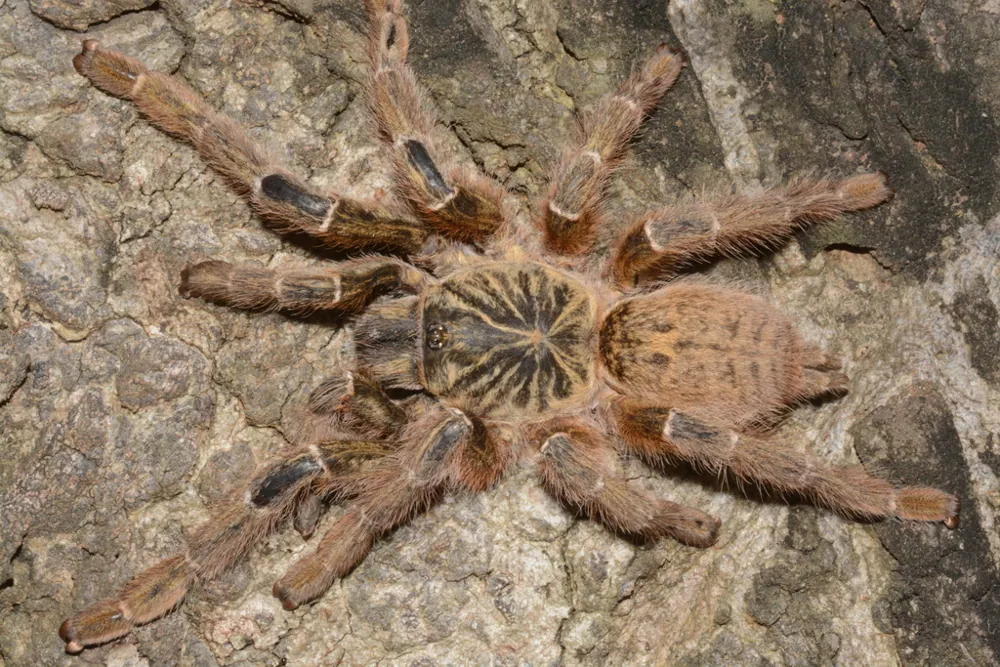
 Mmene ungaizindikirire
Mphamvu ya ululu
Ululu umatuluka kudzera m'mano ake ikaluma.
Ululu wake umachita chiyani?
The venom is not known to be lethal to humans, but the bite is considered medically significant. The bite is extremely painful.1
Ndi yoopsa bwanji kwa anthu?
Ngozi kwa anthu: YopwetekaIngathe kupweteka kwambiri, koma pafupifupi nthawi zonse si vuto lalikulu.The bite is not thought to be serious, but it is extremely painful. It is considered medically significant, so handling this species is advised against.1
Imachita chiyani ikachita mantha?
It is very defensive and will bite if provoked, often without first showing its typical threat display.1
 Ikaluma
- Sambitsa polumidwapo ndi kuziziritsa. Peza thandizo la dokotala ngati kupweteka kuli kwakukulu kapena munthuyo sakumva bwino.
Nthawi zonse yamba wayimbira nambala yadzidzidzi (112, 000, 911). Awa ndi malangizo wamba a chithandizo choyamba, osati malangizo a dokotala. Zoyambira za chithandizo choyamba
 Khala wotetezeka
- Usakhudze, kugwira kapena kuseweretsa nyama yakuthengo, ngakhale yaing'ono, ndipo ngakhale ikuoneka ngati yagona kapena yafa.
- Ipatse malo. Ukakumana nayo, khala chete, bwerera m'mbuyo pang'onopang'ono ndipo uilole ipite njira yake.
- Ikakuluma: khala chete, usasunthe, imbira nambala yadzidzidzi (112, 000, 911) kapena pita kuchipatala mwachangu. Kumbukira m'mene inkaonekera, chithunzi chimathandiza.
Sikufuna kukuvulaza. Imagwiritsa ntchito ululu wake kugwira chakudya kapena kudziteteza, ndipo imakonda kwambiri kubisala. Zambiri za kukhala wotetezeka
Kuti padziko lapansi?
Ndi yaikulu bwanji?
Ndi yaitali bwanji?
 yaitali ngati zidutswa zomangira zoseweretsa 5 pamzere
 ingathamange mamita 100 m'masekondi 200 (munthu wothamanga kwambiri amafunika 9.6)
Orange baboon tarantula ndi yaikulu bwanji poyerekeza ndi IWE?
Ndi masamu chabe mu msakatuli wako. Palibe chomwe chimasungidwa kapena kutumizidwa kwina.
Imathamanga bwanji?


Mfundo
Hobbyists nickname it OBT, short for orange baboon tarantula or orange bitey thing, and call it the pterror, a pun on its genus name.1
It can be found in five known colour forms, and the colour is thought to be linked to the type of soil where each form lives.1
Unlike some New World tarantulas, it has no urticating hairs to irritate the skin.1
It builds a tunnel-shaped web.1
It is a nocturnal spider, so it is most active at night.1
Kumene mfundo zimachokera
- Pterinochilus murinus (Wikipedia (CC BY-SA 4.0))
- Pterinochilus murinus (iNaturalist): mayina ndi magulu a sayansi.
- Venom Wiki: mlingo wa ngozi, kukula wamba ndi kuyerekeza kwa liwiro ndi zathu. Ona mmene timazipezera: Mmene timayezera ngozi.
Mfundo iliyonse patsamba lino ili ndi nambala yosonyeza kochokera. Ngati talakwitsa, pepani, ndife okonda nyama, osati magazini a sayansi. Tiuze pa [email protected] ndipo tikonza.
 Chinkhanira chili ndi njala! Venom Wiki ndi ntchito ya munthu mmodzi: yaulere, yopanda zotsatsa ndi zokutsatira. Mphatso yaing'ono imathandiza kuti ikhalebe pa intaneti.Dyetsa chinkhanira
Zina za gulu lomwelo: Ma tarantula ndi funnel-web
 King baboon spiderMa tarantula ndi funnel-webImangopweteka
 Featherleg baboon spiderMa tarantula ndi funnel-webIkufuna dokotala
 Togo starburst tarantulaMa tarantula ndi funnel-webIkufuna dokotala
 Cameroon red baboon spiderMa tarantula ndi funnel-webImangopweteka
 Golden blue-leg baboon spiderMa tarantula ndi funnel-webImangopweteka
 Horned baboon spiderMa tarantula ndi funnel-webImangopweteka
 Black mamba
 Deathstalker
 Egyptian cobra
 Puff adder
 Boomslang
 Fat-tailed scorpion