
 Afryka
 Azja
Azja Europa
 Ameryka Południowa
 Australia i Oceania
 Antarktyda
 Ocean Spokojny
 Ocean Atlantycki
 Ocean Indyjski
 Ocean Arktyczny
 Morze Śródziemne
 Morze Czerwone
 Morze Karaibskie
 Morze Koralowe
 Morze Południowochińskie
 Morze Filipińskie
 Morze Andamańskie
 Morze Północne
 Morze Timor i Morze Arafura
 Zatoka Bengalska
 Zatoka Kalifornijska
Black-tailed rattlesnake
 Ugryzienia
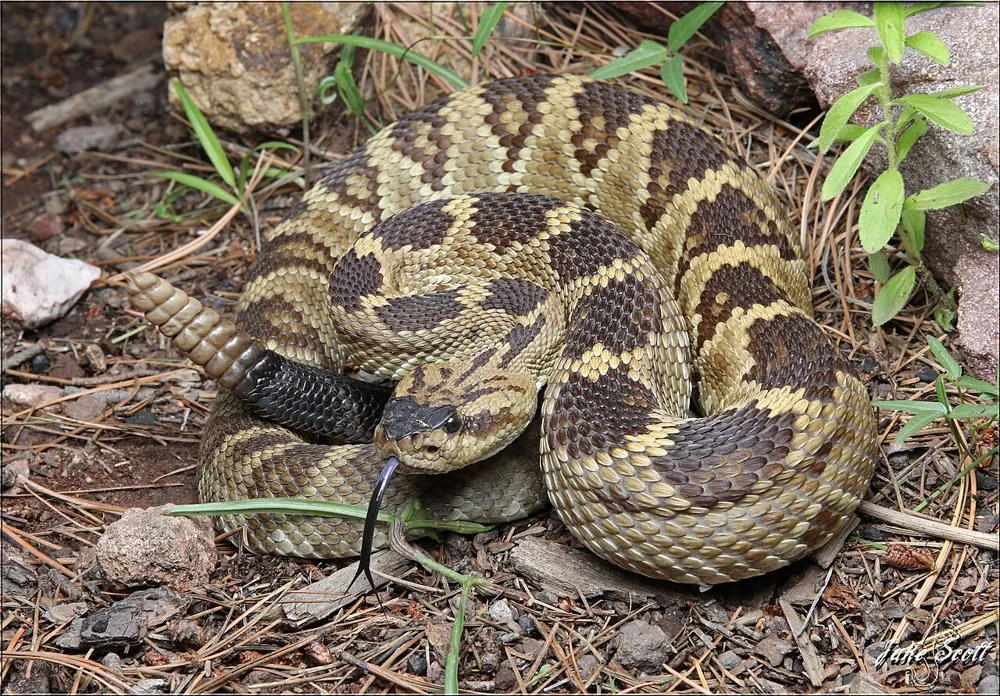
The black-tailed rattlesnake is a venomous pit viper that lives in the south-west of the United States and in Mexico. It is known as one of the calmest rattlesnakes, and it relies on camouflage rather than confrontation.1



 Jak je rozpoznać
- Body colour ranges from yellows and olive greens to browns and black.1
- The tail scales are entirely black, which gives the species its name.1
- Often has a black band that runs across the eyes and down to the corners of the mouth, forming a facial 'mask'.1
- Has a rattle made of keratin at the end of the tail.1
Siła jadu
Jad wydostaje się przez kły lub zęby, gdy zwierzę gryzie.
Jak działa jego jad?
Its venom is primarily hemotoxic, meaning it mainly acts on the blood and surrounding tissue, as with most crotalids (pit vipers). It is only about two-thirds as toxic as western diamondback venom. Because the venom is weaker, the snake has larger venom glands than most rattlesnakes in its region and injects large quantities into prey.1
Jak bardzo jest niebezpieczne dla ludzi?
Zagrożenie dla ludzi: GroźneUgryzienie wymaga lekarza. Zgony są bardzo rzadkie.Bites are fairly rare, because the snake is considered one of the most docile rattlesnakes. The venom is generally not fatal to humans.1
 Dobra wiadomość: lekarze mają na to lek (surowicę przeciwjadową) albo leczenie.1
Co robi, gdy się boi?
It normally tries to slither away when confronted, but it will rattle when cornered, and it relies mostly on camouflage to avoid discovery.1
 Jeśli ugryzie
- CroFab antivenom is often used to treat bites from this snake.1
- Trzymaj poszkodowanego w bezruchu i spokoju, trzymaj ugryzioną kończynę na wysokości serca, zdejmij pierścionki i to, co ciasne, i jak najszybciej dotrzyj do szpitala.
Zawsze najpierw dzwoń na numer alarmowy (112, 000, 911). To ogólne wskazówki pierwszej pomocy, a nie porada medyczna. Podstawy pierwszej pomocy
 Uważaj na siebie
- Nigdy nie dotykaj, nie łap ani nie drażnij dzikiego zwierzęcia, nawet małego, i nawet jeśli wygląda, jakby spało albo było martwe.
- Zostaw mu miejsce. Jeśli je spotkasz, zachowaj spokój, powoli się wycofaj i pozwól mu odejść.
- Jeśli cię ugryzie: zachowaj spokój, nie ruszaj się, zadzwoń na numer alarmowy (112, 000, 911) albo jak najszybciej dotrzyj do szpitala. Zapamiętaj, jak wyglądało, zdjęcie pomaga.
Nie poluje na ciebie. Używa jadu, żeby złapać jedzenie albo się bronić, i dużo bardziej woli się schować. Więcej o bezpieczeństwie
Jakie jest duże?
Jakie jest długie?
 długie jak 2 kotów domowych od nosa do ogona
 długie jak 6 bananów ułożonych jeden za drugim
 100 metrów w 100 s (najszybszy człowiek potrzebuje 9,6)
Black-tailed rattlesnake: jak duże jest w porównaniu z TOBĄ?
Zwykła matematyka w twojej przeglądarce. Nic nie jest zapisywane ani nigdzie wysyłane.
Jak szybkie jest?


Fakty
Its venom glands are larger than those of most rattlesnakes in its region, which compensates for its weaker venom.1
It is considered one of the most docile rattlesnakes because of its calm demeanour and curious nature.1
In the spring and fall it is mainly active during the day, but in summer it becomes nocturnal to avoid the heat.1
In winter it hibernates in dens made and abandoned by other animals, often sharing them with other snake species.1
Its lifespan averages 15 to 20 years.1
Pogromca mitów
Mit: The number of segments in a rattle shows how old a rattlesnake is.
Prawda: Each time the snake sheds its skin, a new segment is added. Snakes can shed several times a year, and the rattle is fragile and can break, so its length is not an accurate guide to age unless the tip (terminal button) is intact.1
Dla znawców jadu
- Nazwa naukowa
- Crotalus molossus
- Grupa
- Grzechotniki
- Rodzina
- Viperidae2
- Kolejność
- Squamata
- Kontynenty
- Ameryka Północna
- Młode
- The female gives birth to live young in the summer. Litters can have as many as 10 to 12 young but usually average four to six.1
- Jak sobie radzi na wolności
- Least Concern1
- Zagrożenie dla ludzi
- 3 / 5: Groźne3
Skąd pochodzą fakty
- Black-tailed rattlesnake (Wikipedia (CC BY-SA 4.0))
- Crotalus molossus (iNaturalist): nazwy i klasyfikacja.
- Venom Wiki: poziom zagrożenia, typowy rozmiar i szacowana prędkość to nasze własne oceny. Zobacz, jak je ustalamy: Jak oceniamy zagrożenie.
Każdy fakt na tej stronie ma numer, który wskazuje jego źródło. Jeśli coś pomyliliśmy, przepraszamy, jesteśmy fanami zwierząt, a nie czasopismem naukowym. Napisz do nas na [email protected], a poprawimy to.
 Skorpion jest głodny! Venom Wiki to projekt jednej osoby: darmowy, bez reklam i bez śledzenia. Mały napiwek pomaga utrzymać go w sieci.Nakarm skorpiona
 Eastern diamondback rattlesnake
 Timber rattlesnake
 Western diamondback rattlesnake
 Sidewinder
 Mojave rattlesnake
 Aruba rattlesnake
 Żararaka szorstka
 Eastern coral snake
 Eyelash viper
 Arizona bark scorpion
 Brown recluse
 Cane toad